
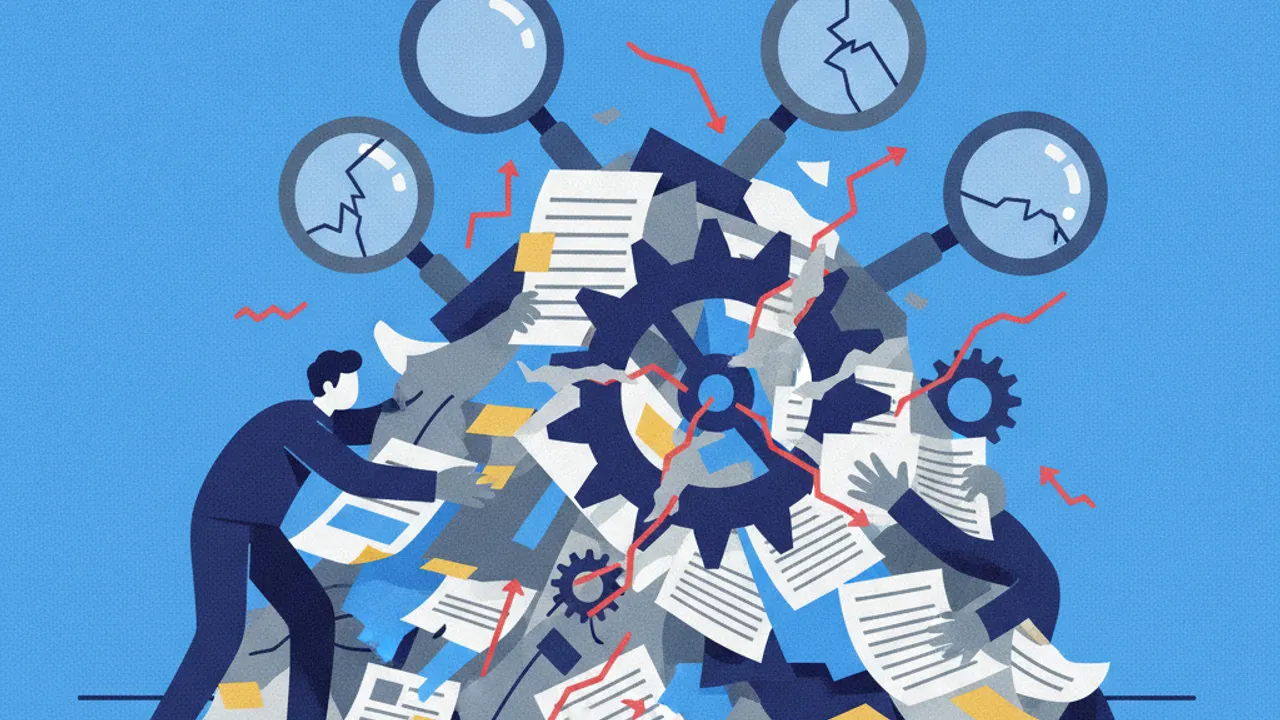
The integration of generative software into everyday office routines is proceeding with far more friction than corporate leadership anticipated. Recent empirical research from Ricoh Europe and Founder Reports highlights a sobering divide between executive ambitions and the actual reality across enterprise workplaces. While corporate decision makers invest substantial capital into digital assistants expecting rapid efficiency gains, daily operational adoption triggers widespread frustration and measurable friction. Instead of providing the promised operational relief, recent data reveals a sharp disconnect between strategic expectations and everyday workplace strain.
This contradiction is documented with clarity in the workplace study published by Ricoh Europe in collaboration with workplace researchers. A striking 91 percent of surveyed executives expressed confidence that their investments in artificial intelligence were already delivering the projected business value. Across the broader workforce, however, the perception is fundamentally different, as 53 percent of employees view the newly introduced tools as a source of ongoing friction and direct extra work. Furthermore, 55 percent of workers report that time-consuming manual corrections and poorly integrated interfaces actively reduce their net productivity.
A primary structural driver behind this divergence is the neglect of organizational change management during deployment. Ricoh found that 81 percent of decision makers openly admit that the speed of purchasing and introducing new tools vastly outpaces organizational guidance and team change management. Compared to other digital workplace technologies, generative assistants demonstrated the weakest net productivity impact in the entire survey. Employees are frequently expected to master complex new interfaces without systematic training, established standards, or clear governance frameworks for operational workflows.
These workplace challenges are further corroborated by Founder Reports in its Productivity Report, which details the emergence of a collective review penalty. While individual employees may experience minor time savings when drafting initial text, that gain is frequently erased at the team collaboration level. Approximately 40 percent of workers reported receiving substandard automated work from colleagues over the past month, requiring an average of nearly two hours per incident to rectify. Uncritical sharing of raw algorithmic output effectively shifts the administrative burden onto co-workers across the organization.
This correction burden falls heavily on managerial staff, whose strategic duties are frequently compromised by routine proofreading and editing. According to Founder Reports, 57 percent of managers reported regularly redoing or heavily correcting work submitted by team members who placed excessive trust in generative outputs. The unchecked reliance on automated generation results in deficient work products that leaders must manually rehabilitate before delivery. Instead of steering higher-level business initiatives, supervisors increasingly act as human safety nets to clean up synthetic errors and hallucinations.
These persistent operational frictions clarify why substantial enterprise spending has struggled to generate tangible financial returns. Despite cumulative corporate expenditures estimated between 30 and 40 billion dollars on enterprise experimentation, Founder Reports indicates that 95 percent of all pilots failed to produce a measurable profit and loss impact. Capital dedicated to automated tools is largely neutralized by the internal labor costs required to verify and correct flawed machine outputs. Unless organizations prioritize comprehensive workflow redesign and rigorous quality assurance over rapid tool acquisition, corporate deployments risk remaining trapped in an expensive productivity sinkhole.