
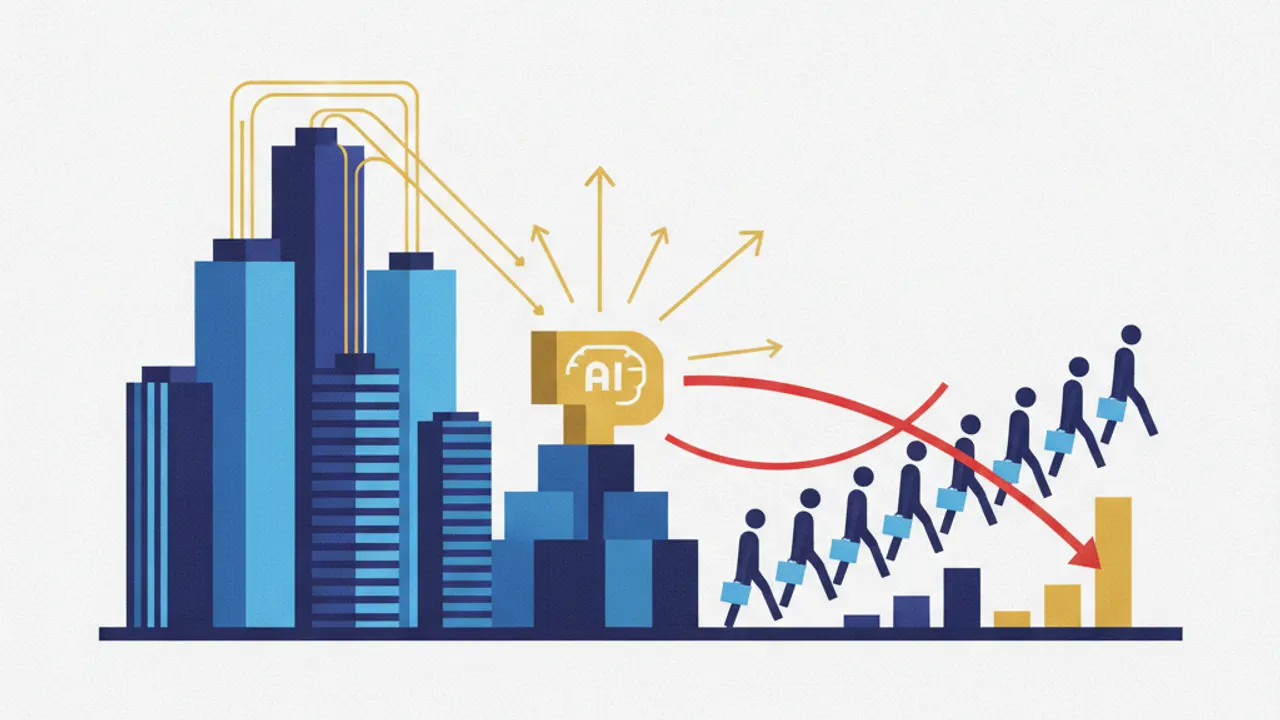
While corporate executives continue to celebrate efficiency gains delivered by artificial intelligence, highly qualified technical specialists across Germany are reporting intense friction. A survey published on October 24, 2026, conducted by market research firm YouGov on behalf of staffing consultancy SThree, reveals that rapid technology adoption is triggering an unexpected wave of voluntary resignations. The study evaluated responses from 817 STEM professionals across Germany regarding the day-to-day consequences of algorithmic tooling. Its findings highlight a widening gulf between measured productivity metrics and the human limits of specialized technical teams.
At first glance, the economic promises of generative systems seem to be materializing effectively. About two thirds of surveyed specialists, exactly 66.8 percent, confirmed that generative AI tools have significantly increased overall productivity within their teams. The time reclaimed from routine labor is largely being redirected toward higher-value work. According to the survey, 38 percent of respondents utilized these freed capacities for strategic initiatives, while 29 percent invested the hours into targeted professional training. These figures demonstrate that automated systems are capable of alleviating repetitive operational overhead for highly qualified talent.
However, this sudden surge in operational throughput brings severe organizational drawbacks that catch management off guard. Nearly four out of ten professionals, or 38.4 percent, reported that colleagues in their immediate teams resigned over the past twelve months due to reasons directly tied to AI integration. When asked about specific triggers, 52.2 percent pointed out that their core job roles had changed beyond recognition. Additionally, 46.5 percent cited a lack of meaningful career perspectives, while 36.9 percent stated that accelerated work tempos and task densification had reached unsustainable levels.
Significant disparities emerge across different technical disciplines. The Life Sciences sector experienced the most intense disruption, where 56.8 percent of respondents observed AI-related departures within their teams. In engineering and information technology, the corresponding figures stood at 29.6 percent and 28.9 percent, respectively. In laboratory environments and pharmaceutical research, automated data interpretation has fundamentally restructured day-to-day responsibilities. As routine tasks vanish, remaining personnel must deliver complex synthesis under tighter deadlines, sharply escalating daily cognitive pressure.
This unrest among veteran employees coincides with severe structural hiring barriers for young talent entering the market. Data published in October 2026 by the Institute for Employment Research, known as the IAB, underscores this generational divide. Overall full-time employment subject to social security contributions in highly AI-exposed professions rose by approximately one percent compared to 2022 levels, whereas non-exposed fields contracted by around three percent. Yet among workers aged 20 to 29, employment in these identical exposed professions fell by 3.8 percent because entry-level onboarding routines are increasingly handled by software.
Labor market researchers at the IAB caution against an emerging career gap if enterprises scale back junior recruiting while exclusively hoarding experienced senior staff. Eliminating traditional introductory tasks risks starving mid-sized enterprises of the foundation required to train future engineering and scientific leaders. Organizations face the dual challenge of preventing automation from turning into burnout while designing modern training pathways for new university graduates. Sustainable human resource strategies must build structured onboarding frameworks so that productivity dividends do not end in a permanent erosion of specialized expertise.