
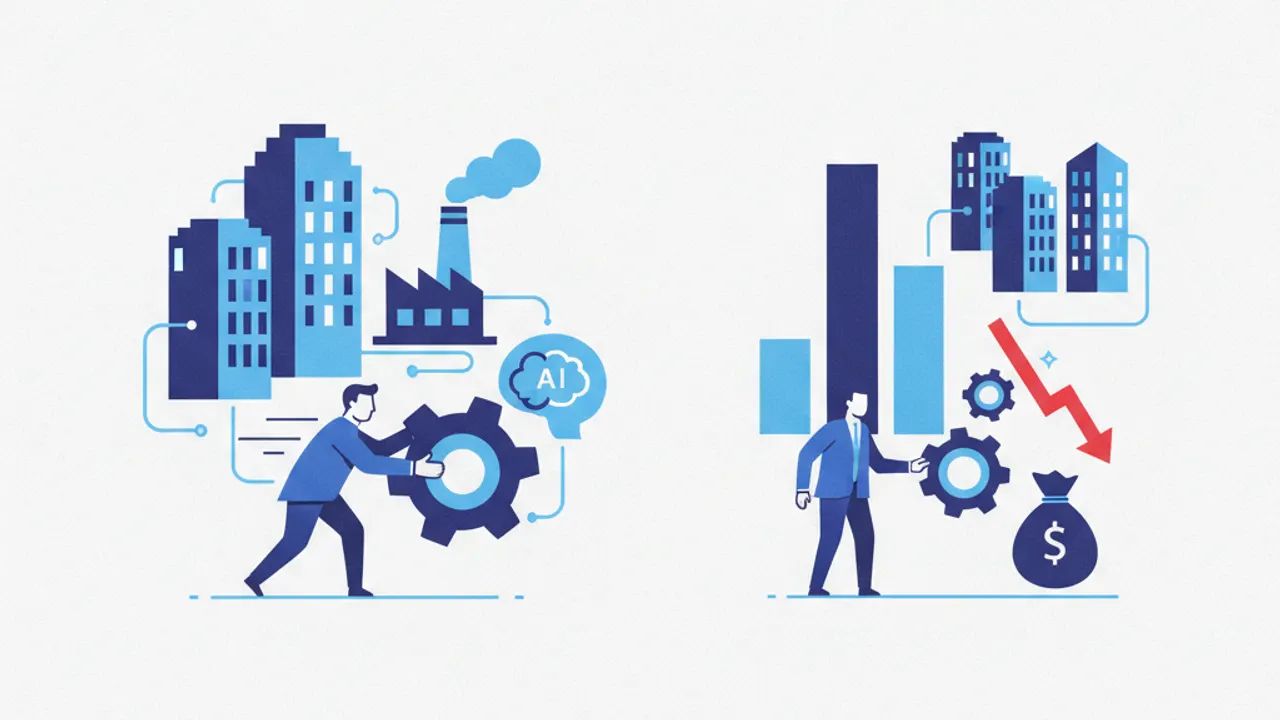
The adoption of generative artificial intelligence across German business has entered a decisive new phase. According to the recent study 'Generative AI in the German Economy 2026', 97 percent of surveyed decision-makers now classify the technology as business-critical for their organizations. By comparison, that figure stood at just 56 percent in 2024. The operational focus has shifted noticeably away from isolated pilot experiments and toward core industrial processes, including complex manufacturing controls and supply chain management.
Despite this widespread strategic adoption, current market realities reveal a distinct productivity paradox. Workplace analyses published alongside executive surveys highlight a pronounced gap between individual employee experiences and corporate financial outcomes. While 80 percent of employees report a noticeable acceleration in completing daily tasks through AI tools, this efficiency gain translates into measurable increases in earnings before interest and taxes (EBIT) at only 37 percent of businesses.
The root causes of this divergence stem largely from organizational inertia and altered work dynamics. Rather than creating measurable operational relief, individual efficiency gains frequently lead to an increased density of project workloads. Employees take on additional tasks in shorter intervals, creating fresh organizational friction along the way. When preliminary work is completed faster, internal workflows often stall at downstream approval stages, departmental handoffs, or manual verification steps, neutralizing the financial benefits.
The survey of 480 business decision-makers indicates that distributing software licenses does not automatically generate commercial returns. Many organizations have neglected to redesign existing workflows around accelerated tempos or to establish clear performance indicators for AI-supported value chains. Without structured workforce transition programs and a thorough re-engineering of internal operations, the software risks turning into an operational overhead cost that amplifies busyness without expanding operating margins.
German companies now face a necessary realignment of their digital transformation strategies. Corporate leadership must pivot from basic software rollouts to a comprehensive overhaul of organizational workflows. Resolving this productivity dilemma requires companies to eliminate internal bottlenecks, redefine responsibilities, and direct freed-up working hours into revenue-generating initiatives, ensuring that individual task acceleration translates into durable bottom-line earnings.