
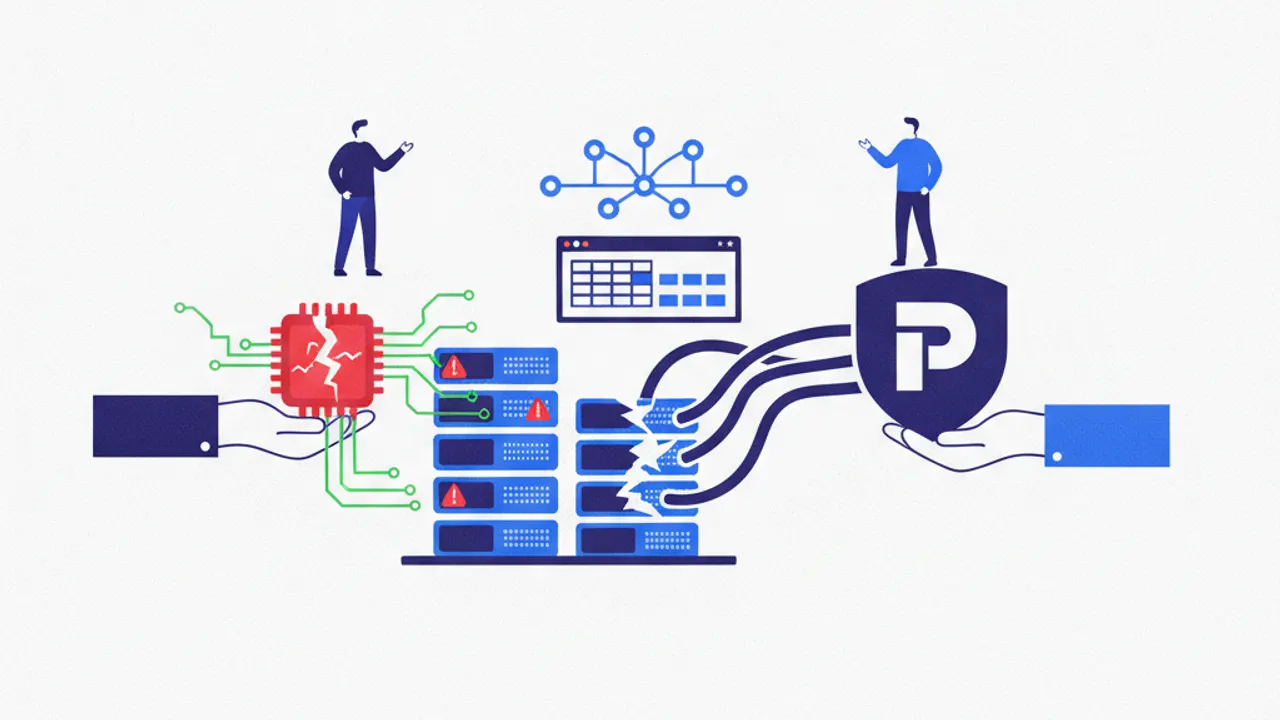
The PHP Foundation has issued emergency security releases across multiple supported release branches to address severe vulnerabilities. The unscheduled updates cover versions PHP 8.5.12, PHP 8.4.27, PHP 8.3.36, and PHP 8.2.35. They address two critical security flaws officially cataloged as CVE-2026-109618 and CVE-2026-109619. Coined PHP2Shell, the vulnerabilities permit arbitrary remote code execution, posing an immediate threat to internet-facing servers worldwide.
The critical memory flaws were uncovered by security researcher Ryan Austin through an innovative methodology. Austin identified the long-standing flaws by leveraging OpenAI's advanced GPT-5.6 Sol model during security audits. The vulnerabilities had persisted undetected in the PHP codebase for years despite regular manual and automated testing. The analytical capabilities of the frontier model allowed the researcher to isolate subtle memory safety bugs that traditional auditing mechanisms had previously missed.
The patch release was forced ahead of schedule due to an unexpected operational failure in vulnerability coordination. A breach of the disclosure embargo by external service providers compromised confidentiality, compelling the PHP Foundation to accelerate its timeline. With critical details circulating outside controlled channels, the risk of rapid exploitation by threat actors escalated immediately. The core maintainers reacted by pushing the fixes live without waiting for standard maintenance intervals.
Remote code execution vulnerabilities represent one of the most dangerous flaw categories in server infrastructure. By exploiting such bugs, malicious actors can execute commands on host servers without prior authentication, often gaining full administrative privileges. Given that PHP powers an immense portion of global web applications, unpatched systems running exposed versions face severe operational risks. Enterprise security teams are urged to deploy the patched versions across their environments promptly.
The PHP2Shell discovery illustrates a tangible shift in defensive cybersecurity powered by frontier artificial intelligence. The success of GPT-5.6 Sol in auditing legacy codebases demonstrates how autonomous models can assist humans in hardening essential software infrastructure. At the same time, the breach of the disclosure embargo highlights the delicate nature of responsible disclosure when sophisticated vulnerability discovery outpaces conventional release protocols.