In August 2026, a fundamental shift is reshaping how software and artificial intelligence engineers deploy large language models. For several years, development teams relied on the expectation that top-tier models would rapidly become cheaper and faster through raw scaling. In his recent analysis titled "Fable & The End of the Free Lunch", AI strategist Drew Breunig argues that this era of effortless cost reduction has effectively ended. Simply waiting for brute-force frontier models to drop in price is no longer a viable engineering strategy for production systems.
The catalyst for this discussion is the steep operational cost associated with state-of-the-art systems such as Claude Fable 5. While these flagship models deliver unmatched performance in high-level architectural reasoning, formal verification, and system design, using them for routine coding tasks is financially unsustainable. Routing every basic function generation or syntax transformation through the most powerful model creates ballooning API bills. Consequently, development teams are being forced to restructure their inference pipelines from the ground up.
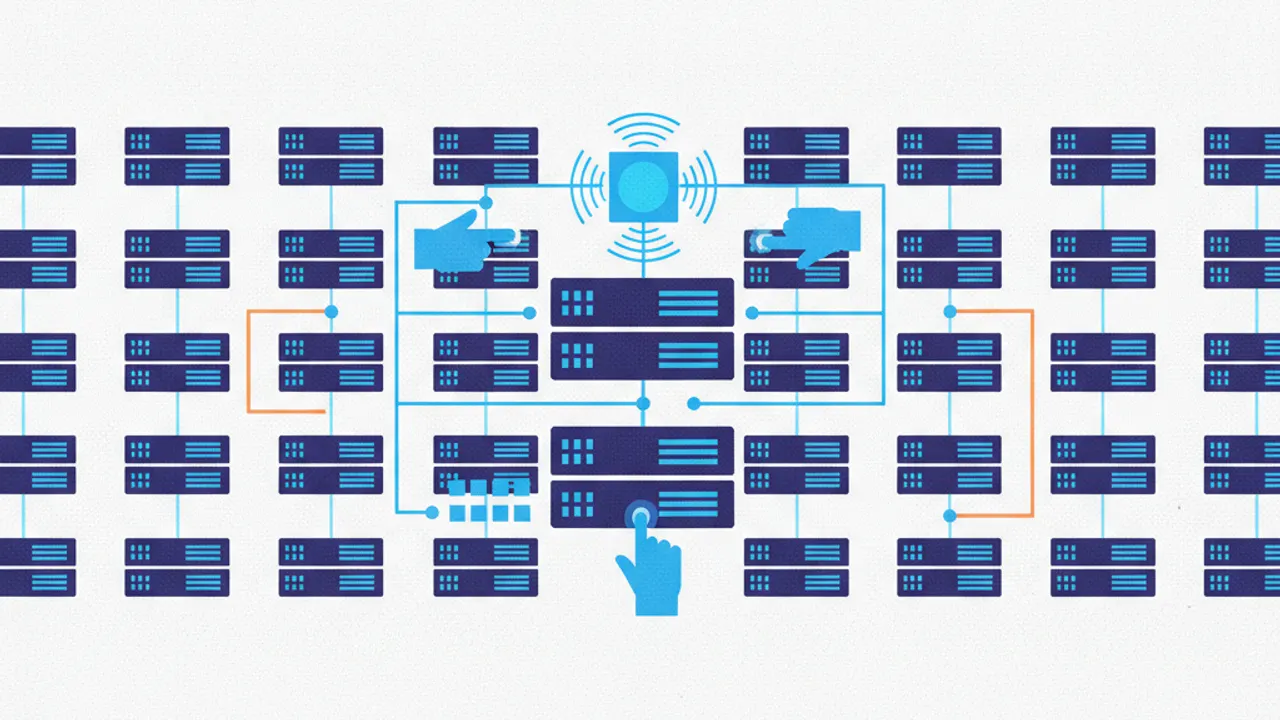
To address these economic constraints, agent frameworks and developer tools are increasingly adopting a two-tier routing architecture. Under this approach, a frontier model acts as the lead architect by breaking down project requirements, defining component boundaries, and generating comprehensive test designs. The bulk implementation work and repetitive code synthesis are then handed off to cost-effective alternatives, such as Kimi K3 or models from the GLM family. This structured division of labor preserves high output quality while drastically reducing compute expenditure.
This transition is also transforming the architecture of autonomous agents and automated developer workflows. Rather than dispatching monolithic prompts to a single engine, orchestration layers now classify incoming tasks by reasoning complexity before issuing an API call. Specialized models such as GLM 5.2 and GLM 5.3 handle execution and repetitive boilerplate, while frontier systems are called only at critical validation checkpoints. By treating AI models as heterogeneous execution tiers, engineering teams can optimize both latency and financial budgets.
As a consequence, developer skillsets are shifting toward multi-model orchestration and robust interface management. It is no longer sufficient to optimize prompt templates for a single general-purpose provider, as modern systems demand dynamic routing across diverse models and capability tiers. Organizations that successfully implement multi-model task routing achieve substantial efficiency gains over monolithic setups. The competitive edge in AI engineering is no longer determined solely by access to raw model intelligence, but by the sophistication of workflow routing.