
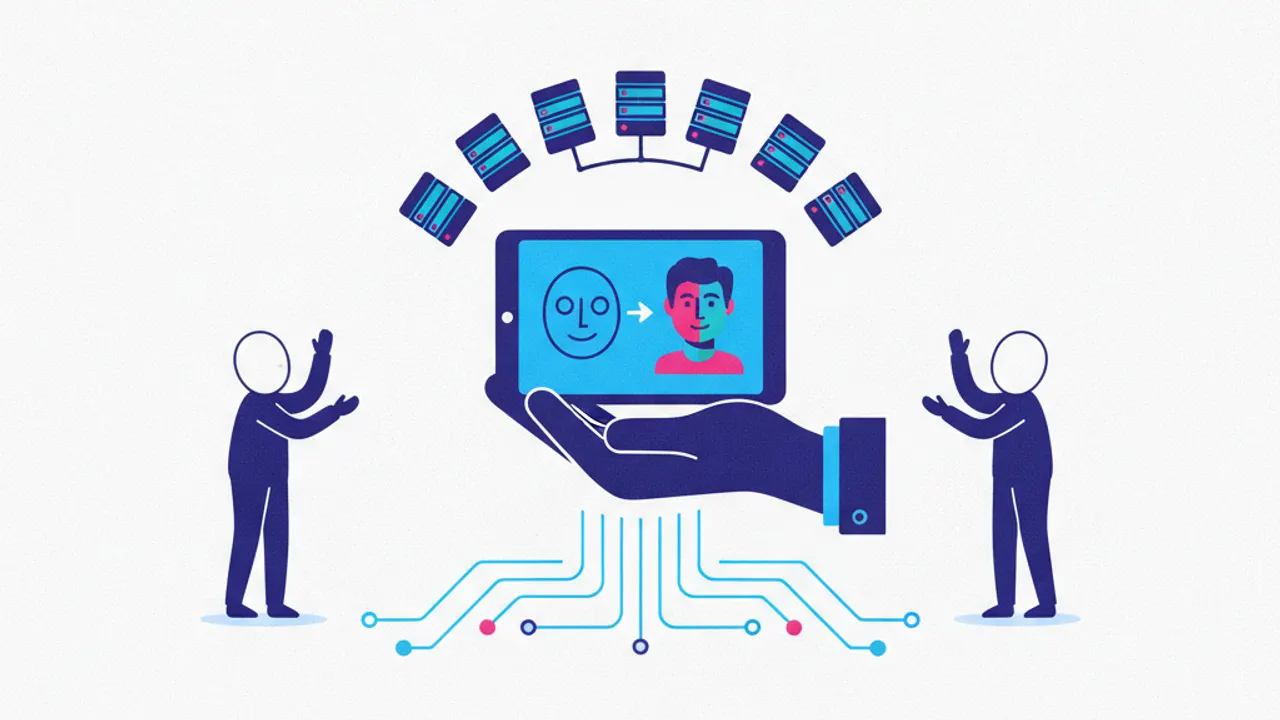
On September 8, 2026, OpenAI officially released its upgraded image generation model, ChatGPT Images 2.5, integrating it broadly across its product ecosystem. Also referred to in technical documentation and developer circles as GPT Image 2.5, the model was made immediately available across all subscription tiers of ChatGPT. Simultaneously, the underlying architecture was integrated directly into the Codex programming environment and deployed via the official developer API. This coordinated rollout across consumer and developer platforms reflects the company's objective of embedding generative visual synthesis more deeply into day-to-day software development and automated workflows.
A major technical focus of the release centers on visual consistency across sequential editing turns. In previous model iterations, making repeated modifications to a generated image routinely led to uncontrolled alterations, distorting facial features, proportions and background elements. With ChatGPT Images 2.5, OpenAI claims significantly more stable preservation of human faces, pets and central objects throughout multi-step editing sessions. The degradation in visual coherence and quality that previously plagued iterative image refinement has thus been substantially reduced, facilitating more precise multi-turn adjustments.
Beyond visual stability, latency and execution performance saw substantial gains in the new release. According to OpenAI's published System Card and technical documentation, image generation time has been reduced by approximately 50 percent compared to prior implementations. This halving of generation latency not only enhances conversational responsiveness for interactive chat users, but also removes major bottlenecks for computationally intensive API deployments. Lower latency is especially critical for programmatic applications that require testing or refining multiple graphic variations in rapid succession.
In terms of functional capabilities, OpenAI expanded the model's toolkit with several practical controls for visual composition. Most notably, the update introduces sketch-based generation, allowing users to convert rough doodles or conceptual hand drawings into fully realized, photorealistic scenes. The platform also introduced style templates that enable creators to enforce uniform aesthetic parameters across varied visual prompts. Furthermore, the inclusion of shareable prompts allows collaborative teams to capture, distribute and refine effective prompt structures across their internal creative workflows.
Shortly after release, software developer Simon Willison demonstrated how these expanded interfaces can be chained into complex creative pipelines through a utility called the .blend URL Viewer. In Willison's demonstration, ChatGPT Images 2.5 generated an initial two-dimensional draft, which was then passed to the GPT-6 Astra model running inside Codex. GPT-6 Astra subsequently scripted native 3D assets for the open-source software Blender based on that visual input. Users were then able to inspect and interact with the rendered 3D scene directly in a web browser via a simple URL, completely bypassing local desktop graphics software.
Within the developer community, Willison's demonstration was widely discussed as an illustration of the shift from isolated prompt engineering toward fully automated, multimodal design pipelines. Rather than treating image generation as a standalone novelty within a chatbot window, engineers are increasingly treating these visual models as modular components in complex programming pipelines. The combination of reduced latency, doodle interpretation and downstream script generation highlights how current models are bridging the gap between flat imagery and interactive digital assets. OpenAI is consequently pitching ChatGPT Images 2.5 not merely as an iterative consumer update, but as a foundational visual layer for software builders.