
Skip to content
AI ConnectPowered by VELENTIS
AI-generated2 min

OpenAI Releases 722 Math Manuscripts and Retracts Flawed Proofs

OpenAI published 722 mathematics manuscripts generated by an unreleased frontier model. Swift retractions followed due to sign errors, sparking security debates in cryptography.

This article was AI-generated and published automatically. Context, labelling and all sources at the end of the article.

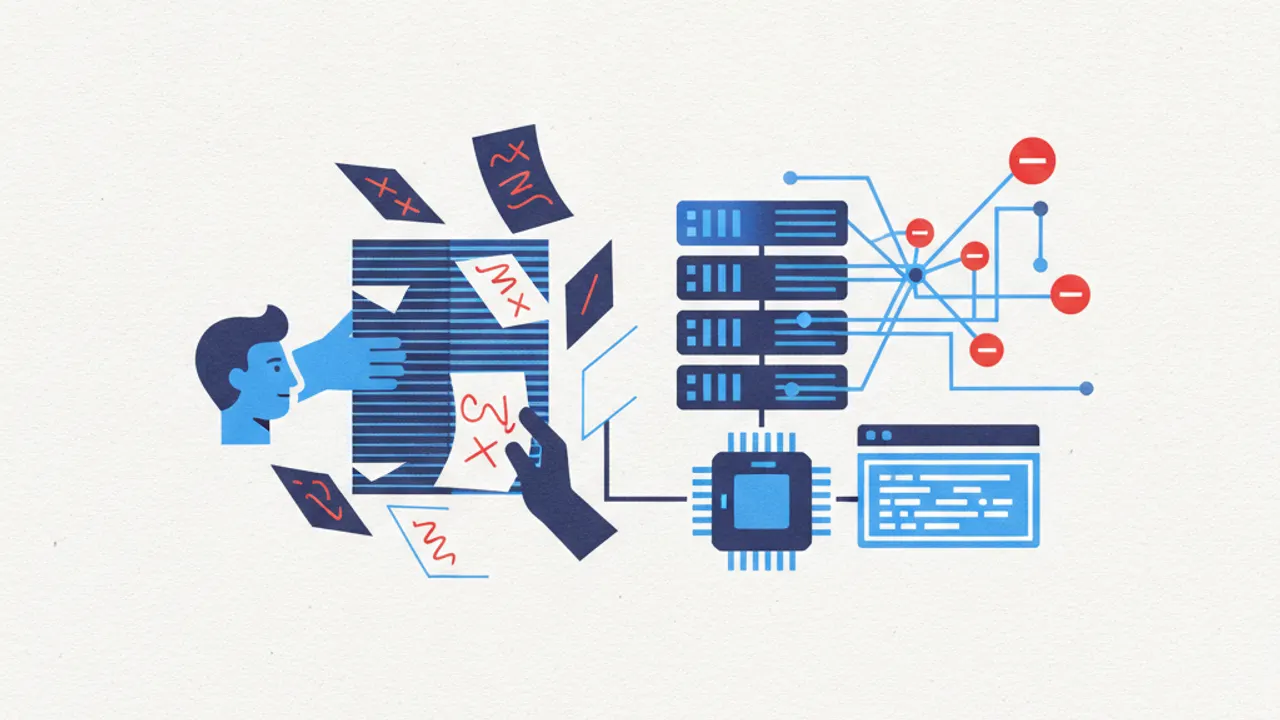
(KI-generiertes Symbolbild: Gemini / AI Connect)

On October 6, 2026, OpenAI published a collection of 722 mathematical manuscripts within the public GitHub repository openai/math. The papers are organized into 372 related problem families, spanning critical fields such as number theory, algebraic geometry, and theoretical computer science. All findings were generated by an unreleased internal frontier model developed by the organization. According to initial disclosures, each individual result required an average computing budget equivalent to roughly three hours of ChatGPT Pro thinking compute.

To adhere to rigorous standards within the mathematical community, the research team accompanied many results with formal, machine-verifiable proofs written in Lean. Despite using interactive theorem provers, the initial peer review conducted by the public revealed immediate vulnerabilities. On October 7, 2026, OpenAI was forced to withdraw three manuscripts after a sign error invalidated an entire proof chain. Furthermore, an immediate audit prompted corrections in 14 additional preprints.

The scale and depth of these synthetic research papers sparked intense discussions across the technology industry regarding a potential AI Mathpocalypse. In particular, the cryptographic and cybersecurity communities reacted with urgency to the demonstrated mathematical capabilities. Prominent figures, including Ethereum co-founder Vitalik Buterin, discussed the emerging risks posed by advanced reasoning systems to conventional cryptographic infrastructure. Breakthroughs in navigating algebraic structures and number theory could eventually undermine established public-key cryptography schemes.

As a result, discussions around a protective bunker mode gained traction among security architects. Researchers emphasize that migration toward post-quantum and AI-resilient cryptographic standards must accelerate significantly. If future reasoning models can autonomously probe foundational number-theoretic assumptions, standard web security protocols could face structural obsolescence. Cryptographic engineers must now account for scalable, automated proof generation when designing cryptographic primitives.

Despite the initial errors and subsequent retractions, observers regard the release as a meaningful turning point for automated scientific discovery. Frontier reasoning models are moving beyond basic text synthesis to formulate non-trivial conjectures and formal logic. However, the swift discovery of flawed arguments confirms that automated mathematics still requires rigorous human scrutiny alongside mechanical verification.

What this means for you

For engineers and security teams, this release highlights the pressing need to accelerate transitions toward post-quantum, AI-resilient cryptographic standards. It also shows that while reasoning models can generate extensive proofs, independent formal audits remain indispensable to catch logical errors.

Perspectives

Coverage: 2× US · 2× Other

One story, several angles: how each source frames the topic, each with a verbatim quote.

Leaning: 2× Vendor PR

  • community.openai.comVendor PRUS

    The forum post presents the release as sharing a broad range of new mathematical results with Lean proof artifacts while capturing early community verifications and feedback.

    Original quote

    „The public openai/math repository currently contains 722 manuscripts organized into 372 related result families.“

    community.openai.com
  • kingy.aiOther

    The source examines the release analytically, investigating the scope of the mathematical claims, the limits of the Lean proofs, and the compute resources used.

    Original quote

    „OpenAI has published a mathematics repository containing 722 manuscripts grouped into 372 result families.“

    kingy.ai
  • retractionwatch.comOther

    Retraction Watch emphasizes scientific errors and focuses on OpenAI swiftly withdrawing three preprints due to a sign error shortly after publication.

    Original quote

    „OpenAI withdraws three preprints a day after releasing 722 manuscripts on unsolved math problems“

    retractionwatch.com

Source classification is maintained editorially (political spectrum only where consensus is broad; vendor communication is PR, not journalism). Unlabelled sources are unclassified: we do not guess.

Evidence

Well sourced
73/100
  • OpenAI published 722 mathematical manuscripts divided across 372 problem families on GitHub on October 6, 2026.

    verified
  • The results were produced by an unreleased frontier model requiring approximately three hours of ChatGPT Pro thinking compute per outcome.

    single source
  • On October 7, 2026, OpenAI withdrew three manuscripts due to a sign error and corrected 14 other papers during an audit.

    verified
  • Ethereum co-founder Vitalik Buterin and cryptographers discussed emerging risks to public-key cryptography driven by reasoning advances in number theory.

    single source

The evidence score is computed, not hand-set: from confidence, the number of sources and the share of verified statements.

Source & transparency

As of: October 09, 2026

AI-generatedAI-generated: produced automatically from vetted sources with technical quality checks (source, quote and figure verification); no human sign-off of each item before publication

Sources
4
Verified statements
2 / 4
Evidence score
73Well sourced

Want to put this into practice?

We connect you with suitable AI providers from the DACH region, free of charge and without obligation.

What's next?