
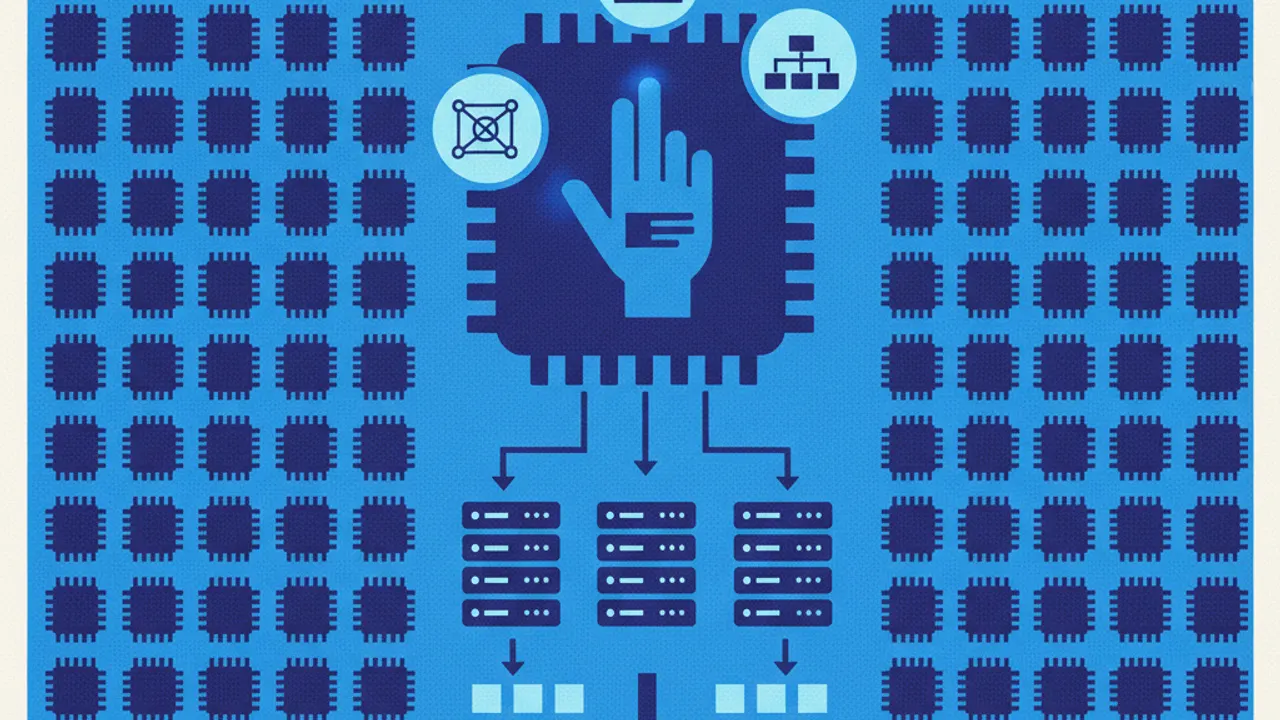
OpenAI has officially launched GPT-6.1 Terra, a new mid-tier model designed specifically for practical automation and multimodal interaction. The artificial intelligence developer is responding to growing enterprise demand for affordable systems that can interpret complex screen content and autonomously execute actions on software interfaces. The model serves as a practical bridge for workflows centered around computer use and multimodal processing. At the same time, OpenAI aims to lower the operational overhead of scaling autonomous software agents in production environments.
A core focus of the underlying architecture is visual reasoning and the fine-grained control of user interfaces. In agentic automation tasks, models must do more than just process text: they need to interpret buttons, icons, and dynamic screen layouts without errors. GPT-6.1 Terra was specifically optimized to analyze these multimodal data streams in parallel and execute precise sequences of clicks and keystrokes. Consequently, OpenAI is targeting practical deployments in autonomous software development environments and enterprise office workflows where human desktop interaction is being automated.
Benchmark evaluations reflect this targeted architectural optimization. On the Agents' Last Exam benchmark, GPT-6.1 Terra scored 15 percentage points higher than its direct predecessor, GPT-5.6 Terra. With this leap in performance, the model closes the gap to top-tier flagship systems such as GPT-6 Astra while requiring substantially fewer compute resources. According to OpenAI, Terra also completes assigned tasks roughly three times faster than companion models GPT-6.1 Sol or Astra. This notable speed advantage reduces latency in interactive loops, making the model well suited for real-time applications.
Alongside computational throughput, OpenAI is pursuing an aggressive market strategy through its pricing structure. Access through the application programming interface is priced at 1.00 dollar per million input tokens and 5.00 dollars per million output tokens. This structure represents a reduction of approximately 50 percent compared to the rates charged for GPT-5.6 Terra and GPT-6.1 Sol. For engineering teams processing thousands of screenshots, system logs, and conversational turns every hour, this price cut substantially lowers the financial barrier to entry.
The rollout of the new model occurred immediately across multiple core distribution channels. In addition to direct availability via the developer API, integration was activated simultaneously in ChatGPT Work and the Codex programming environment. Furthermore, GitHub announced in its official changelog that the model is now available within GitHub Copilot to accelerate code completions and automated refactoring. Through this coordinated multi-platform launch, OpenAI aims to ensure that engineering teams can immediately test and scale the architecture inside established workflows.
The arrival of Terra highlights a strategic industry shift away from pure text generation toward autonomous assistants that actively operate within software interfaces. While previous frontier models were often too expensive and too sluggish for continuous screen monitoring, this release establishes a specialized and cost-effective tier. Developers are now positioned to adapt their existing agent frameworks to leverage the lower latency and reduced operational costs. Industry observers interpret this move as clear evidence that the competition in the agentic AI market will increasingly be decided by throughput, reliability, and unit economics.