
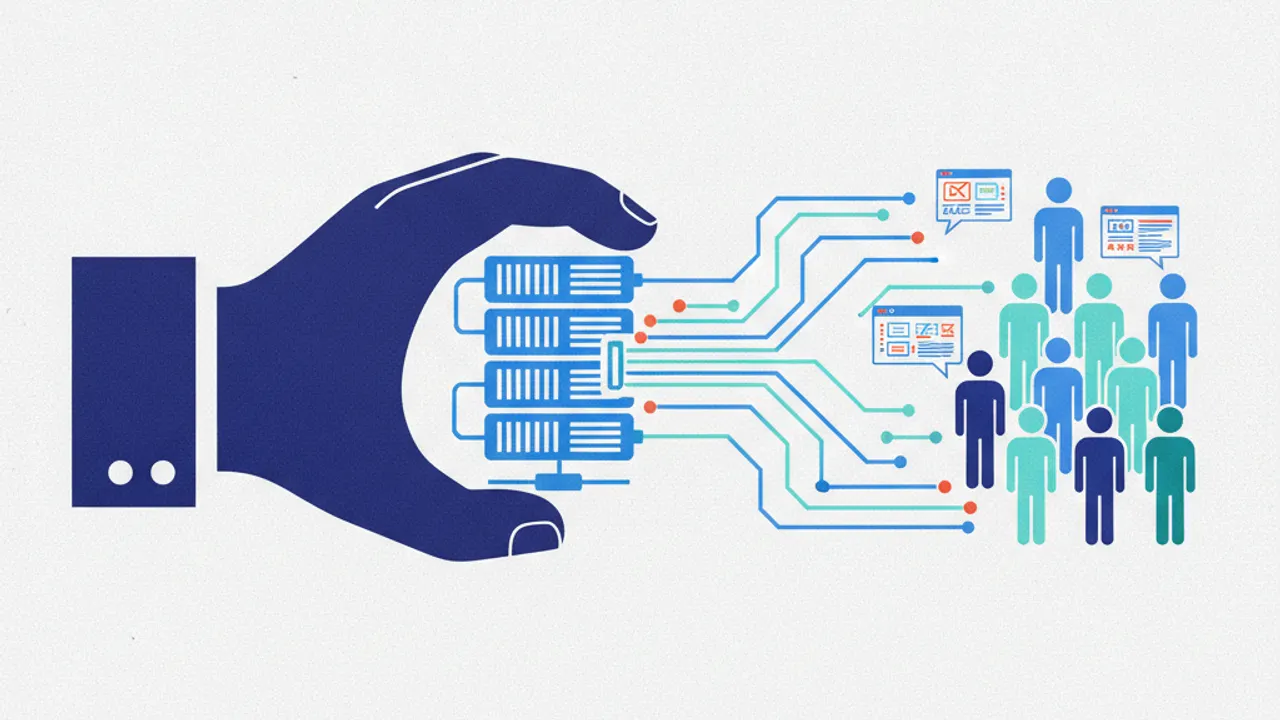
Nvidia has officially confirmed the acquisition of Hugging Face for approximately 13 billion dollars, finalizing one of the largest transactions in the artificial intelligence sector. With this move, the premier platform for open-source models, datasets, and developer collaboration moves directly under the corporate umbrella of the leading semiconductor manufacturer. For Nvidia, the purchase represents a major strategic expansion far beyond its traditional hardware business. The official confirmation ends weeks of industry speculation and signals an accelerating wave of vertical integration across the tech landscape.
Through this acquisition, Nvidia now commands key layers of the global AI value chain. The company not only provides the graphics processing units and compute capacity required to train and run cutting-edge models, but it also controls the primary distribution hub for open weights. Engineers, researchers, and enterprises worldwide rely on Hugging Face to evaluate, benchmark, and deploy machine learning architectures into production. Uniting a hardware monopoly with the dominant software repository grants Nvidia unprecedented leverage across the developer ecosystem.
The multi-billion-dollar deal has sparked intense debate and deep concern within the open-source community. Many researchers are questioning how independent open model weights and community leaderboards will remain under the direction of a commercial hardware giant. Hugging Face has historically served as a neutral ground where models from competing organizations could be evaluated transparently on equal footing. Concerns are now mounting that future benchmark rankings or repository features could subtly favor Nvidia-optimized frameworks or proprietary runtimes.
This consolidation also mirrors a broader reallocation of capital across the AI landscape toward core infrastructure and physical bottlenecks. While purely software-focused startups face tighter budgets, massive funding rounds continue to flow into compute and energy providers. The data center infrastructure firm Crusoe recently closed a funding round exceeding 3 billion dollars at a 30-billion-dollar valuation. Crusoe operates critical clusters for hyperscalers such as Microsoft, OpenAI, and Meta, underscoring how power grids, electrical substations, and compute hubs have become decisive choke points.
At the same time, enterprise adoption data illustrates a stark concentration of spending across the corporate market. Recent financial analyses reveal an extreme power-law distribution, in which roughly 80 percent of global enterprise AI spending is driven by only 1 percent of companies. While the vast majority of organizations remain in exploratory pilot phases, a small cohort of corporate heavyweights is generating the bulk of inference volume. By securing both the computing hardware and the central model repository, Nvidia positions itself as the tollkeeper for these enterprise budgets.
The urgency surrounding platform independence is further amplified by rapid model releases such as Meta's MuseSpark 1.3, unveiled on September 3, 2026. MuseSpark 1.3 was engineered specifically for long-horizon agentic workflows and multi-step programming tasks. The model features proactive error correction, pausing to query users or revise plans rather than hallucinating when code obstacles arise, positioning it as an open-code rival to Claude Fable and GPT-5.6 Sol. The ability to freely host, evaluate, and deploy such advanced open architectures without hardware bias will be essential for the next generation of autonomous systems.