
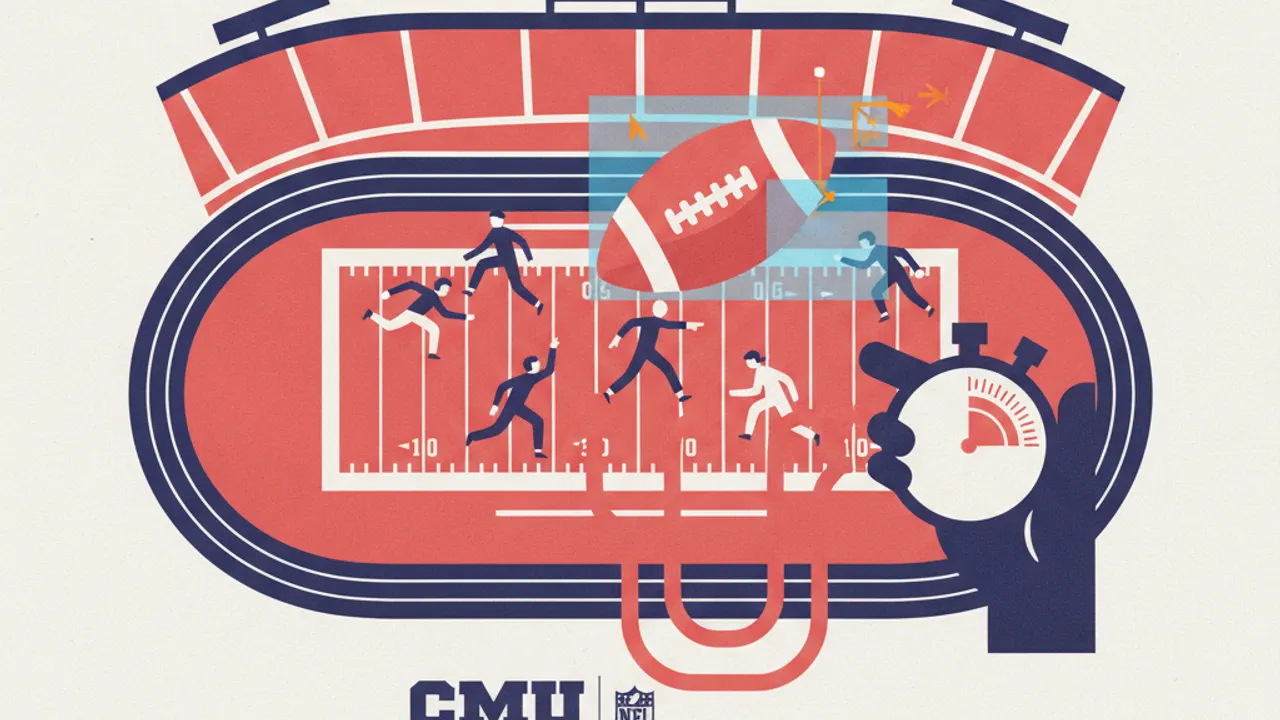
The National Football League is expanding its technical investments into tactical preparation through an academic partnership. On November 5, 2026, the league granted researchers at Carnegie Mellon University access to its official video repositories and player sensor metrics. The project is designed to help artificial intelligence models understand the mechanics and strategic subtleties of American football plays.
The academic effort is led by Professor Chenyan Xiong from the Language Technologies Institute alongside Ron Yurko, director of the Carnegie Mellon University Sports Analytics Center. By feeding deep learning models granular positional and tracking information, the research team aims to replicate how veteran coaches interpret movement patterns, formations, and pre-snap indicators on the field.
A primary operational objective is the full automation of video tagging. In modern professional football, coaching staffs and video coordinators spend long hours labeling game clips, cataloging coverage schemes, and preparing cutups for weekly film review. The system under development uses sensor feeds and video processing to categorize these actions automatically, reducing labor-intensive manual overhead.
Beyond routine classification, the initiative focuses heavily on predictive analytics and decision support. The models are being built to anticipate upcoming plays based on pre-snap alignment and down-and-distance metrics. Furthermore, the software aims to simulate alternate outcomes, giving coaching personnel mathematical estimates on how minor tactical adjustments might change the result of a drive.
This collaborative effort reflects a broader shift across elite athletic organizations toward integrating advanced machine learning into operational workflows. Rather than treating artificial intelligence merely as a marketing feature, top sports leagues are turning to university labs to solve structural bottlenecks in tactical preparation and game management.