
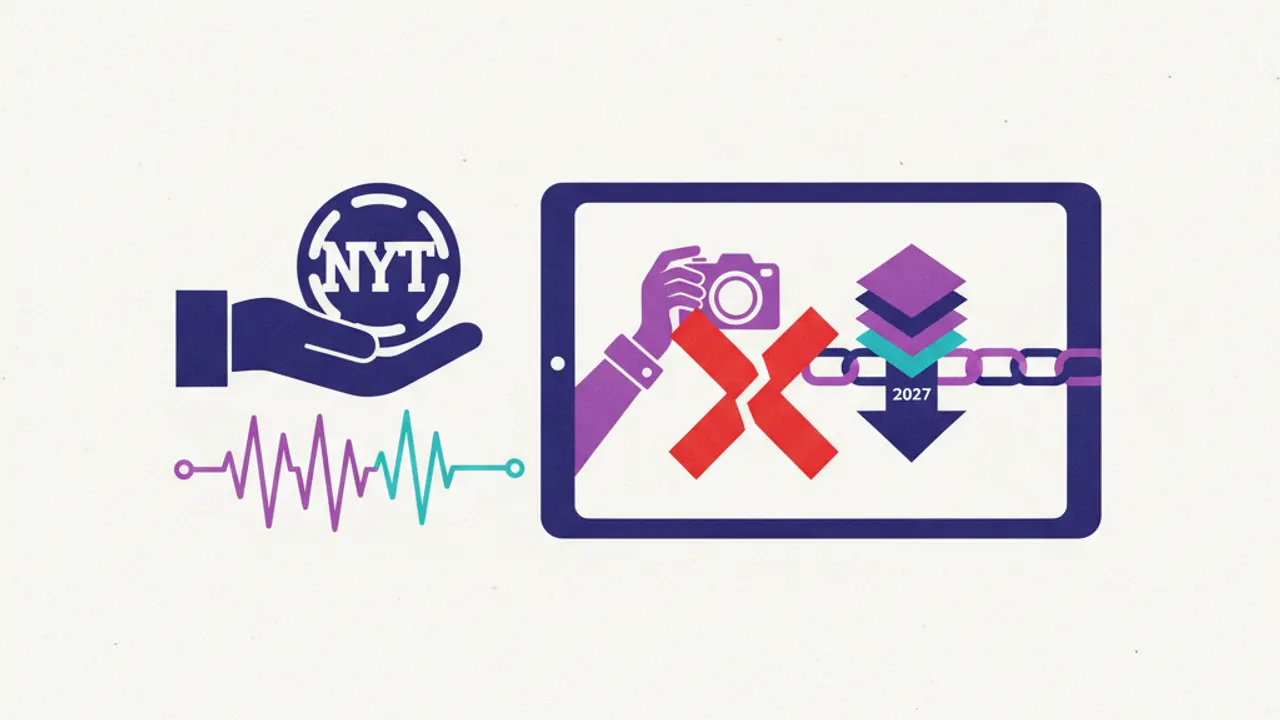
The photography leadership at The New York Times has issued a strict internal directive prohibiting freelance photojournalists from using the latest version of Adobe Photoshop. Sent on 24 November 2026, the guidance was authored by Meaghan Looram and Josh Haner, who oversee visual journalism at the prominent newspaper. The ban specifically targets Adobe Photoshop 2027, covering version 28.0.0 alongside all subsequent updates. Editorial directors made this decision after determining that newly integrated automated features pose a severe threat to documentary credibility. The publication insists that the authenticity of journalistic imagery must not be compromised by opaque software mechanisms.
At the heart of the dispute is the deeply embedded AI Assisted Editor introduced in Photoshop 2027. Adobe integrated an array of generative capabilities directly into core editing workflows, including Generative Remove, intelligent relighting, and AI-powered recomposition tools. Many of these functions draw on generative models in the background without giving users clear, real-time feedback on every underlying operation. Even standard maintenance tasks such as cloning out camera sensor dust or removing lens spots can trigger generative synthesis rather than classic pixel sampling. Consequently, photographers can no longer easily determine whether an adjustment was performed using traditional retouching or synthetic generation.
The conflict intensifies upon exporting the file, when automated cryptographic provenance records are written into the image. Photoshop 2027 routinely attaches C2PA metadata, known commercially as Content Credentials, directly to exported files. If any background generative feature was activated during editing, the software writes a tag indicating that the image was created or altered using generative artificial intelligence. Current provenance implementations do not make fine-grained distinctions between technical dust spotting and substantive scene manipulation. Once embedded, the metadata permanently labels the file as computationally altered.
This automatic labeling triggers severe professional and editorial repercussions for documentary photojournalists. Stringent ethical standards at The New York Times strictly forbid digital manipulations that alter the factual content of news photographs. Furthermore, major social media platforms and distribution channels now scan C2PA signatures, flagging tagged images or suppressing their reach algorithmically. Freelancers who unwittingly deliver flagged photographs risk severe reputational damage, contract cancellations, and accusations of journalistic misconduct. The integrity of the newsroom relies on an unbroken chain of trust that automated metadata flags can unintentionally break.
Consequently, the editorial guidelines require all freelance contributors to remain on earlier releases in the Photoshop 27.x family. The New York Times indicated that this restriction will remain in place until Adobe provides a dependable, fully transparent kill-switch for all generative functionality. Editorial leaders are demanding a verified mode that completely disables generative subroutines and guarantees that export files carry clean, traditional metadata records. Until the software vendor offers these explicit controls, news organizations are forced to halt software updates. The standoff highlights a broadening tension between generative software features and the strict compliance demands of independent journalism.