
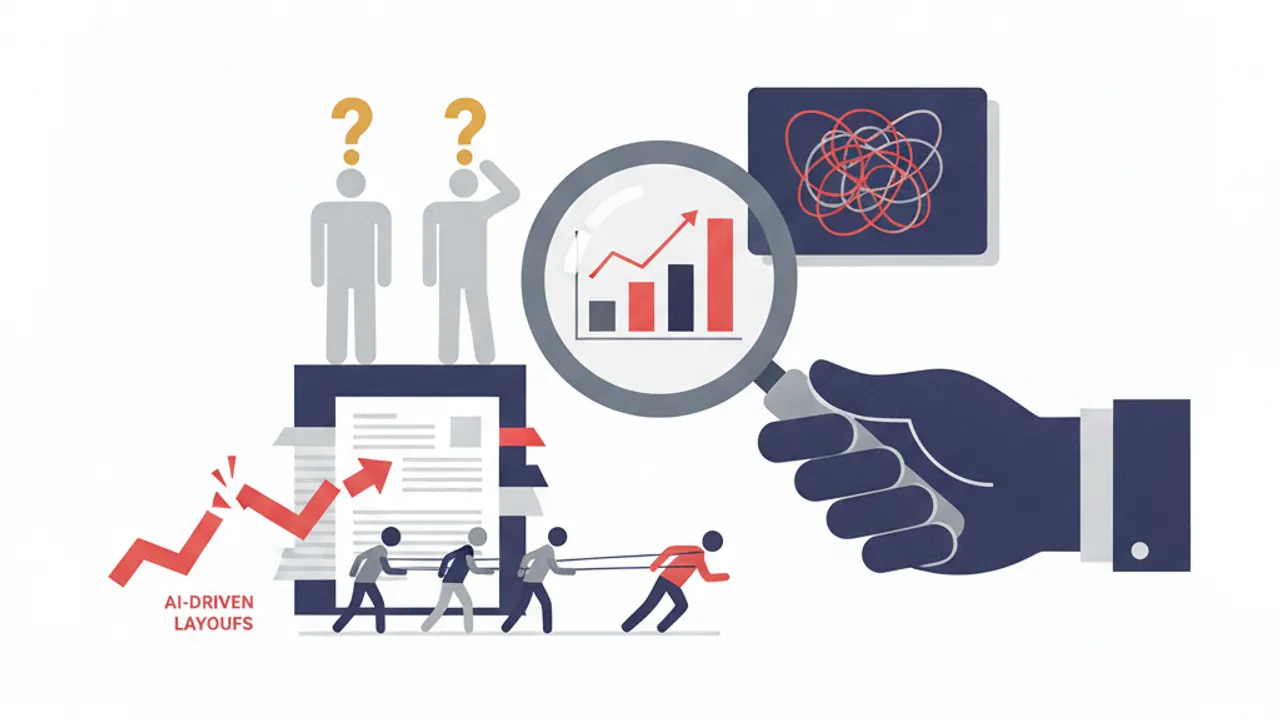
Many corporate leaders appear to have drastically overestimated how easily human labor can be replaced by artificial intelligence. According to a recent study by talent assessment firm SHL, reported by Fortune, businesses in the United States and the United Kingdom are now confronting an AI rebounding effect. Nearly a fifth of surveyed US professionals, precisely 19.1 percent whose jobs were eliminated in AI automation efforts, reported being approached by former employers to return. Across both surveyed markets combined, that rehiring inquiry rate stood at 16 percent.
The underlying cause of this corporate reversal stems directly from the practical limitations of automated workflows. Organizations quickly discovered that without the implicit domain expertise and contextual judgment of veteran staff, AI tools produced flawed outputs and stalled business processes. Companies had rushed into automation before thoroughly evaluating whether the systems were truly suited for nuanced operational demands. Crucial institutional knowledge accumulated over years proved impossible to replicate through generative prompts alone.
This miscalculation is proving costly for employers, as returning specialists negotiate from an unprecedented position of leverage. According to the SHL findings, 51 percent of contacted workers demanded a significant salary hike before agreeing to step back into their former roles. Furthermore, 42 percent required written job security guarantees against future rounds of cuts, while 40 percent insisted on contractual clarity defining the exact operational scope of AI in their daily responsibilities.
These operational stumbles reflect a broader deficit in executive oversight, as highlighted by a study from the Deloitte Global Boardroom Program released on November 10, 2026. Surveying 806 board members, directors, and C-suite leaders across 53 countries, Deloitte uncovered a striking strategic void at the highest corporate tiers. Just 16 percent of surveyed organizations possess an established strategy to govern how technological transformations impact their workforce. A notable 49 percent of respondents admitted that human capital considerations are not consistently addressed when boards evaluate technology investments.
Financial oversight presents an equally troubling blind spot. Deloitte revealed that 49 percent of board members lack clarity on how budgets are allocated between core IT infrastructure and employee enablement programs, with only 12 percent maintaining full visibility over these expenditures. Crucially, 62 percent of board executives identified their own lack of AI knowledge and practical experience as the single largest barrier to effective governance.
Taken together, the two studies present a sobering portrait of modern enterprise automation. In chasing rapid cost reductions, corporate leadership overlooked the critical human baseline needed to validate and guide algorithmic outputs. The resulting wave of rehiring demonstrates that AI adoption without robust workforce enablement and competent board oversight leads to costly friction rather than productivity gains. Moving forward, executive boards will need to dismantle internal silos and treat workforce readiness as an inseparable component of any technology roadmap.