
Following the conclusion of the first season featuring the league-wide rollout of the Automated Ball-Strike Challenge System, known as ABS, comprehensive statistical performance data has officially been unveiled. Developed to evaluate disputed calls at home plate objectively and instantaneously, the computer-vision and trajectory analysis infrastructure underwent its first full-scale competitive test. The findings released on November 8, 2026, provide detailed insight into umpire accuracy at the plate and highlight the operational adoption of automated decision systems in North America's premier baseball league.
At the core of the technical architecture sits a Hawk-Eye camera array that traces the trajectory of every thrown baseball in real time, projecting its path against a customized three-dimensional strike zone. Under the established rules, pitchers, catchers, and batters are each granted two challenges per contest, which they can initiate immediately following a call by tapping their helmet or pressing a designated dugout button. When an appeal proves successful, the team retains its review quota, whereas an unsuccessful challenge results in the loss of that challenge opportunity.
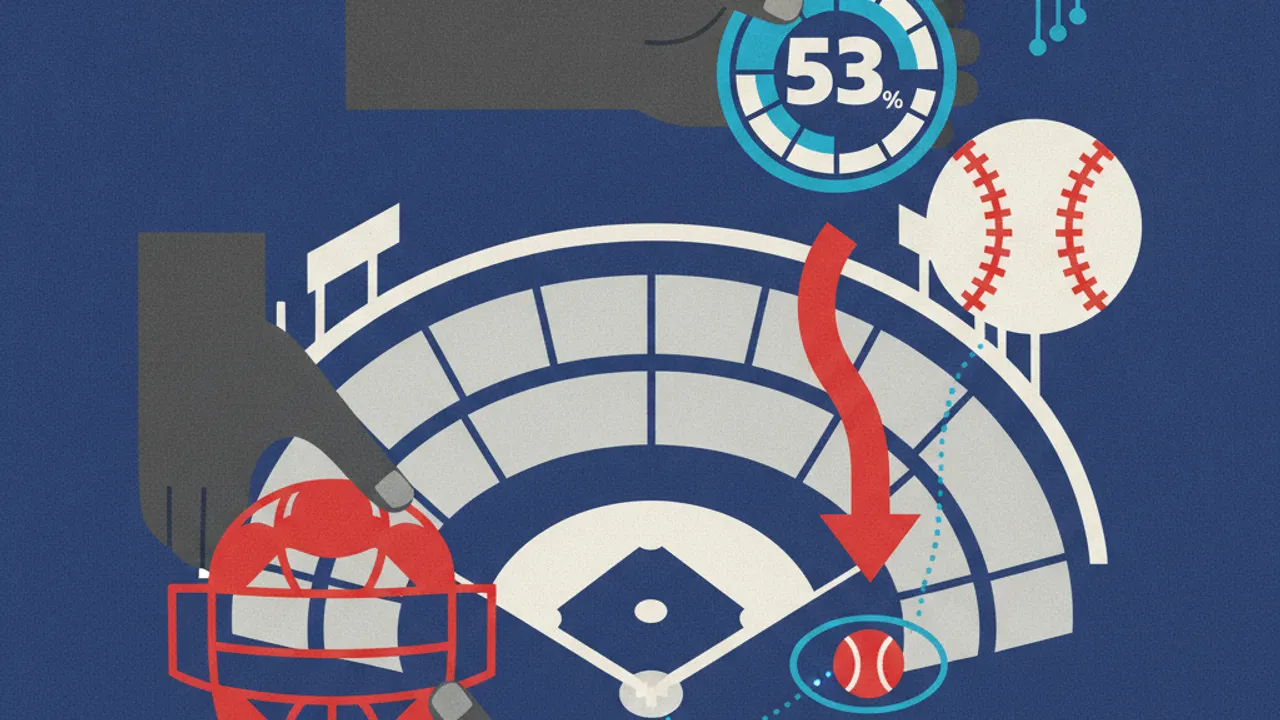
The defining statistical takeaway from the inaugural season is the high success rate achieved by participating players. In more than 53 percent of all initiated challenges, the algorithmic tracking system overruled the initial judgment made by the home plate umpire. This figure illustrates that competitors deployed their appeals with high tactical selectivity, focusing predominantly on marginal calls. The data revealed that human judgment was most vulnerable at the lower boundary of the strike zone, where the largest proportion of corrected pitches occurred.
A prominent critique directed at historical video replay implementations across professional sports has been the inevitable disruption of match flow. However, the ABS framework successfully dispelled these concerns during its initial regular-season campaign. The average duration between the trigger of a challenge and the visual rendering of the trajectory on stadium video boards remained under four seconds. This rapid rendering virtually eliminated downtime, preserving the rhythm of the game for spectators in attendance and television audiences alike.
The publication of these metrics coincides with broader scholarly examinations of algorithmic referee support across elite athletics. A systematic meta-analysis published on October 31, 2026, in the field of sports informatics highlighted how major leagues are fundamentally restructuring officiating protocols. The analytical paradigm is shifting away from lengthy post-event reviews toward proactive referee decision support systems designed to alleviate cognitive overload and resolve obscured sightlines in real time.
For Major League Baseball, the implementation represents one of the most substantial technological and competitive shifts in modern sports administration. Initial anxieties regarding the erosion of traditional human officiating have largely given way to institutional confidence in quantitative verification. By pairing a high correction frequency with near-zero latency and immediate stadium transparency, the ABS challenge model establishes an influential precedent that other global sports governing bodies will likely study.