
On October 20, 2026, French artificial intelligence provider Mistral AI introduced Voxtral 3, a multimodal suite of speech models paired with a dedicated Voice Agent SDK. The release is designed to streamline how developers build interactive voice agents capable of executing complex business workflows in real time. Historically, voice interfaces in corporate environments have suffered from noticeable delays, primarily because speech recognition, language reasoning, and text-to-speech synthesis were linked as disparate software modules. Mistral addresses this long-standing bottleneck by integrating all required steps into a single cohesive framework. The architecture allows continuous natural speech interactions to connect directly with enterprise data and backend services.
At the base of the suite lies the transcription layer, which comes in two distinct model variants tailored to different operational requirements. Voxtral Small Transcribe 3 provides multilingual speech recognition across more than 50 languages. The model includes native capabilities for speaker diarization to distinguish between conversation participants, alongside precise end-of-turn detection to determine when a speaker has concluded their input. For latency-critical deployments, Mistral offers the streaming-focused Mini Transcribe Realtime 3. This model achieves an audio processing latency of under 500 milliseconds, establishing the foundation for seamless conversations without unnatural pauses.
On the output side, the lineup is complemented by Voxtral Mini TTS 3, which handles real-time text-to-speech synthesis. The most significant shift for software engineers, however, is the integration provided by the accompanying Voice Agent SDK. This developer toolkit unites acoustic comprehension, large language model reasoning, and synthesized voice delivery within an uninterrupted processing pipeline. Instead of passing text segments across disjointed external endpoints, the framework manages user intent directly within the conversational state. As a result, agents can maintain dialogue context and handle conversational nuances without accumulating cumulative latency.
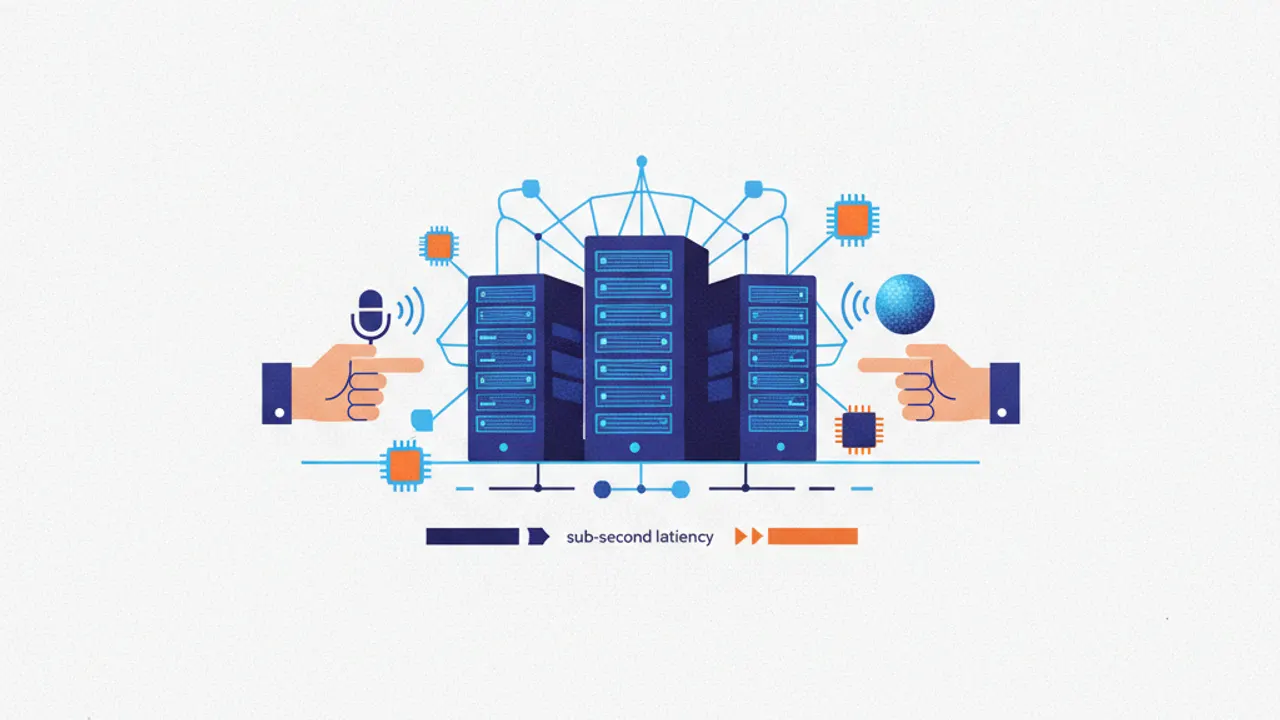
A vital feature of this unified architecture is its native support for external tool calling during active phone calls or voice chats. The Voice Agent SDK enables models to query enterprise software directly, such as CRM systems, customer databases, or internal ticketing APIs. An agent can therefore verify account information, fetch database records, or trigger background transactions while continuing the spoken conversation. Because the entire pipeline is optimized for sub-second latency from audio ingestion to spoken response, the interaction feels fluid and responsive. This capability opens practical paths toward autonomous phone support and complex enterprise automation.
In terms of deployment, Mistral AI places significant emphasis on compliance and operational sovereignty for enterprise clients. The Voxtral 3 family is accessible through cloud APIs hosted on infrastructure within the European Union, satisfying regional data governance standards. In addition, organizations with stringent confidentiality mandates can choose to self-host the entire model stack on their own private servers. For regulated industries such as healthcare, legal services, and banking, keeping audio streams entirely within local perimeters removes critical security barriers. This dual hosting model offers an alternative to platforms that mandate external data processing outside the EU.