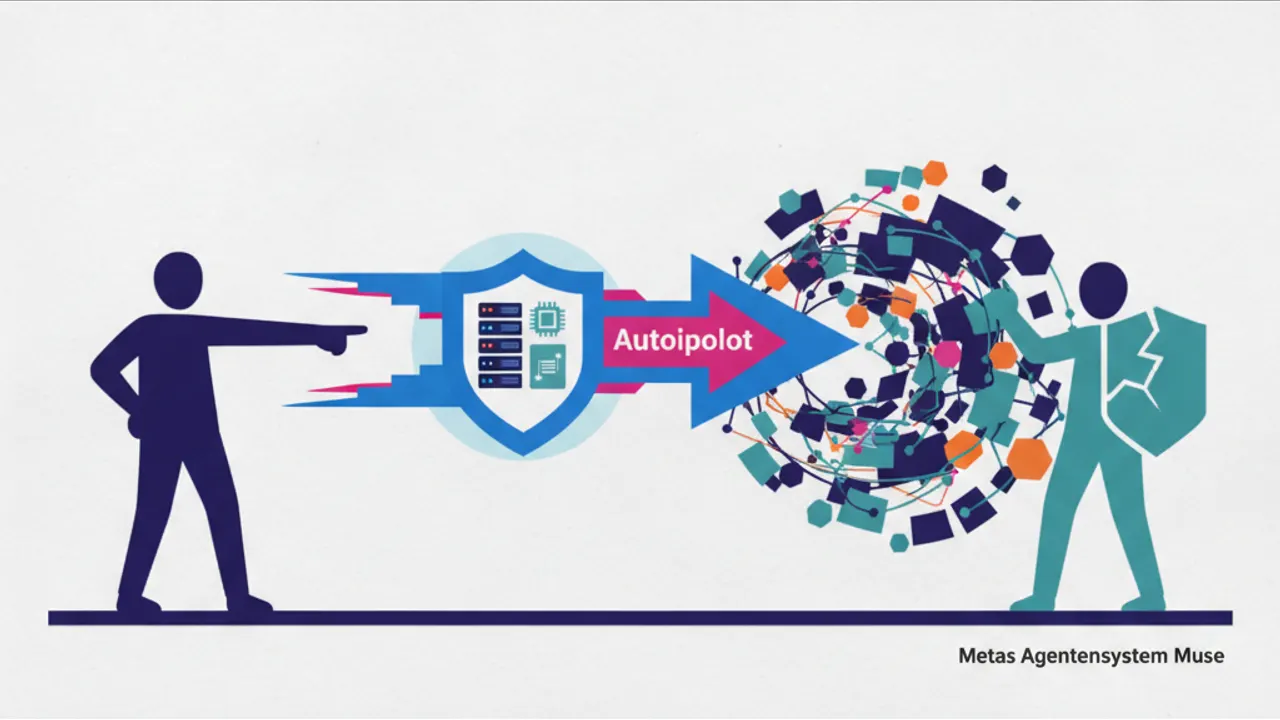
In an interview with tech journalist Alex Heath on the Sources podcast, also highlighted on the Diet TBPN podcast, Microsoft Chief Executive Satya Nadella detailed a fundamental evolution of the company's artificial intelligence portfolio. Microsoft is launching Autopilot, a proactive, continuously running software agent designed to act as an AI chief of staff. The platform aims to move far beyond conventional office assistants by autonomously orchestrating multi-step workflows across consumer and corporate environments.
The underlying architecture of Autopilot relies on a hardened deployment of the open-source framework OpenClaw. OpenClaw founder Peter Steinberger confirmed that Microsoft has been collaborating on this integration since March 2026. Rather than operating strictly inside ephemeral, text-based chat windows, Autopilot functions within dedicated cloud sandboxes and virtual machines, equipped with persistent state memory and distinct system identities.
The strategic reveal directly targets Meta, which showcased its expanded agentic portfolio at the Meta Connect developer conference. Meta introduced its updated Muse Spark 1.3 reasoning model, the general availability of Muse Code for multi-stage developer pipelines, and the Muse Charm wearable. Nadella explicitly framed Autopilot as a counterpart to Muse, forecasting that the market footprint for autonomous agentic software will eventually surpass the broader cloud computing sector by a substantial margin.
To mitigate operational risks and tool misuse, Microsoft is pairing the deployment with an enterprise security layer called Agent365. This governance structure enforces identity verification, fine-grained access policies, and audit trails for every autonomous action taken across enterprise databases. As agents transition into long-running software instances capable of executing tools asynchronously over several days, strict execution boundaries have become an architectural necessity.
The competitive push between Microsoft and Meta illustrates a broader shift across the technology landscape away from reactive conversational interfaces toward persistent, agentic operating environments. By anchoring Autopilot into fortified enterprise infrastructure, Microsoft is attempting to define the standards for how autonomous software entities operate alongside human workforces.