
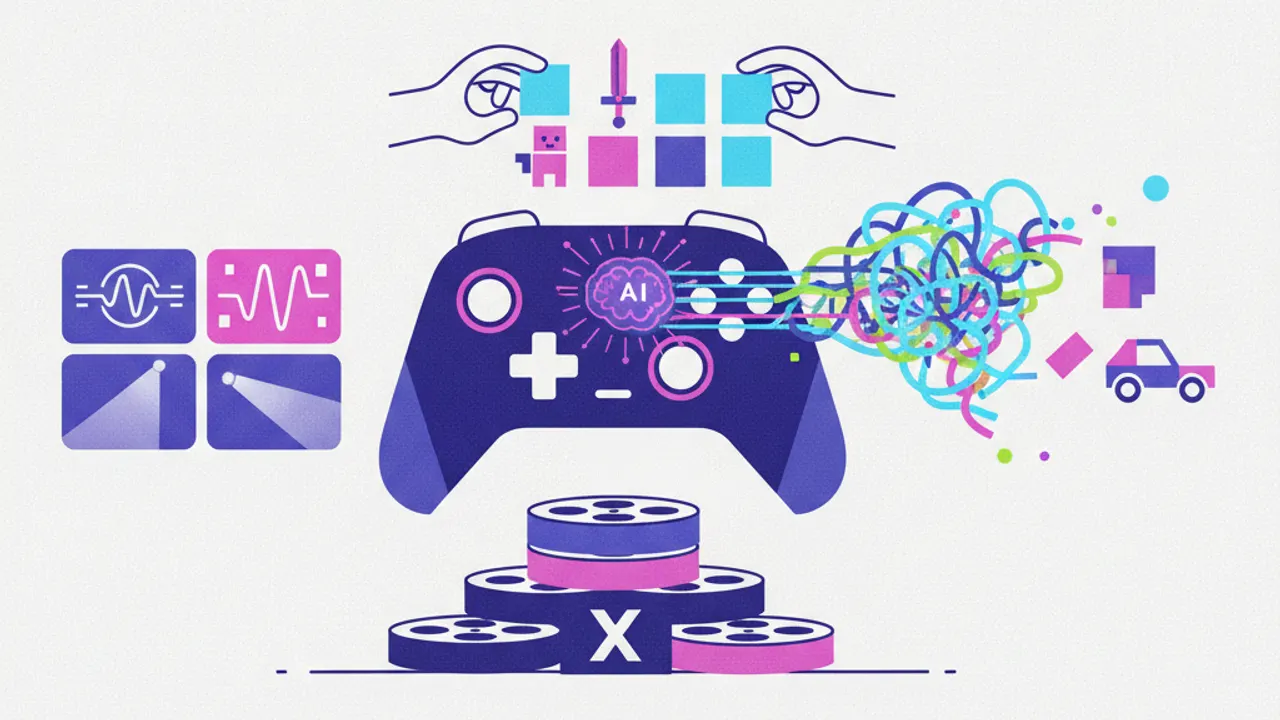
On October 13, 2026, Xbox CEO Asha Sharma announced the launch of a new division called Xbox Labs. The announcement reached staff through an internal memo and was simultaneously published via Xbox Wire. Scott Van Vliet, Chief Technology Officer at Xbox, will lead the dedicated group. The specialized unit unites game designers, software engineers, and researchers to explore emerging technologies for the modding scene, ports, and creator tools.
The catalyst behind Microsoft's strategic move is a major breakthrough in the use of generative AI agents for reverse engineering legacy software. In the past, analyzing assembler code by hand took development teams years of grueling forensic work. Today, cutting-edge models complete equivalent reverse-engineering tasks within just a few days. Proprietary codebases from legacy games are being translated back into human-readable source code at unprecedented speeds, completely transforming software preservation and porting workflows.
Concrete demonstrations have already highlighted the power of this method on prominent classics, including early builds of Halo. AI-decompiled software is now being executed smoothly in web browsers through WebAssembly and WebGPU standards, or ported directly to run natively on Apple Silicon hardware. These advances bypass traditional engineering bottlenecks that once required massive manual rewrites. While this rapid translation unlocks new possibilities for software preservation, it also introduces major intellectual property complications for platform holders.
Asha Sharma made a point of distinguishing Xbox Labs from indiscriminate generative content pipelines. In her message, she stressed that Microsoft does not intend to flood the gaming ecosystem with soulless AI slop. Instead, the focus rests squarely on establishing robust interfaces for authentic ports and community-driven remixes. The initiative seeks to embrace fan engagement and creator modifications constructively, channeling modern AI capabilities into controlled and sustainable developer frameworks.
The broader implications of automated code recovery were underlined on October 14, 2026, when an essay by indie developer Popcar went viral across developer hubs such as Hacker News. The debate highlighted how AI decompilation functions as a double-edged sword across the interactive entertainment industry. On the one hand, generative models allow developers to rescue abandoned titles before server shutdowns erase them forever. On the other hand, proprietary game logic can now be exposed and cloned with simple prompts, threatening the commercial foundations of closed-source IP.
By launching Xbox Labs, Microsoft is signaling an intention to guide the technological tide rather than relying solely on legal enforcement against unauthorized reverse engineering. Under Scott Van Vliet's direction, the team will examine how proprietary platforms can coexist with rapid community remixing. How successfully Xbox Labs manages to integrate agentic decompilation and creator tooling will likely serve as a blueprint for other publishers facing similar disruptions across the industry.