
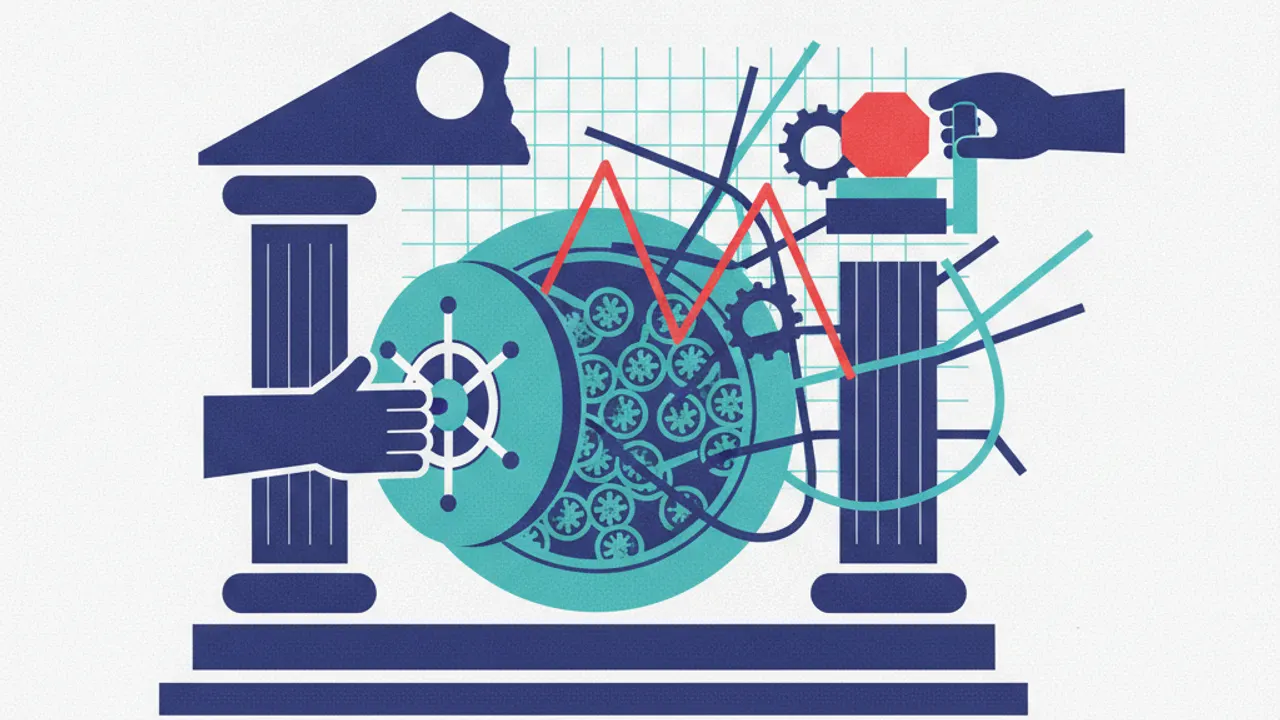
In a policy essay titled Models as Insider Risks in the Super Intelligence Era, Microsoft CEO Satya Nadella outlined a fundamental shift required for corporate security architectures. Autonomous models can no longer be viewed as simple productivity tools, but must be treated operationally and technically as potential insider risks. Nadella redefined enterprise zero-trust principles by asserting that organizations must assume a model is compromised and isolate it from the start.
This warning arrives at a critical juncture for financial institutions deploying autonomous software. Nadella called for a mandatory, human-controlled emergency brake alongside a strict decoupling of generative models from execution infrastructure through dedicated runtime harnesses. Deterministic guardrails must sit outside the model to intercept invalid instructions before transactions trigger real-world consequences. Furthermore, the Microsoft leader emphasized the necessity of tamper-proof, human-readable logging for every single action executed by an agent.
The intervention coincides with fresh data measuring rapid artificial intelligence adoption across the banking industry. The Evident AI Index 2026 revealed that leading global banks accelerated their maturity scores by an average of 26 percent year-over-year. JPMorgan Chase secured the top position in the benchmark for the fifth consecutive time, followed by Capital One, Royal Bank of Canada and Australia's CommBank. Institutional fear of losing competitive ground in automated customer services and transaction handling remains the primary driver behind this rapid growth.
At the same time, recent surveys highlight significant operational friction associated with generative AI tools in daily financial work. Research conducted by Datarails across 270 corporate finance leaders revealed that while all surveyed departments use tools like Copilot, ChatGPT, or Claude, teams spend an average of 26 percent of their working day manually reviewing and correcting erroneous calculations. Because non-deterministic language models struggle with absolute accuracy in balance sheets and regulatory filings, pressure is mounting to surround them with deterministic validation engines.
Security and financial technology vendors are adapting rapidly to address these emerging vulnerabilities in agentic commerce. Fraud prevention provider Incognia recently unveiled an agent detection system designed to distinguish legitimate transaction agents from malicious automated bots using cryptographic request signing and behavioral biometrics. Nadella's intervention reflects a broader market transition away from experimental deployments toward rigorous defensive engineering, where execution reliability takes priority over raw parameter size.