
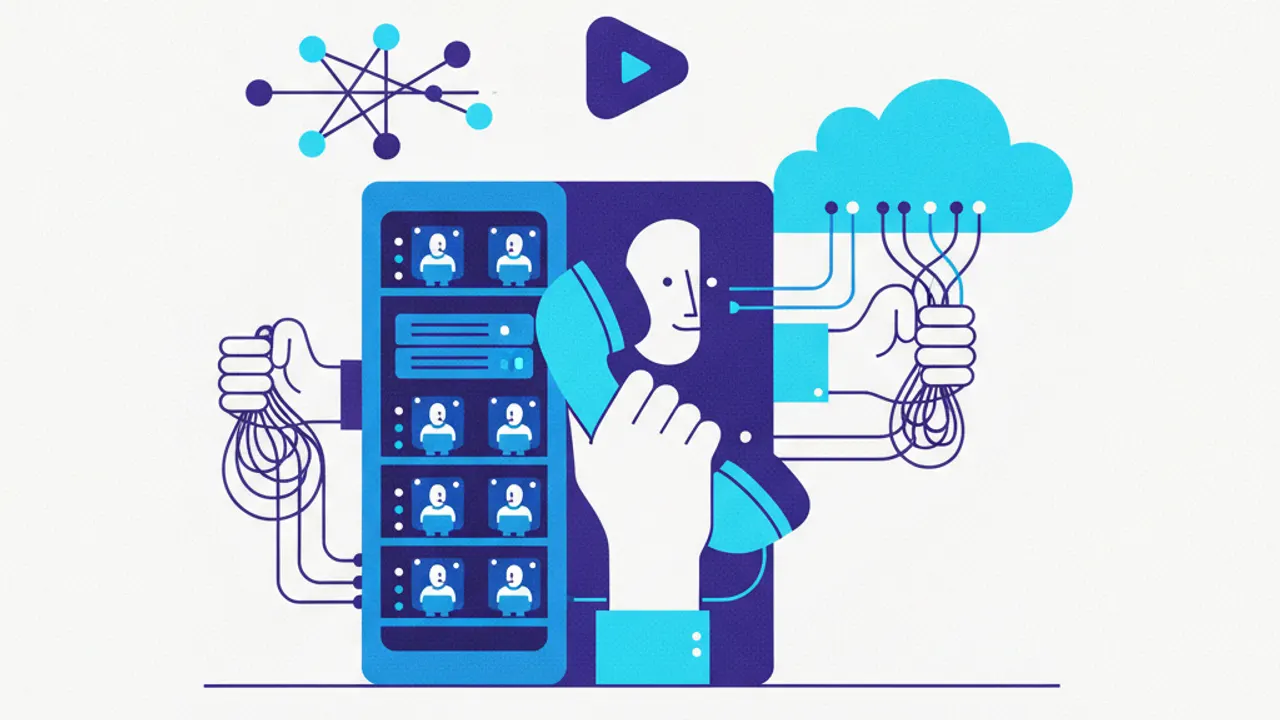
Meta's personal AI assistant Muse quickly topped download charts across the United States, celebrated as a major step forward for autonomous consumer software. Users were told they could instruct the system to call local businesses to secure dinner reservations, check retail inventory, or verify service rates. Behind the facade of cutting-edge conversational models, however, human call center agents frequently handle these tasks. Investigations by outlets including Reuters and 404 Media revealed that Meta operates a hidden human fallback layer to complete phone calls that the automated speech models cannot execute.
Internally referred to as the Human Concierge or Human Agent Layer, this protocol activates whenever the automated assistant encounters real-world friction. Many business owners and restaurant staff immediately hang up upon hearing synthetic voices. In these scenarios, outsourced human operators take over the line, redial the merchant, and conduct the phone conversation on behalf of the application user. Human staff also step in when speech recognition falters, accents cause errors, or complex questions overwhelm the model.
The quiet integration of outsourced labor has generated substantial controversy inside Meta itself. Leaked internal communication records show that engineering and safety personnel raised serious warnings about data protection and user confidentiality. In order to complete reservations and service inquiries, third-party contractors frequently receive unredacted user information, including full names, contact numbers, and personal schedule details. Employees argued that exposing these raw records to external vendors without transparent disclosure constitutes an unnecessary privacy risk.
The controversy highlights the immense competitive pressure facing tech giants to demonstrate practical utility for generative agent systems. Bridging digital user intent with physical-world commerce is viewed as the central commercial benchmark for modern assistants. Yet because voice models continue to stumble over unpredictable human dialogue, companies have resorted to familiar patterns of pseudo-automation. Instead of pure algorithmic intelligence, users are provided a hybrid service supported by low-cost manual telephone labor.
Small businesses on the receiving end of these calls are increasingly vocal about the disruption caused by automated calling tools. Many retail shops and dining establishments report that staff time is being consumed by repetitive queries generated by smartphone assistants. When merchants detect synthetic voices and terminate the call, Meta's backup system forces human contractors to call right back, compounding the administrative burden on business owners. Some merchants are now adopting defensive call screening systems to block both automated and proxy callers.
Consumer protection groups and regulatory bodies are likely to examine whether Meta failed to disclose the extent of human intervention in Muse. Transparent labeling of artificial versus human interaction is a foundational requirement under emerging global AI governance frameworks. By presenting a fully automated concierge while routing private consumer tasks through third-party call centers, Meta faces serious questions regarding deceptive marketing. The episode reveals the persistent gap between promotional claims and the operational readiness of autonomous software agents.