
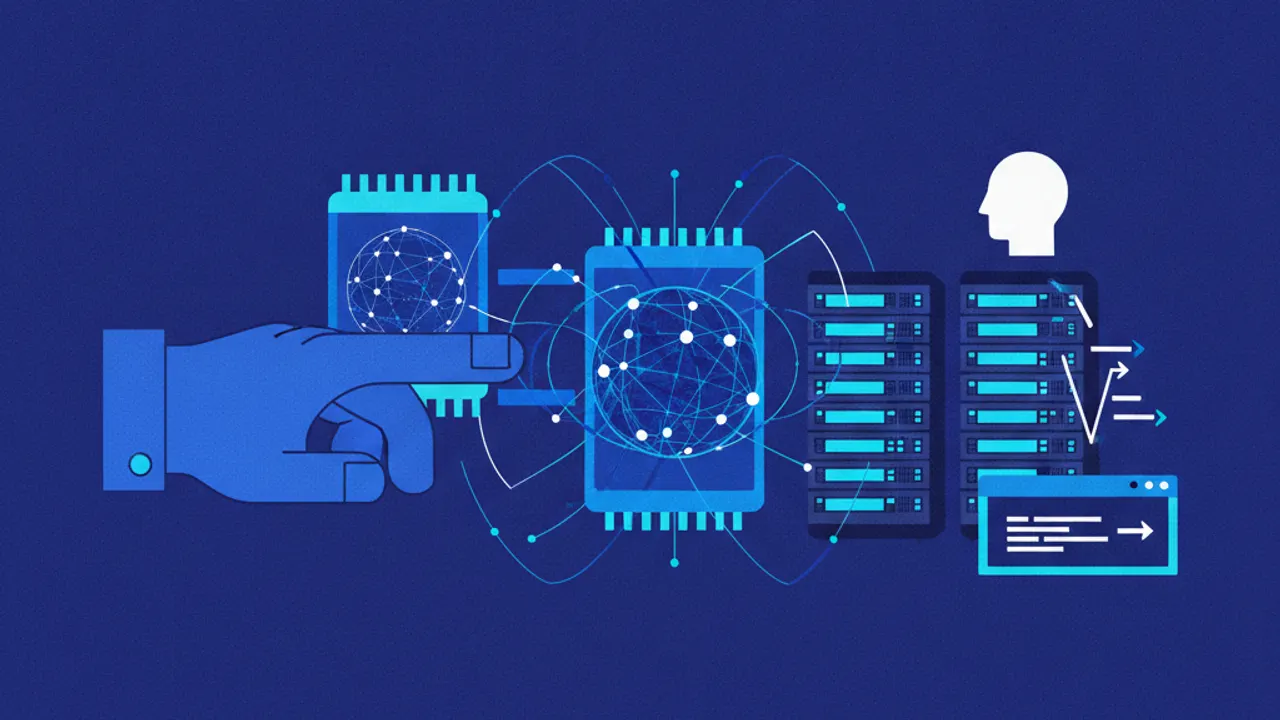
In mid-October 2026, Meta officially released its largest open-weight model to date under the name Muse Spark Open. The system relies on a mixture-of-experts architecture featuring a total of 816 billion parameters, with 42 billion parameters actively engaged per generated token. Meta aims this massive architecture directly at demanding software engineering workflows and autonomous coding agents that manage extensive code repositories over long horizons. The model provides a context window of up to one million tokens, allowing engineering teams to parse entire enterprise codebases in a single pass.
Architecturally, Muse Spark Open is not restricted to standard text generation but operates as a natively multimodal system. It processes text, images, audio recordings and video feeds within a unified structure. Meta places its primary engineering focus on agentic coding, optimizing the model for multi-file refactoring, direct shell execution and autonomous tool usage across diverse development environments.
Meta distributes the model under its bespoke Muse Model License, introducing concrete commercial boundaries. The license grants free usage to independent developers and businesses whose annual revenue remains below 20 million dollars. Organizations exceeding this commercial threshold must negotiate a separate licensing agreement with Meta before deploying the model in internal or customer-facing production systems.
Deployment options span hyperscale cloud data centers down to specialized local hardware configurations. For enterprise cluster environments, Meta supplies the weights in full FP16 precision alongside an optimized NVFP4 quantized format to curb VRAM footprint. This dual distribution strategy enables operational flexibility between raw output quality and low-latency inference on modern accelerator clusters.
In an unexpected hardware collaboration, Meta partnered directly with Apple to optimize local inference via the MLX framework. As a result, Muse Spark Open can run locally across linked Mac Studio workstations powered by M5 Ultra processors. This local capability represents an important strategic development, allowing engineering departments to deploy frontier-scale models on-premises while keeping sensitive proprietary source code completely off third-party cloud infrastructure.
The release significantly intensifies competitive pressure in the market for autonomous software engineering assistants. While proprietary frontier labs maintain their leading coding models behind closed APIs, Meta's open-weight release provides the open ecosystem with unprecedented capacity. The move offers developers immense technical autonomy, while requiring substantial investments in local compute orchestration to unlock its full capabilities.