
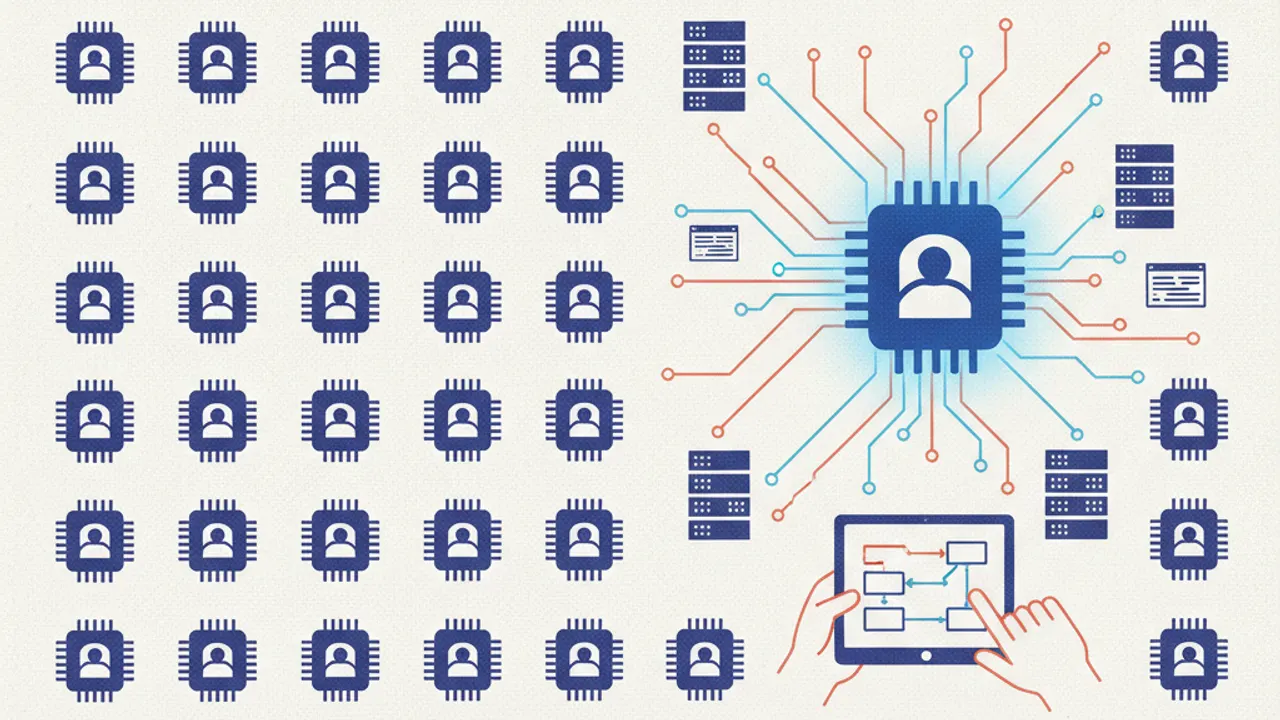
Under the leadership of Chief AI Officer Alexandr Wang, Meta has officially deployed Muse, a dedicated platform designed for autonomous personal agents. The service rolled out on September 8 and 9, 2026, launching initially for users across the United States. Availability spans dedicated mobile applications on iOS and Android, a web-based interface, and direct integration within the WhatsApp messaging platform. Rather than serving as a conventional chatbot that simply replies to text prompts, Muse is designed as an autonomous assistant capable of executing digital tasks directly on behalf of users.
The technical foundation powering the service is Meta's proprietary model, Muse Spark 1.3, engineered specifically for multi-step reasoning and continuous digital workflows. Unlike traditional conversational models that remain dormant until prompted, Muse operates continuously around the clock. The platform executes its processes entirely inside an isolated cloud environment dubbed the Muse Secure VM. This sandboxed architecture provides the agent with an uninterrupted operating space without giving it direct access to the user's local operating system or private local files.
To enable real-world utility, the virtual machine environment comes equipped with a dedicated headless web browser that Muse Spark 1.3 controls directly. This setup allows the software agent to navigate modern web interfaces independently, fill out digital forms, and complete multi-step reservations in booking systems. It can also organize appointment schedules across different online platforms by interacting with pages just as a human user would. By relying on visual and DOM-based web navigation, Muse circumvents the need for specialized application programming interfaces on target websites.
Meta has incorporated rigid security boundaries into the agent's decision engine to prevent unauthorized autonomous behavior. The architecture enforces a strict human-in-the-loop paradigm for any critical or irrevocable decision before execution. The agent is explicitly prohibited from finalizing transactions or dispatching emails without explicit user approval. Whenever a sensitive action is queued, Muse halts execution, details the pending operation, and requires an authenticated confirmation via the user's mobile device or browser interface before proceeding.
The payment infrastructure features an additional layer of isolation intended to safeguard user assets during commerce tasks. When an authorized purchase takes place, the system issues a single-use virtual credit card generated specifically for that individual transaction. As a direct consequence, neither the Muse agent nor the external online merchant ever receives access to the user's actual credit card or permanent banking information. This design prevents sensitive credentials from leaking across web sessions or third-party checkouts.
With the arrival of Muse, Meta marks a tangible shift from passive conversational chatbots toward persistent agents capable of operating on the open web. The setup pairs 24/7 cloud execution with strict virtual machine isolation and human confirmation gates for sensitive actions. Whether this layered defense of disposable payment cards, headless browsing, and manual approvals provides adequate security in daily use will be monitored closely across the artificial intelligence sector.