
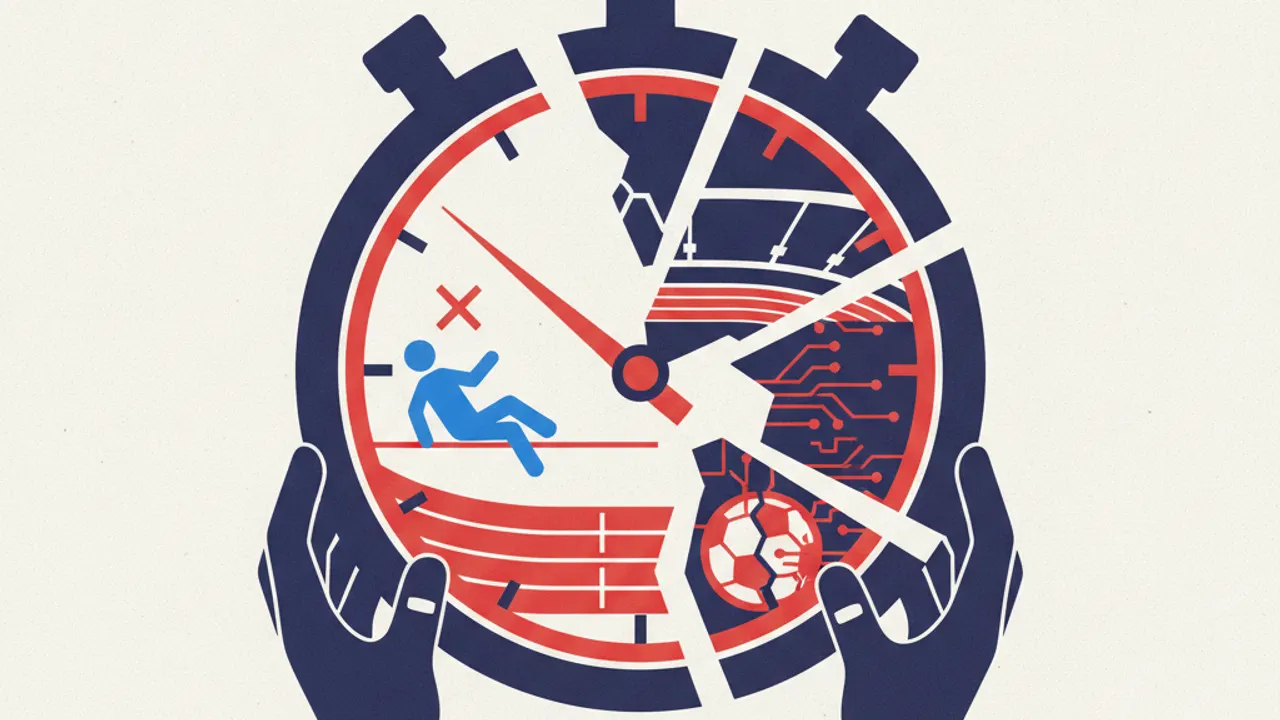
The deployment of machine learning in elite athletics has encountered a significant scientific setback. A systematic review and meta-research audit published on November 9, 2026, in the academic journal Frontiers directly challenges the readiness of predictive injury tools. Titled 'Implementation Readiness of Artificial Intelligence Models for Predicting Future Sports Injuries: A Systematic Review and Meta-Research Audit', the paper scrutinized the methodological integrity of algorithms designed to forecast athletic strain and injuries.
The findings of the research team present a sobering evaluation of current machine learning practices in sports science. All 64 examined modeling approaches exhibited a high overall risk of bias in their data analysis pipelines. Even more concerning was the lack of external verification outside the original training cohorts. Only 18.8 percent of the evaluated models were ever externally validated on independent or temporally separated datasets, exposing a critical lack of generalizability.
Given these structural deficiencies, the authors issued an explicit caution to athletic trainers and performance directors. Commercial risk assessment platforms should not be adopted uncritically as a dependable foundation for athlete workload management. If coaching staffs rely on biased predictions, they risk making flawed roster choices, either returning athletes to competition prematurely or benching them needlessly based on algorithmic artifacts.
This scientific skepticism contrasts sharply with the accelerating commercial investments in other sports-focused AI applications. On October 29, 2026, AO Ventures, the investment division of Tennis Australia, announced a strategic stake in enterprise platform Jump. Co-founded by Marc Lore, Jordy Leiser, and former MLB star Alex Rodriguez, the platform unites dynamic ticketing and fan data, having already been implemented by the NBA's Minnesota Timberwolves to modernize ticketing operations.
Media orchestration and digital rights management are experiencing a comparable automation push. On November 12, 2026, NASCAR and technology firm Perfect Memory announced the operational rollout of multimodal generative AI across a library exceeding three million media assets. That same day in Lisbon, IBM concluded its Sports Tech Startup Prize Challenge at Web Summit 2026, awarding early-stage companies that process live player telemetry via edge computing for tactical broadcast graphics.
This divergence highlights a sharp divide within the sports technology landscape. While automated media processing and commercial fan analytics deliver reliable operational efficiencies, predicting human biology and soft-tissue trauma remains far beyond the proven capabilities of current models. Professional clubs must recognize that while algorithms can successfully tag video feeds and optimize ticket revenue, athlete health decisions still demand empirical medical judgment over unverified algorithms.