
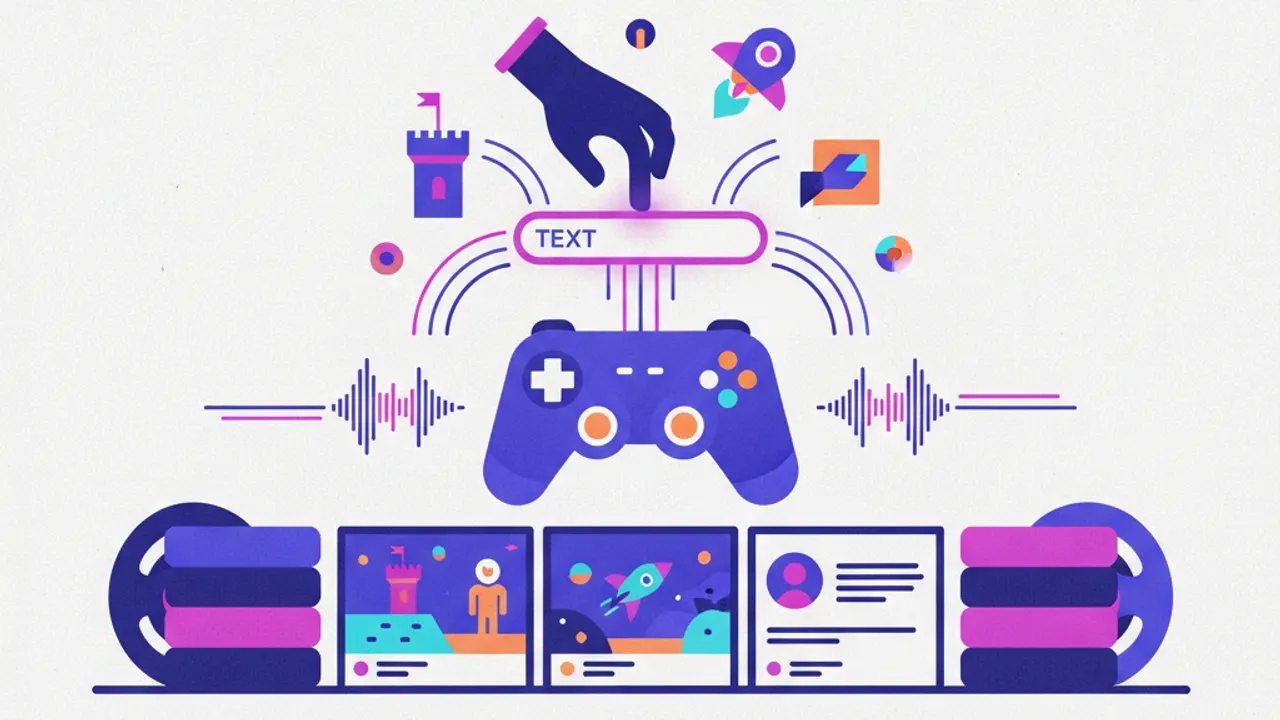
Meta announced two new software tools at its Meta Connect 2026 developer conference, bringing generative artificial intelligence directly into video game creation. The tools, named Horizon Create and Horizon Studio, run on the company's new Meta Horizon Engine. Meta aims to radically simplify the creation of interactive digital spaces, translating natural language prompts into fully functional titles. Creators no longer require traditional software coding experience to bring interactive ideas to life.
The centerpiece for mobile devices is the Horizon Create application. Through conversational prompts, users can generate complete two-dimensional and three-dimensional games from scratch. The underlying AI engine handles visual art direction alongside complex mechanics, level progression, and enemy balancing. Furthermore, it automatically sets up multiplayer functionality. If changes to quests, virtual environments, or characters are needed, users can refine them through iterative text instructions operating in the background.
To accommodate more detailed design needs, Meta is pairing the mobile app with Horizon Studio. This browser-based development environment operates entirely on the web and stays synchronized with the smartphone application. In Horizon Studio, creators access granular sliders and specialized controls to fine-tune visual assets and gameplay parameters manually. This integrated workflow allows users to prototype a game on mobile and subsequently refine mechanics on a desktop browser.
A pivotal element of the announcement lies in Meta's distribution architecture. Rather than relying on traditional app storefronts that require lengthy downloads and installations, creators can publish finished titles natively into the feeds of Instagram, Facebook, and Horizon Worlds. Viewers can launch these games instantly with a single click inside their social feeds. The framework also supports seamless multiplayer matchmaking without leaving the feed.
With this deployment, Meta intensifies competition across the user-generated content landscape, challenging incumbent platforms. While services like Roblox historically required familiarity with scripting languages and specialized developer editors, Meta lowers the barrier of entry through text-to-game generative workflows. By leveraging the vast social reach of Facebook and Instagram, the company gains an expansive distribution network for AI-generated interactive entertainment.