
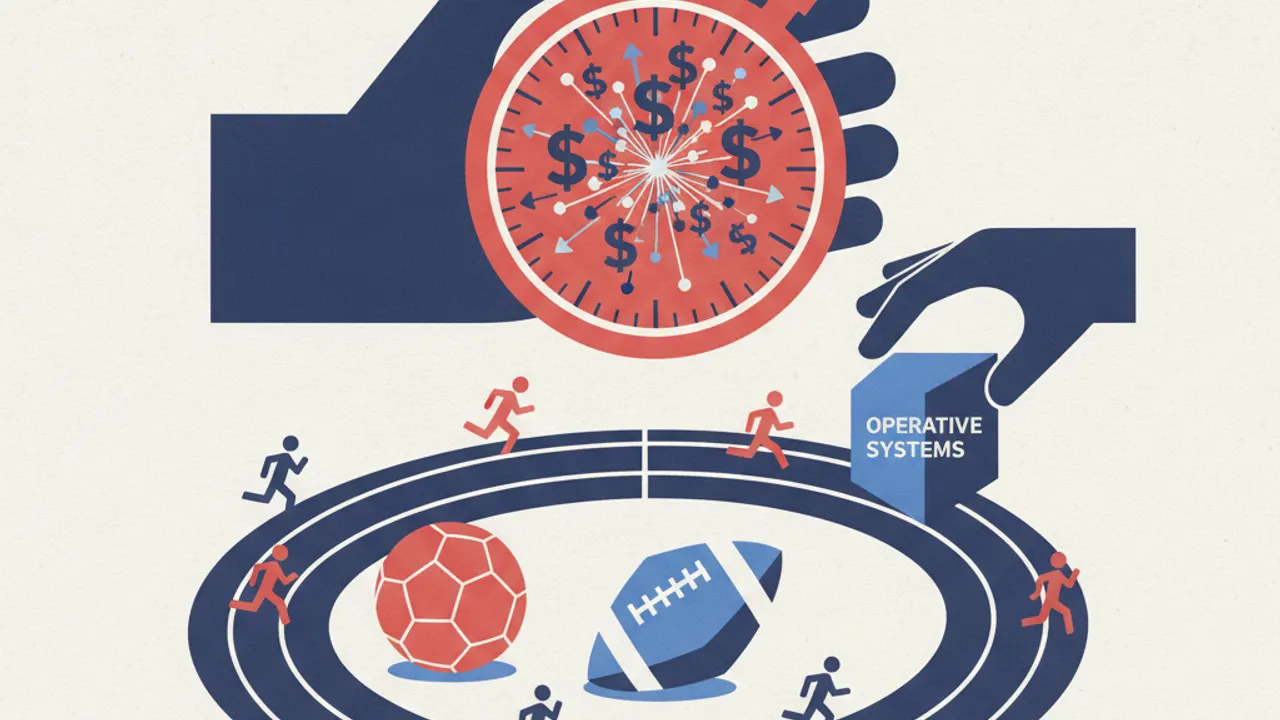
Professional sports sponsorships are undergoing a significant structural shift driven by artificial intelligence providers. According to a market analysis by SponsorUnited, investment volume from AI companies in team sports deals grew from $17 million in 2024 to more than $85 million in 2026. This capital flows through 843 contracts signed by over 176 AI brands across 14 professional leagues worldwide. The data illustrates how rapidly AI vendors have expanded their financial footprint in high-profile athletic organizations.
The central finding of the report highlights a qualitative transformation in how these agreements are structured. Roughly 61 percent of these contracts are no longer traditional logo-sponsorship deals centered on jersey patches or perimeter boards. Instead, AI vendors are increasingly onboarded as operational infrastructure partners providing backend systems. Clubs implement these tools to handle data processing, deploy legal AI for contract management, and power strategic copilots for performance staff.
High-profile cases in motorsport and North American sports illustrate this practical shift. Anthropic serves as the official thinking partner at Formula 1 team Williams Racing, assisting race strategists and engineers with analytical workflows via its Claude model. In the NBA, the Golden State Warriors utilize Harvey AI to manage day-to-day legal and contractual paperwork. These partnerships demonstrate that franchises now prioritize operational productivity over simple promotional visibility.
Other top motorsport organizations are executing similar technology-first pivots. On November 19, 2026, McLaren Racing renewed its multi-year collaboration with Google, fundamentally shifting the partnership focus toward Google Gemini. Beyond fan-facing activations and AI-supported helmet concepts for driver Oscar Piastri, the team incorporates Gemini into engineering interfaces. Strategists leverage multimodal capabilities to cross-reference telemetry, meteorological data, and video feeds in real time during race preparations.
A parallel transformation is unfolding in franchise operations within association football. Los Angeles FC announced a partnership with AccelerAI on November 17, 2026, to launch a club-wide platform powered by autonomous AI agents and large language models. The system integrates marketing, ticketing, and venue logistics in real time to automate matchday operations and capacity steering. Following tests focused on matchday attendance preservation, club officials reported double-digit business value growth compared to isolated point solutions.
These coordinated moves signal a broader maturation in the intersection of sports business and artificial intelligence. Technology providers are entrenching their platforms within the operational nervous systems of elite athletic organizations. While this deep integration promises measurable efficiency gains, it also binds franchises to the reliability and algorithmic performance of third-party software providers.