
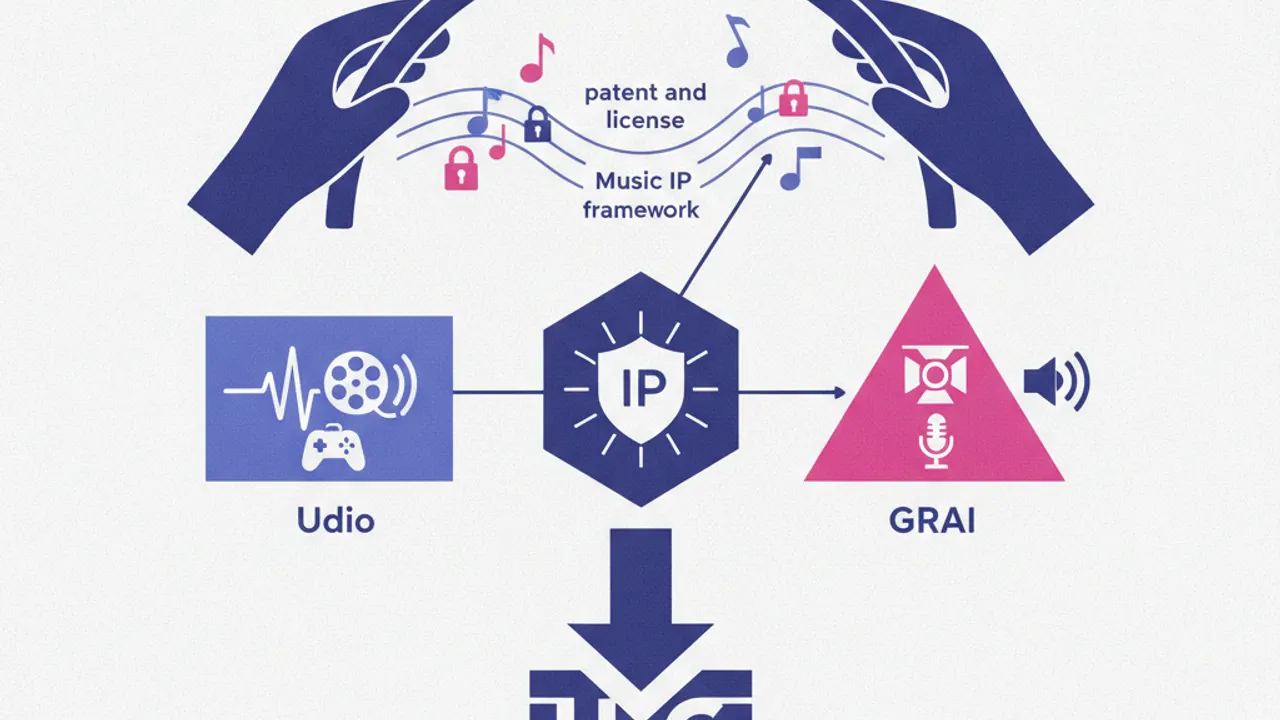
The music industry is initiating a notable shift in how it handles generative artificial intelligence. On August 20, 2026, Music IP Holdings, an organization emerging from a partnership with Universal Music Group, unveiled a comprehensive patent and licensing framework tailored for AI-generated music. The initiative aims to shift industry strategy from pure legal confrontation toward managed, licensed technology workflows.
AI music platforms Udio and GRAI were introduced as the initial official licensees under the new framework. Both platforms are integrating the technical parameters designed by Music IP Holdings directly into their audio generation pipelines. For Udio and GRAI, this integration provides critical legal clarity following extended industry disputes regarding training data and uncredited outputs.
The underlying patent portfolio of Music IP Holdings encompasses more than 24 granted patents and over 50 pending applications. These intellectual property assets cover essential phases across the generative audio pipeline. Key areas include automated prompt moderation, identification tagging mechanisms, and robust watermarking protocols for synthetic audio tracks.
A central focus of the licensing architecture is the formal monetization of secondary creations, such as fan remixes and AI-generated covers. The framework introduces revenue allocation mechanisms that ensure rights holders and original artists receive compensation when their distinct styles or compositions are adapted. This structure seeks to convert widespread platform gray areas into enforceable revenue streams.
Industry analysts view this partnership as a calculated transition from defensive litigation to the creation of proprietary technical control layers. By establishing patent monopolies over crucial verification and filtering tools, Universal Music Group and its partners are enforcing market compliance. AI services operating outside these emerging licensing standards face rising hurdles in distributing output across commercial channels.