
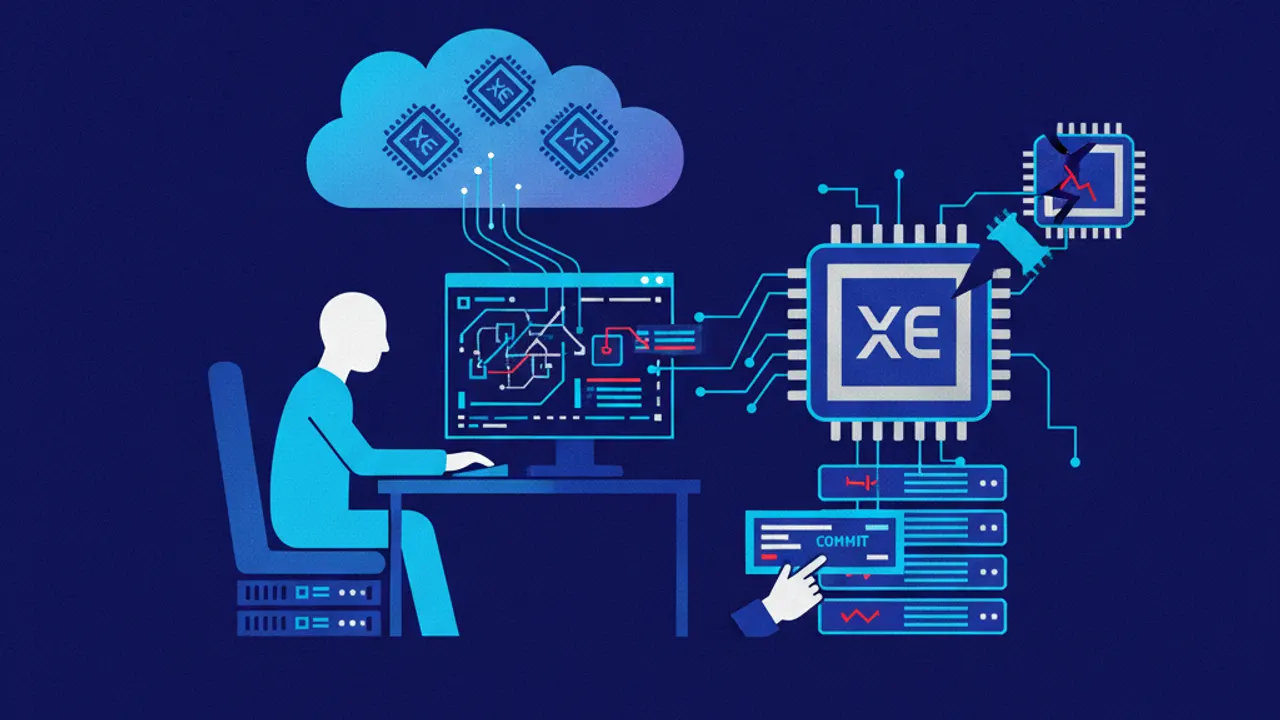
Linux creator Linus Torvalds has officially credited an AI model for assisting in a complex bug resolution within the kernel. The commit, bearing hash 818bebeb63dd, addresses the Intel Xe graphics driver under the title 'drm/xe: Don't hand out the flat CCS storage as usable VRAM'. In the commit log, Torvalds documented the troubleshooting process as a difficult debugging session that was ultimately resolved through iterative collaboration with an AI system. He also let the language model draft the final commit explanation.
The technical issue in the driver involved the improper exposure of flat CCS storage as usable video RAM. Torvalds noted in the log that the AI model repeatedly advised giving up on the specific approach during the debugging process. Only through persistent guidance and firm prompting did the tool eventually produce the critical debugging code needed. This breakthrough allowed Torvalds to isolate the underlying flaw in the driver implementation and implement the correct fix.
The event serves as an important milestone for the practical adoption of generative AI in low-level systems programming. Software developer Simon Willison analyzed the commit, highlighting that core engineering competencies are shifting. The primary skill required when working with modern coding assistants is no longer simply reviewing generated code line by line. Instead, success hinges on precise instruction, designing thorough system tests, and verifying overall behavioral outcomes.
In parallel, the rise of coding agents is reshaping adjacent areas of software development. A recent debate on terminal user interfaces underscored that automated code generation has drastically reduced the cost and effort of building native graphical interfaces. Industry observers argue that many traditional development shortcuts are becoming obsolete as AI capabilities advance. Software engineers are increasingly freed to focus on high-level application architecture and overall system integrity.
Torvalds' transparent documentation adds practical weight to discussions surrounding the utility of language models in mission-critical codebases. Despite the model's initial reluctance and tendency to suggest giving up, the outcome demonstrates that disciplined human oversight can extract high-quality results. The blend of seasoned developer intuition and rapid AI code analysis is steadily cementing its role as a standard methodology, even across the world's most demanding open-source infrastructure.