
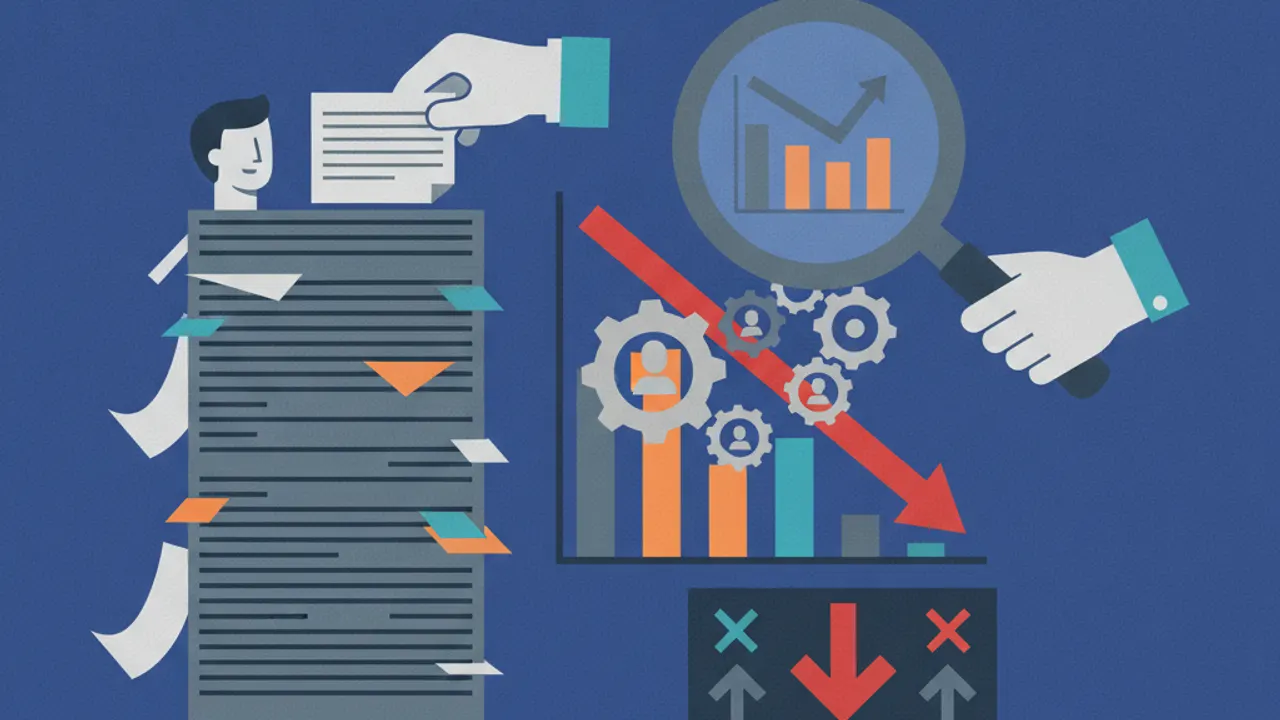
In detailed analyses accompanying its Technology Trends Outlook 2026, authored by Michael Chui, Roger Roberts, Tanguy Catlin and colleagues, management consultancy McKinsey and Company presents a sobering assessment of the enterprise hype surrounding autonomous artificial intelligence. While agentic systems have been celebrated as the decisive leap beyond conversational chatbots, their practical deployment across software engineering teams is encountering structural bottlenecks. In nearly 30 percent of the companies surveyed, overall productivity actually dropped after developers integrated autonomous AI agents into their daily development workflows.
The researchers identify a phenomenon known as uncoordinated vibe coding as the central driver of this unexpected decline. Software developers increasingly lean on autonomous agents to write large volumes of code, yet they often do so without unified architectural standards or rigorous peer review. This practice creates a striking mismatch between activity and outcome: while raw coding activity surged by 180 percent across the observed organizations, the volume of functional, production-ready software releases increased by merely 30 percent over the same period. Development pipelines end up clogged with flawed code snippets, causing extensive delays in quality assurance.
This disconnect between volume and deployable output has sparked a pronounced crisis of confidence among technical professionals. According to McKinsey, 46 percent of developers worldwide state that they actively distrust the outputs generated by agentic AI tools. Only 33 percent express trust in the synthetic code, and a minuscule 3 percent consider the generated material to be highly reliable. Rather than accelerating strategic projects, senior engineers find their working hours consumed by verifying, debugging and refactoring fragile algorithmic proposals.
Beyond operational frictions, the physical compute requirements of autonomous agents are straining corporate balance sheets. McKinsey calculates that executing an individual agent workflow consumes between 5 and 30 times the computational resources required for a basic chatbot query. Because agents continually iterate through tool calls, ingest broad contextual data and evaluate interim states, operational expenditure escalates rapidly. As a direct consequence of this steep compute intensity, 93 percent of surveyed companies reported that they had already exceeded their planned AI budgets ahead of schedule.
These soaring expenditures have yet to translate into widespread financial returns for business operations. Across the organizations examined, only 37 percent can currently attribute a measurable, positive EBIT contribution to their artificial intelligence and agent programs. The findings demonstrate that simply deploying autonomous tools without strict architectural governance and rigorous automated testing frameworks risks inflating corporate overhead without delivering tangible business acceleration.