
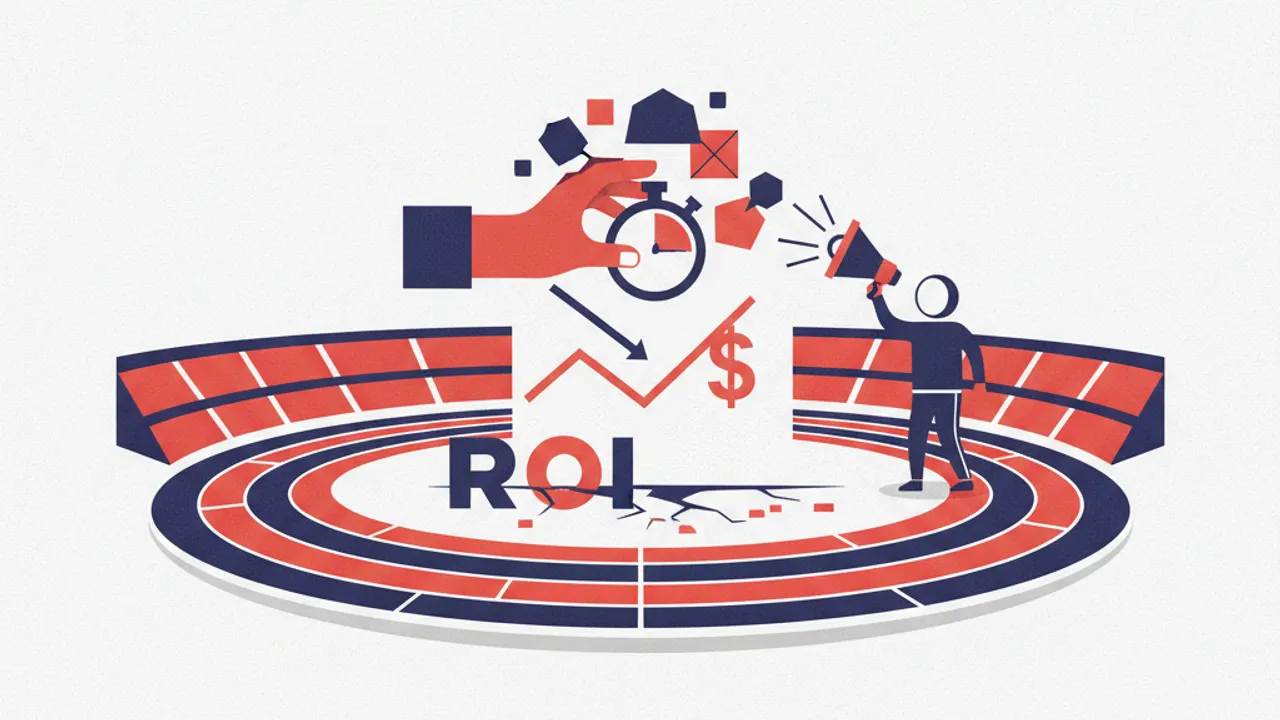
A global survey conducted by cloud communications provider Infobip reveals a significant disconnect between commercial sports spending and measurable returns. The study surveyed 500 marketing and digital leaders across eleven countries to assess how organizations are modernizing their audience engagement strategies. Findings indicate that brands now allocate an average of 13 percent of their total marketing budgets specifically to sports activations. Furthermore, 87 percent of surveyed decision makers regard artificial intelligence as business-critical for the future of fan engagement. Despite these substantial financial commitments, many organizations still struggle to prove the tangible value generated by their digital campaigns.
The primary challenge identified in the report centers on an inability to verify financial performance. A notable 57 percent of participating brands stated that they cannot accurately demonstrate the return on investment of their fan engagement initiatives. In addition, 47 percent of companies reported failing at real-time interaction while live sporting events are actively underway. When on-field tension reaches its peak, marketing teams frequently lack the infrastructure required to convert fleeting viewer attention into durable digital touchpoints. Traditional sponsorship models consequently remain tethered to vanity metrics, offering little clarity on actual customer acquisition or long-term loyalty.
To address this gap between expenditure and provable impact, Infobip is accelerating the deployment of its agentic solution named PitchMate. Built upon the vendor's AgentOS platform, the conversational system delivers interactions directly through ubiquitous messaging channels such as WhatsApp and RCS. This approach eliminates the friction of requiring supporters to download standalone club applications, meeting audiences where they already communicate. PitchMate provides personalized real-time match statistics, contextual rules explanations, and prompt responses tailored to unfolding game dynamics. By integrating directly into everyday messaging ecosystems, the tool seeks to lower the barrier for immediate during-match participation.
A key technological feature within the software is its integration of persistent session memory alongside multimodal interaction modules. Beyond standard text exchanges, PitchMate incorporates an audio-driven module called Vocalize, which analyzes fan voice inputs in real time. Chants, cheers, and recorded voice notes are processed to fuel gamified interactions, allowing supporters to participate actively during critical match moments. Crucially, each interaction is captured as a structured, quantifiable data point within the underlying analytics architecture. Brands and sports franchises thereby gain actionable visibility into audience behavior that goes well beyond traditional broadcast impression estimates.
The findings and emerging software solutions underscore a structural shift across the sports marketing landscape. Static logo placements on stadium hoardings and jerseys are no longer sufficient for corporate sponsors demanding rigorous attribution models from their marketing departments. AI agents are increasingly viewed not as promotional novelties, but as essential tools to close persistent tracking and attribution deficits. Whether automated conversational systems can sustainably satisfy these expectations will depend heavily on whether fans perceive such interfaces as genuinely additive rather than intrusive during moments of intense sporting drama.
For the broader sports industry, this development highlights the ongoing evolution from rudimentary scripted chatbots toward fully autonomous agent networks. By linking live match data feeds, individual profile histories, and immediate messaging streams, organizations can establish a closed loop between active engagement and commercial conversion. If agentic frameworks succeed in proving quantifiable returns, speculative estimates in sports sponsorship may rapidly lose ground. The enduring challenge for sports clubs and commercial partners will be preserving an authentic fan experience while systematically expanding data-driven monetization strategies.