
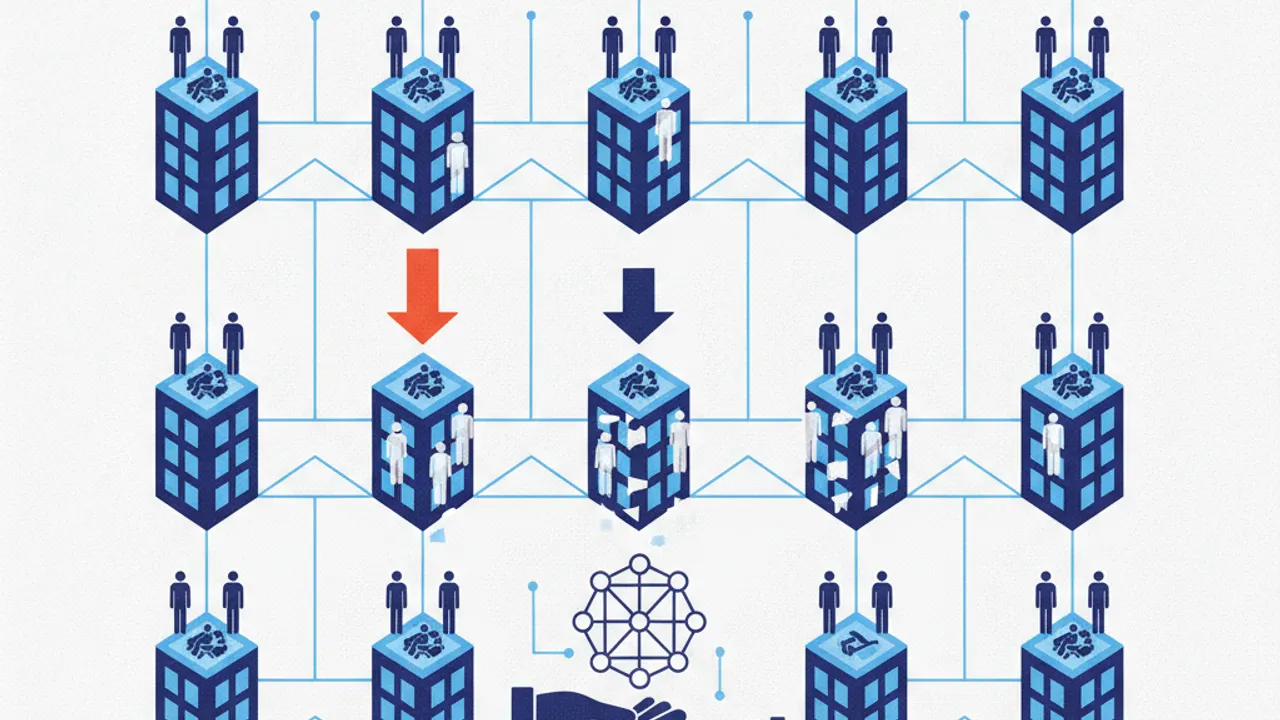
On November 20, 2026, the ifo Institute published the twelfth edition of its 'KI & HR Radar', presenting detailed findings on employment dynamics in Germany. The evaluation of 140 occupational profiles paints a paradoxical picture of how the labor market is evolving under the growing influence of generative artificial intelligence. While overall headcount across office professions heavily exposed to AI has remained stable, young professionals entering the workforce are facing sharp declines. The data demonstrates that technological transformation is not sweeping through offices with mass layoffs, but is instead concentrating its impact directly at the entry-level threshold.
At the heart of the research lies a stark divergence between total employment and the situation facing younger workers in administrative sectors. Across the 140 office professions with high AI exposure, overall employment has actually expanded by 1.8 percent since the third quarter of 2022. In sharp contrast, full-time employment among the age group of 20- to 24-year-old career entrants plunged by 14 percent over the same period. In absolute terms, this percentage drop represents a net loss of around 40,000 junior roles from the German labor market.
According to the ifo Institute, the economic mechanics driving this decline do not stem from dismissals of experienced core staff. Companies are keeping their existing talent while fundamentally adjusting how they approach hiring and replacement. Assistant and entry-level positions, which were traditionally created for basic research, initial data preparation or drafting text, are increasingly being phased out. Because generative AI tools can execute these preparatory workflows faster and at lower cost, employers are frequently choosing not to refill vacant junior positions at all.
This hiring pullback is concentrated primarily in entry-level roles across data analysis, text creation, and operational support. Tasks that once served as the standard training ground for graduates and young professionals are now embedded directly into algorithmic workflows. Experienced staff are leveraging generative AI to boost their own productivity, handling foundational work independently with the aid of automated tools. The corporate need for human assistance in routine tasks is diminishing, which steadily raises the bar for candidates aged 20 to 24 trying to break into these fields.
This structural shift fundamentally alters the mechanics of corporate workforce planning. By offloading routine administrative workflows to generative AI, companies can lower short-term operational overhead, yet they simultaneously dismantle traditional on-the-job qualification paths. When entry-level and support positions disappear without replacement, the proven apprentice-style learning model in office professions falls apart. The ifo study highlights that generative AI is transforming the labor market not by eliminating established roles, but by blocking the pipeline for newcomers.
For employers, this dynamic presents substantial strategic challenges over the medium and long term. While deploying generative AI secures immediate efficiency gains in preparatory tasks, it risks creating a severe shortage of developed talent ready to step into senior positions down the road. Organizations that deny young entrants opportunities to build practical routine and domain expertise effectively cut off their future talent supply. The ifo Institute findings thus mark a turning point, requiring businesses to devise new models to onboard and train career beginners in an AI-driven work environment.