
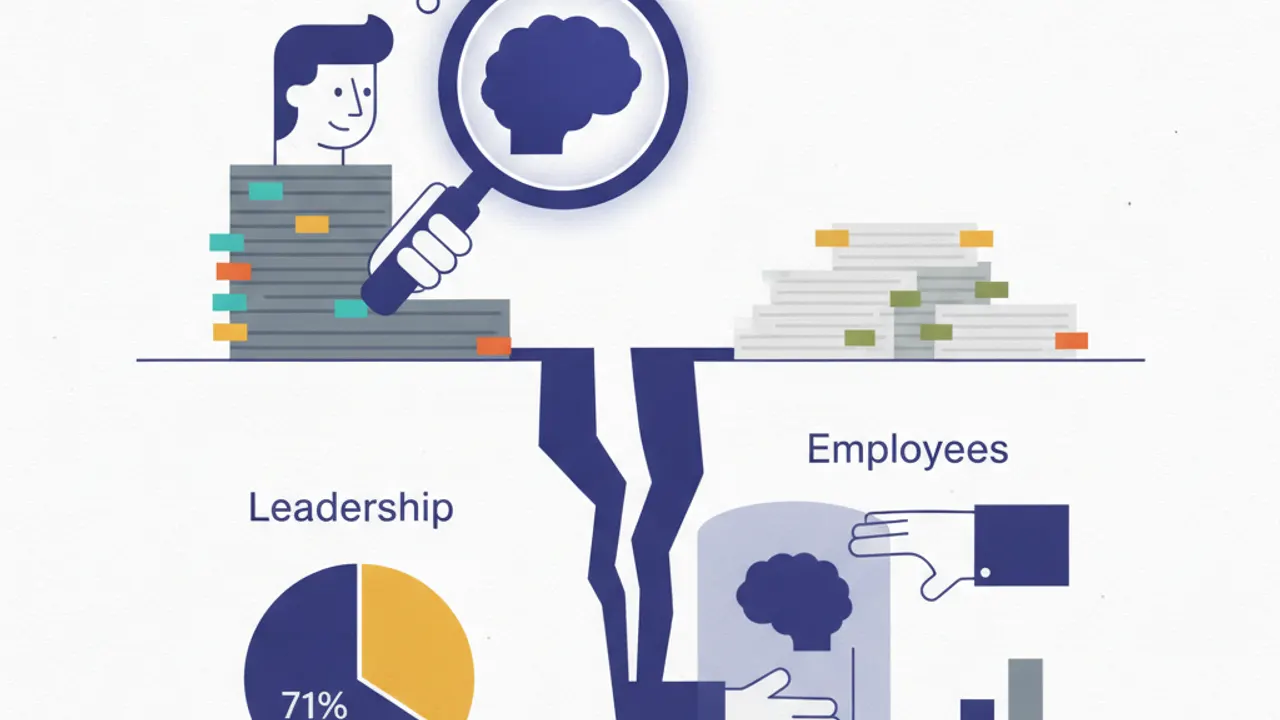
On September 21, 2026, the IBM Institute for Business Value released an extensive global study examining the ongoing transformation of the corporate workplace. The researchers surveyed 1,500 Chief Human Resource Officers and 8,800 workers across the globe to assess practical experiences and strategic expectations regarding artificial intelligence. The findings document a deep structural mismatch between executive expectations and the operational mindset of employees. While organizations are rapidly integrating algorithmic tools into daily operations, workforce development initiatives risk trailing behind actual business needs. This lack of alignment poses substantial operational risks to long-term corporate performance.
This divide is particularly pronounced when assessing critical skills for future enterprise success. According to the survey, 71 percent of HR leaders consider reviewing, validating, and overriding automated decisions to be the most vital capability for employees. In stark contrast, only 29 percent of workers currently view human judgment as critical to their professional effectiveness. Independent oversight and critical skepticism toward machine outputs are therefore valued far less by staff than executive leadership deems necessary for secure operations.
At the same time, employees report mounting anxiety over the gradual erosion of their specialized professional knowledge. A significant 60 percent of surveyed workers expressed concern that continuous reliance on automated tools is diminishing their core technical competencies. Erosion of critical thinking emerged as the primary fear, particularly when data analysis and draft outputs are accepted without thorough scrutiny. This unease unfolds in work environments that often fail to provide clear standards for questioning algorithmic conclusions. Consequently, many professionals fear becoming deskilled rather than empowered by corporate automation.
Structured governance frameworks translate directly into measurable business performance gains. Organizations that formally categorize their operational workflows into human-led, AI-assisted, or AI-executed tasks realize substantial improvements. The IBM study reports an 18 percent reduction in operational risk alongside a 20 percent increase in overall work quality among firms implementing this structured model. Delineating responsibilities clearly prevents algorithmic errors from cascading through organizations while ensuring consistent oversight. Companies gain immediate tangible advantages when human override protocols are established before deployment.
Despite these unambiguous operational benefits, the report reveals a critical governance gap at the executive level. In 46 percent of surveyed organizations, HR leadership is not included in the formulation of the enterprise AI strategy. Technological adoption remains largely confined to IT teams and individual business units, leaving workforce planning and skill development unaddressed. When human resource strategies fail to synchronize with technical rollouts, organizations risk alienating employees and triggering preventable failures. A purely technical rollout falls short when human judgment remains the indispensable final safeguard.