
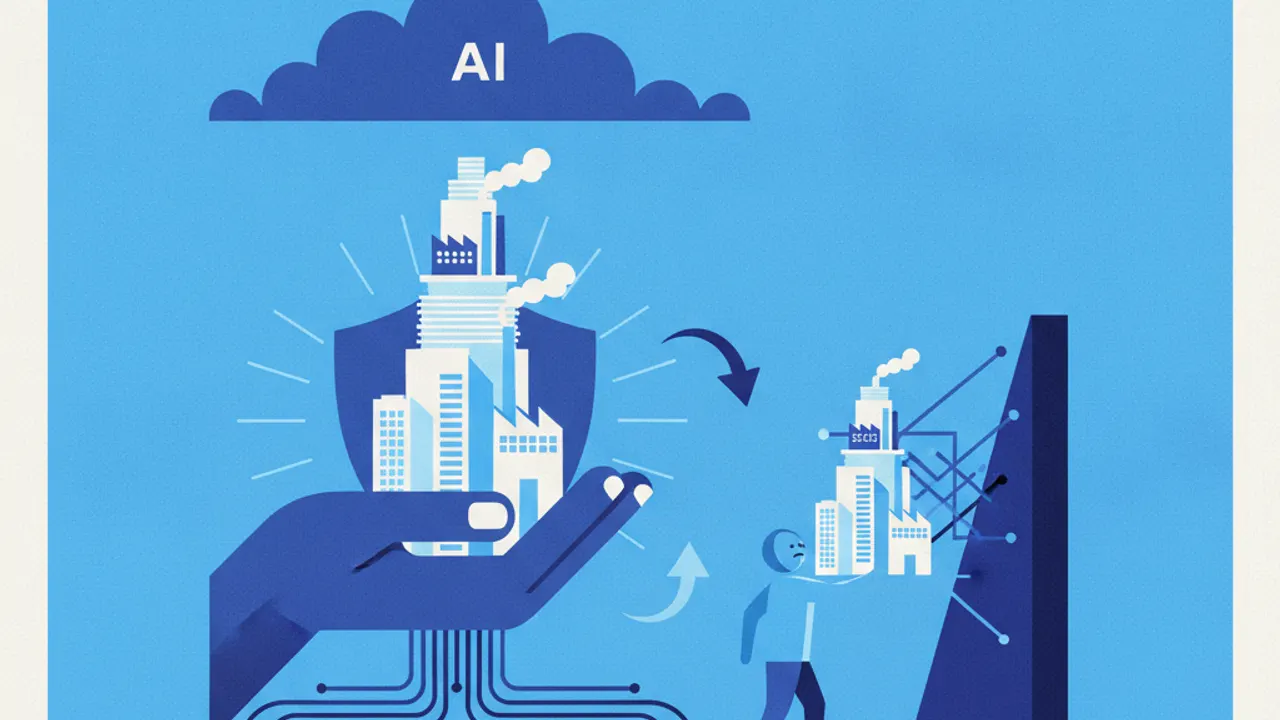
Contrary to widespread fears of immediate mass layoffs, the adoption of artificial intelligence across the German labor market has not led to net employment losses. This is the central conclusion of a study released on 13 October 2026 by the Institute for Employment Research, known as the IAB, in Nuremberg. Yet behind the stable headline figures lies a profound structural shift that disproportionately affects young professionals entering the workforce.
An analysis of employment data from 2022 to 2025 highlights a distinct preference for seasoned workers. In occupations with high exposure to AI technologies, regular full-time employment subject to social security contributions rose by six percentage points more among individuals aged 30 to 39 than in roles with low AI exposure. For employees between 40 and 64 years of age, employment in highly exposed professions still grew five percentage points stronger than in the comparison group.
A starkly different picture emerges for early-career workers. Among employees under 30 years old, employment in highly AI-exposed occupations dropped by 1.2 percentage points relative to the broader average. Labor economists at the IAB attribute this pattern to a dynamic they describe as seniority-biased technological change. Under this mechanism, artificial intelligence augments experienced professionals while creating substantial barriers to entry for newcomers.
The underlying reason for this imbalance lies in the typical profile of entry-level jobs. In many industries, juniors are primarily tasked with preliminary research, basic data crunching and drafting initial copy. Because current generative and analytical systems can execute these standardized duties within seconds, traditional junior positions are being eliminated. Combined with a sluggish macroeconomic environment, employers are increasingly hesitant to invest in unproven talent, preferring experienced staff who can direct automated tools effectively.
This trend introduces serious long-term risks for corporate talent pipelines. When organizations automate entry-level roles without creating alternatives, the traditional path toward senior expertise breaks down. Tomorrow's specialists cannot easily emerge if today's graduates are denied the chance to build foundational practical skills. The IAB researchers warn that cutting back on early-career hiring may yield short-term efficiency at the expense of sustainable workforce renewal.
For corporate leaders and policymakers, the study calls for a timely change in perspective. Instead of fixating on sweeping forecasts of AI-driven joblessness, attention must turn to redesigning vocational training and onboarding frameworks. Companies must restructure junior positions, moving graduates away from easily automatable tasks toward auditing model outputs, enforcing compliance safeguards and learning complex decision-making from day one.