
Skip to content
AI ConnectPowered by VELENTIS
AI-generated2 min

According to HP Study: Nearly Half of German Employees Use AI Agents

According to the HP Work Relationship Index 2026, 49 percent of German employees use AI agents. At the same time, 43 percent fear displacement, leading to widespread jobhugging.

This article was AI-generated and published automatically. Context, labelling and all sources at the end of the article.

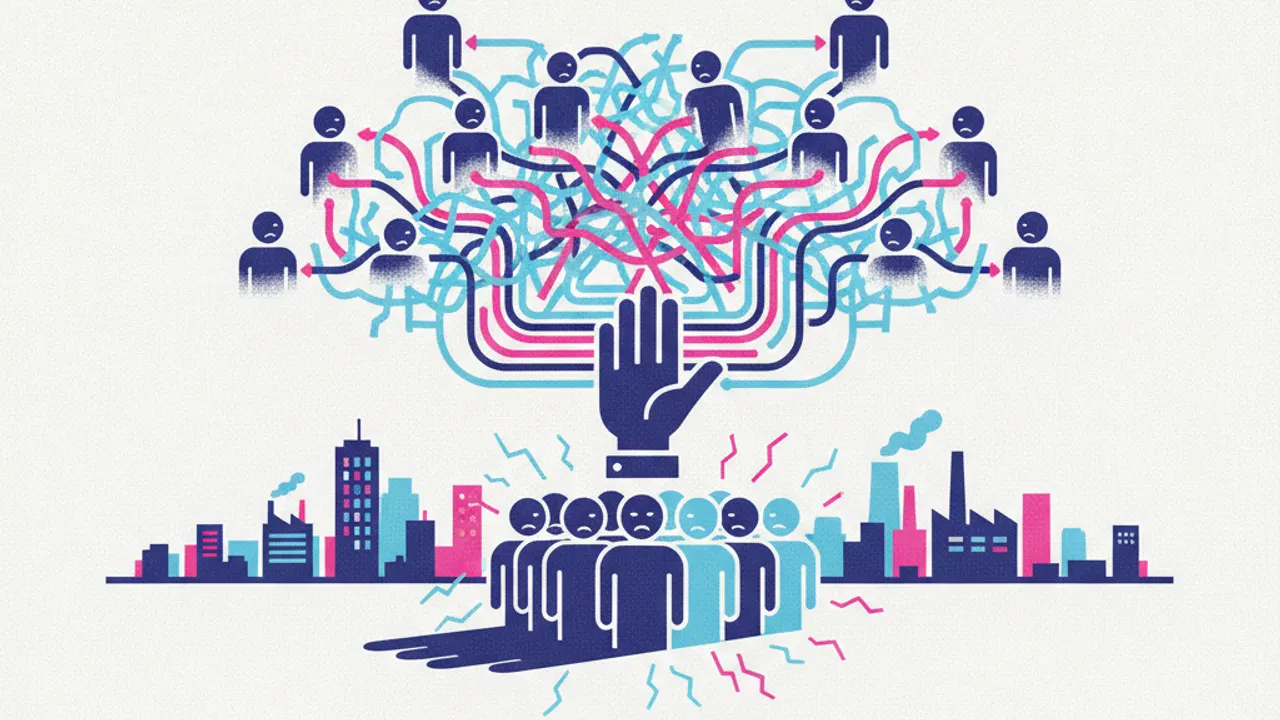
(KI-generiertes Symbolbild: Gemini / AI Connect)

The adoption of autonomous software agents has accelerated dramatically across German workplaces over the past twelve months. According to the findings of the HP Work Relationship Index 2026, 49 percent of surveyed employees in Germany now use AI agents in their daily professional tasks. This marks a substantial increase from 32 percent in the previous year. Germany now holds second place among the studied industrialized nations, trailing only the United States in terms of workforce adoption.

A closer look at organizational hierarchies reveals that these agentic tools have established a particularly firm footing among senior staff and technical teams. Usage among surveyed IT decision-makers has reached 64 percent across the country. Company executives and managerial leaders report an almost identical adoption rate of 63 percent. In these professional roles, automated agents are no longer treated as experimental software, but actively handle routine workflows and operational processes.

However, this swift technological uptake is accompanied by mounting anxiety among the workforce. The report highlights that 43 percent of active users worry about being replaced either by AI systems directly or by colleagues possessing superior technical skills. This fear of displacement and skills obsolescence cuts across diverse departments and industries. Employees increasingly face the psychological pressure of keeping pace with fast-evolving automation tools while guarding their professional relevance.

This apprehension is directly reshaping employee behaviour and stalling mobility across the broader labour market. A striking 60 percent of respondents stated that changing jobs during this period of technological transition appears far too risky. Analysts term this phenomenon jobhugging, as workers cling tightly to current positions despite potential dissatisfaction. In an era characterised by unpredictable workplace disruption, familiar roles offer employees a sense of security that new employment opportunities cannot guarantee.

Younger workers are adopting distinct strategies to protect themselves against potential career disruption. Within Generation Z, 32 percent of respondents reported pursuing a side gig or secondary employment to cushion against professional and financial volatility. These younger specialists actively build diversified income streams to avoid relying entirely on a single employer. The added workload is seen by many as a necessary trade-off to bolster personal resilience amidst ongoing economic and technological shifts.

For employers and human resources leaders, the study underscores a delicate tension between productivity gains and organizational hesitation. While AI agents drive automation and operational efficiency in technical departments, widespread anxiety risks freezing internal mobility and curbing innovation. Overcoming this pervasive jobhugging will require organizations to provide transparent guidelines for agent deployment and robust upskilling opportunities. Without proactive communication, firms risk building highly automated operations staffed by deeply insecure workforces.

What this means for you

For both employees and leaders, these findings demonstrate that operating alongside AI agents is rapidly becoming standard practice. Rather than clinging defensively to existing roles, professionals must proactively develop hands-on competence with agentic workflows. For employers, resolving this widespread uncertainty requires transparent communication and targeted training to prevent fear from paralyzing organizational mobility.

Perspectives

Coverage: 2× Other

One story, several angles: how each source frames the topic, each with a verbatim quote.

  • borncity.comOther

    The source emphasizes that the rapid rise of AI agents in the workplace is triggering significant fears of displacement and professional uncertainty among many employees.

    Original quote

    „HP zufolge nutzen 49 Prozent der Beschäftigten in Deutschland KI-Agenten; zugleich fürchten viele Verdrängung und unklare Berufsperspektiven.“

    borncity.com
  • it-daily.netOther

    The source highlights Germany's globally leading position in adopting autonomous AI agents, while also addressing the resulting fears about the future and reluctance to switch jobs.

    Original quote

    „Deutschland zählt bei KI-Agenten zur Weltspitze“

    it-daily.net

Source classification is maintained editorially (political spectrum only where consensus is broad; vendor communication is PR, not journalism). Unlabelled sources are unclassified: we do not guess.

Evidence

Well sourced
75/100
  • According to the HP Work Relationship Index 2026, 49 percent of surveyed employees in Germany use AI agents at work, up from 32 percent in the previous year.

    verified
  • Germany ranks second behind the United States among surveyed industrialized nations in AI agent adoption, with usage reaching 64 percent among IT decision-makers and 63 percent among executives.

    verified
  • 43 percent of surveyed users fear being displaced by AI systems or by colleagues possessing higher AI competence.

    verified
  • 60 percent of respondents consider changing jobs too risky during the current upheaval, while 32 percent of Generation Z pursue a side hustle to hedge risks.

    verified

The evidence score is computed, not hand-set: from confidence, the number of sources and the share of verified statements.

Source & transparency

As of: October 04, 2026

AI-generatedAI-generated: produced automatically from vetted sources with technical quality checks (source, quote and figure verification); no human sign-off of each item before publication

Sources
2
Verified statements
4 / 4
Evidence score
75Well sourced

Want to put this into practice?

We connect you with suitable AI providers from the DACH region, free of charge and without obligation.

What's next?