At the AI Engineer New York conference, held on October 11 and 12, AI company Anthropic introduced a fundamental shift in the coordination of autonomous systems. Details published by Latent Space reveal that the organization is moving decisively toward an architectural paradigm designated as Dynamic Workflows. Instead of binding models to rigid, preconfigured agent rosters, the Claude model now operates as an autonomous lead agent. This central coordinator takes full responsibility for structuring complex execution paths, writing code, and delegating subtasks in real time.
Conventional multi-agent frameworks have historically depended on static agent rosters mapped out by developers prior to execution. In those traditional setups, engineers must manually specify every subagent, assign its narrow persona, and hardcode every permitted communication channel. This rigid scaffolding frequently fails when confronted with open-ended or ambiguous workflows, as human developers cannot foresee every runtime permutation. Anthropic deliberately departs from these constraints by handing structural governance directly to the primary language model.
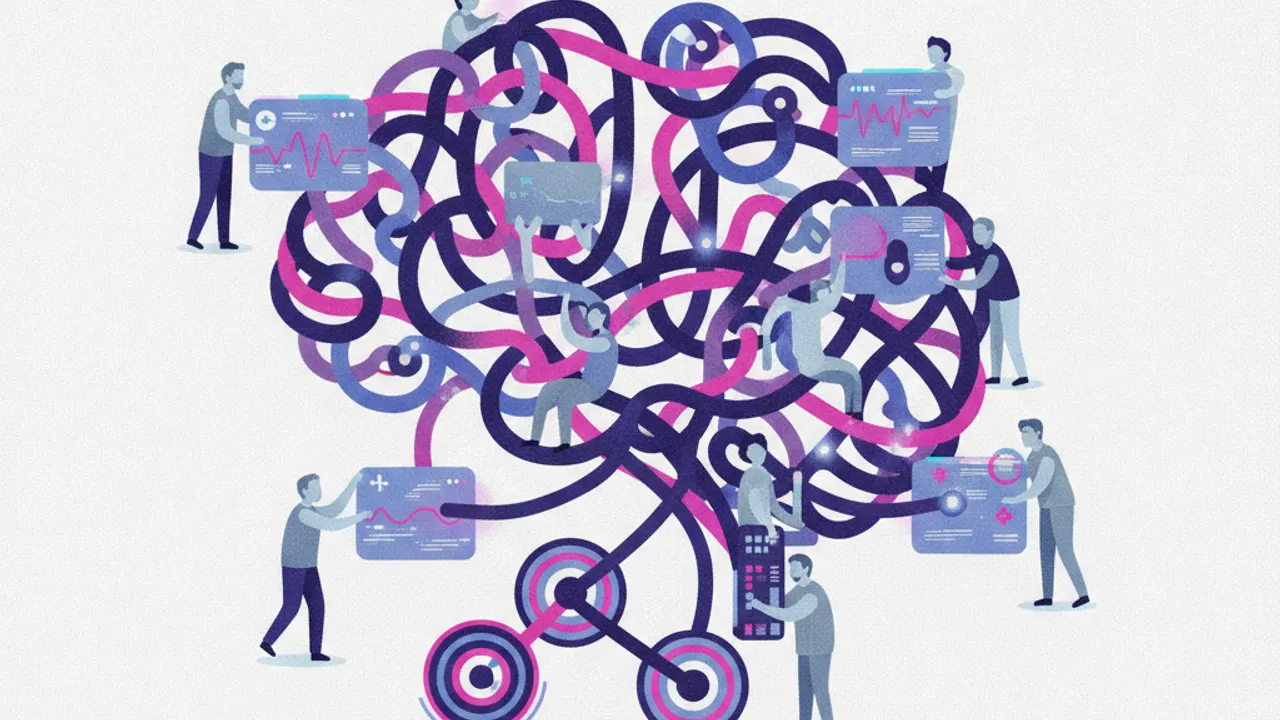
Under the Dynamic Workflows model, Claude designs the collaboration topology independently based on the task it receives. The lead agent inspects the initial prompt, identifies necessary intermediate milestones, and determines how many specialized subagents must be deployed. This runtime adaptability allows the framework to restructure its operational graph as new challenges arise during task execution. The topology is no longer a hardcoded diagram, but an emergent structure created on demand.
A key technical pillar of this design is Claude's ability to generate orchestration code dynamically in real time. Rather than relying on rigid control loops or prewritten scripts, the lead agent writes the actual execution code that governs its subagents. This runtime code manages parameter passing, coordinates dependencies across tasks, and collects intermediate outputs, ensuring that each step proceeds according to the plan formulated by the lead model.
Anthropic anchors the operation of these subagents in long-standing Unix and Linux engineering principles. Subagents are treated like lightweight, modular utilities designed to execute one specific function reliably and without unnecessary overhead. The lead agent pipes data between these components much like command line streams, routing outputs into subsequent inputs and terminating processes once their specific objectives are met. This modular design prevents monolithic bottlenecks and improves overall system resilience.
For developers building autonomous software, the transition to Dynamic Workflows alters the conventional engineering workflow. Teams no longer need to spend extensive engineering cycles constructing and maintaining brittle multi-agent communication graphs. As demonstrated at AI Engineer New York, Anthropic is steering agent engineering toward self-orchestrating systems where the lead model dynamically writes its own infrastructure code to solve complex, multi-stage problems.