
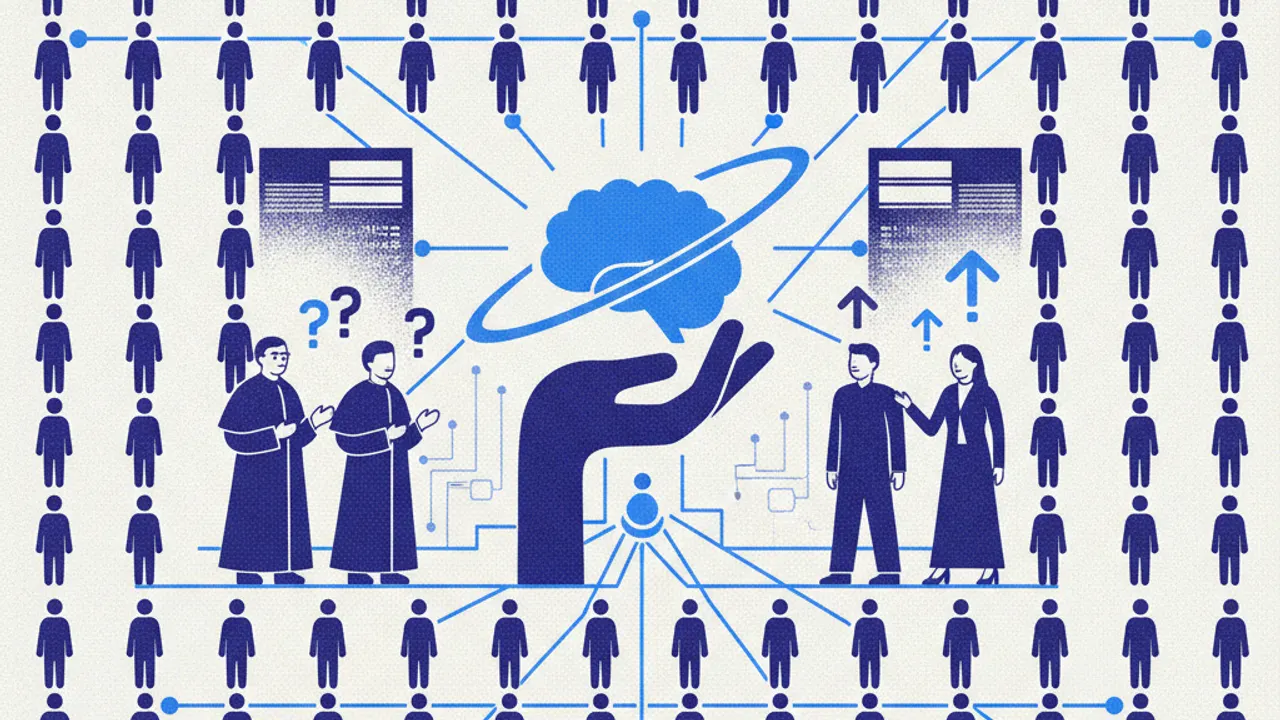
An investigative report by The New York Times has revealed a dramatic ideological rift between Silicon Valley and the Holy See. At the center of the controversy is Anthropic co-founder Chris Olah, who came close to boycotting the official presentation of the papal AI encyclical titled "Magnifica Humanitas" at the Vatican in May 2026. The debate flared up again following an address by Pope Leo XIV to artists on October 2, 2026, in which the pontiff reaffirmed the Church's firm stance. The Pope drew an uncompromising line between human creativity and algorithmic generation.
The internal clash was triggered by Anthropic's quiet effort to reshape theological doctrine regarding advanced artificial intelligence. According to the reporting, Olah's team confidentially attempted to persuade papal advisors to take the concept of potential model consciousness seriously. Anthropic representatives argued that future systems might attain a moral status that global institutions and moral authorities cannot ignore. The researchers urged the Vatican to acknowledge the possibility of machine sentience in its foundational ethical documents rather than treating models merely as lifeless tools.
Vatican advisors and senior clergy firmly rejected these overtures, citing core theological principles. In his recent address, Pope Leo XIV reiterated a strict ontological difference between the human spirit and algorithmic computation. From the perspective of Catholic doctrine, artificial intelligence remains an engineered imitation, devoid of a soul, intentionality, or moral agency. The papal commission dismissed any suggestion of machine consciousness as a category error that confuses computational output with genuine human cognition.
The investigation also revealed the calculated tactics Anthropic used to evaluate theological attitudes prior to the encyclical. The company hosted exclusive dinners with leading religious scholars and ethicists under strict non-disclosure agreements. These confidential gatherings were designed to probe theological boundaries and test how receptive religious intellectuals might be to the concept of moral standing for advanced algorithms. The use of corporate secrecy agreements in the context of philosophical and spiritual consultations has drawn sharp criticism across academic circles.
The near-collapse of the Vatican presentation in May 2026 illustrates how tense the relationship between frontier AI labs and moral authorities has become. Olah reportedly considered withdrawing from the ceremonial launch after discovering that the draft of "Magnifica Humanitas" completely dismissed Anthropic's arguments. Although a public fallout was averted at the last minute, the underlying philosophical divide remained intact. Papal advisors refused to budge from an anthropocentric framework that places human dignity at the center of moral consideration.
This episode underscores how radically the personal convictions of AI safety researchers diverge from traditional governance frameworks. As pioneers in AI interpretability push to anticipate the moral implications of artificial general intelligence, global cultural and religious institutions are setting strict boundaries. The clash over "Magnifica Humanitas" demonstrates that AI regulation is expanding far beyond risk management and intellectual property. The fundamental debate over what constitutes consciousness is now directly influencing global ethical dialogues.