
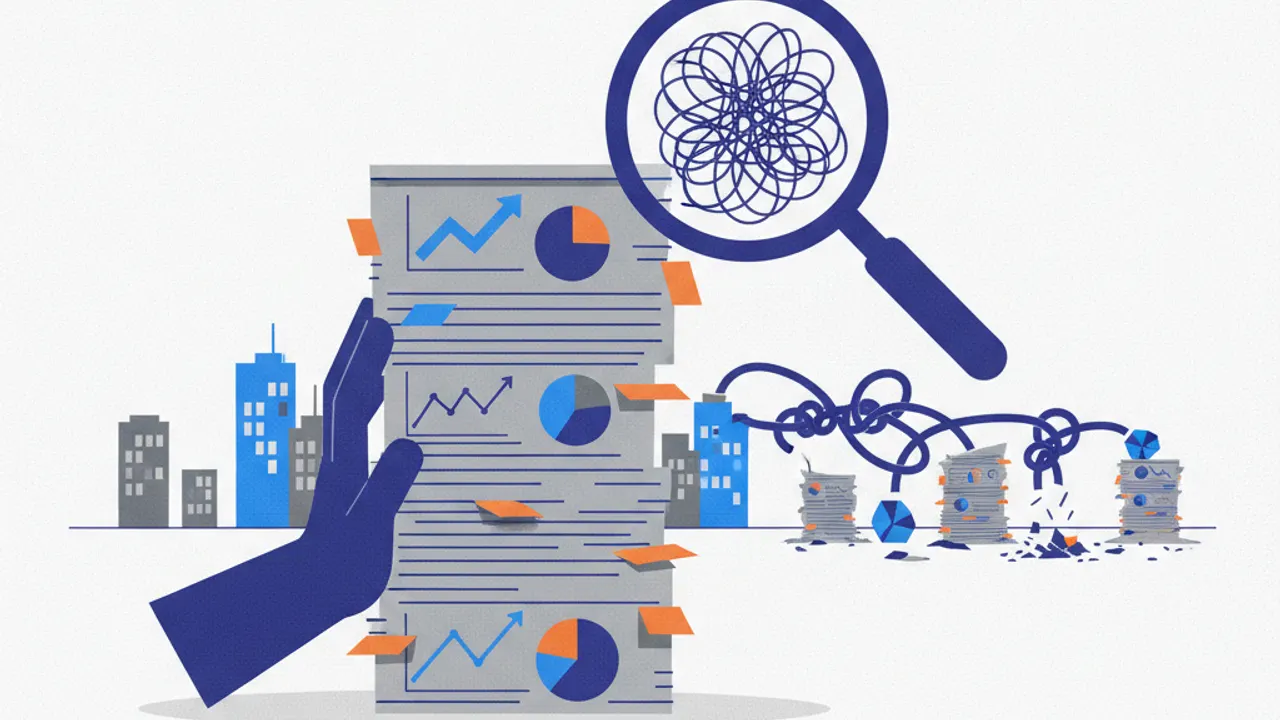
Recent research from strategy consultancy Bain & Company and software provider Freshworks offers an unvarnished assessment of enterprise technology adoption. While software budgets continue to expand globally, the vast majority of organizations struggle to convert modern algorithmic tools into tangible business value. Bain estimates that approximately 90 percent of enterprises remain trapped in isolated point solutions, merely deploying software to employees without transforming underlying business models.
The Bain report, titled 'The AI-Native Enterprise' and released on September 29, 2026, emphasizes a growing performance divide. Only leading organizations that approach artificial intelligence as a comprehensive enterprise transformation with executive sponsorship achieve EBITDA increases of 10 to 25 percent. In contrast, standard software distributions across everyday staff produce only localized micro-productivity, leaving top-line revenue and net operating margins virtually unchanged.
The study identifies a fundamental shift in the primary bottleneck confronting corporate leaders. Commercial returns are no longer limited by the computational strength or algorithmic sophistication of models. Instead, progress is hindered by the internal absorption speed of organizations, which require extensive workflow redesign rather than generic software rollouts. Without restructuring foundational processes, productivity gains fail to travel across department boundaries.
Operational inertia is similarly documented in Freshworks' 'Cost of Complexity Report 2026', based on an international survey of 12,021 IT decision-makers. Among surveyed German mid-market companies, 61 percent report that approving and rolling out new AI applications takes between 6 and 12 months. Furthermore, 43 percent of German firms remain stranded in pilot phases, and only 7 percent have deeply integrated such technologies across multiple core processes.
These prolonged release schedules impose considerable overhead on internal technology staff. Freshworks found that German IT teams spend 27 percent of their AI-related working hours on troubleshooting, interface integration, and navigating legacy system friction. Rather than building forward-looking, high-value implementations, technical personnel are forced to dedicate more than a quarter of their time to containing systemic complexity.
Taken together, these findings demonstrate that commercial adoption barriers are organizational and architectural rather than mathematical. Enterprises continue to procure software licenses while neglecting the restructuring of day-to-day operations and interface infrastructures. Long-term competitive separation will depend not on procuring additional standalone tools, but on an organization's capacity to streamline systems and absorb new workflows directly into core operations.