
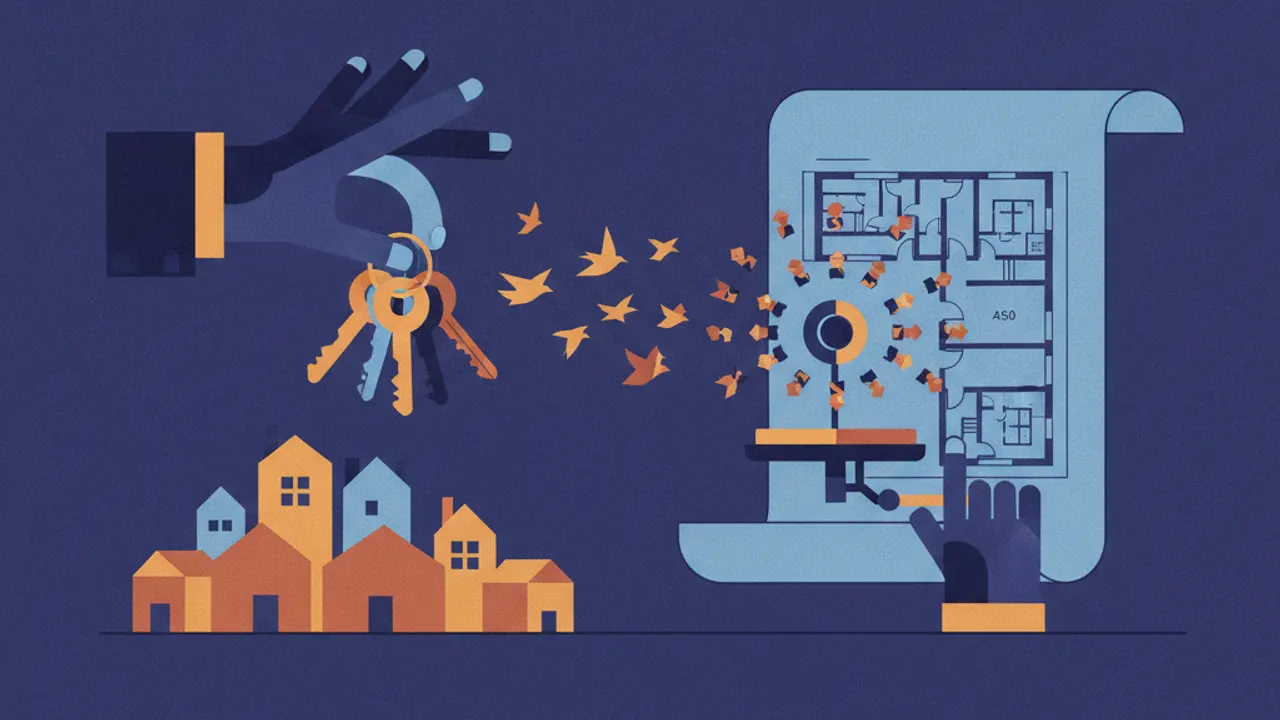
At its annual industry conference in Las Vegas, real estate software provider MRI Software announced a major expansion of its MRI Agora platform. Central to the release is the integration of approximately 250 specialized, autonomous AI agents engineered to automate core operational workflows across residential and commercial property management. These dedicated software units are configured to run more than 20 vital operational processes without requiring constant manual intervention from property teams. With this deployment, the enterprise provider aims to address persistent labor shortages and growing administrative burdens across the real estate management sector.
A primary element of this platform release is Agora Voice, a specialized conversational voice module designed to handle phone calls from tenants and prospective renters. Operating around the clock, the system acts as a continuous point of contact that answers incoming inquiries seven days a week. Key capabilities include the immediate logging and classification of maintenance issues, as well as the autonomous scheduling of property viewings for prospective tenants. Call transcripts and structured data are routed directly into the platform, eliminating the need for staff members to transcribe notes or manually input inquiry details into backend systems.
For orchestrating complex administrative responsibilities, MRI Software introduced the Agora Orchestrator engine, which functions as an operational command center. The system continuously tracks rental transactions and intervenes automatically whenever payment delays or rental arrears are identified. Under predefined policy rules, the orchestrator autonomously oversees dunning procedures and handles communication regarding overdue receivables. By automating collection workflows, property managers can reduce the time spent chasing delinquent accounts while identifying liquidity problems across portfolios at an earlier stage.
Beyond managing financial workflows, Agora Orchestrator extends into direct facility management by coordinating contractor work orders. When a repair request or property defect is reported via the voice interface or digital portals, the system can autonomously dispatch service orders to pre-approved external trade professionals. To safeguard property owners against uncontrolled expenditures, these autonomous actions remain strictly confined within predefined financial limits. Whenever an estimated maintenance cost exceeds the allocated budget ceiling, the platform automatically flags the issue for human review and manual approval.
Distributing roughly 250 specialized agents across more than 20 operational workflows signals a marked strategic shift away from generic conversational chatbots toward modular automation networks. Instead of relying on a single all-purpose language model, the architecture deploys targeted agents responsible for discrete duties such as tour coordination, arrears reminders, and repair routing. This modular framework is designed to minimize execution errors while maintaining synchronization with existing real estate databases. The rollout reflects a broader evolution across the proptech market, moving from passive informational assistants toward active, agentic software environments.
For property management teams and institutional real estate operators, deploying autonomous agent networks fundamentally alters daily workplace responsibilities. The property manager role is transitioning from executing repetitive operational tasks toward setting governance policies, monitoring system performance, and defining commercial parameters. Operational leaders must establish precise financial thresholds for maintenance orders and strict rules for debt collection to ensure compliance with legal and operational guidelines. Although administrative productivity stands to gain significantly, legal accountability and financial oversight for every automated decision remain firmly in human hands.