
Skip to content
AI ConnectPowered by VELENTIS
AI-generated2 min

AI in Professional Sports: IBM Study and $3.6 Billion Investment Surge Signal Structural Industry Shift

A global IBM survey and $3.6 billion in H1 2026 funding demonstrate how artificial intelligence is reshaping everything from athlete health to live stadium operations.

This article was AI-generated and published automatically. Context, labelling and all sources at the end of the article.

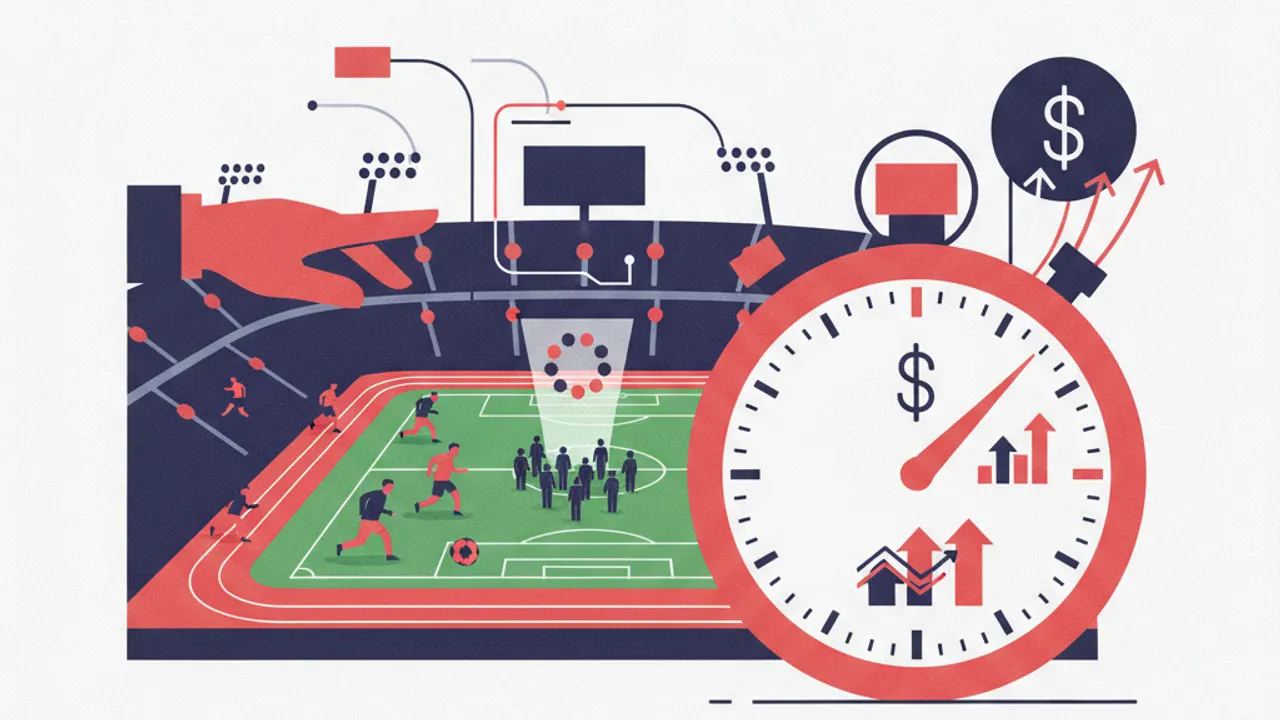
(KI-generiertes Symbolbild: Gemini / AI Connect)

Professional sports are undergoing a profound technological transformation that extends far beyond traditional performance analytics. According to the latest IBM Sports Intelligence Report, which surveyed more than 20,000 sports enthusiasts across twelve countries, active engagement with AI-powered sports services surged year-over-year from 52 percent to 69 percent. Approximately 59 percent of respondents expressed trust in AI-generated sports content, such as automated highlight packages and live tactical metrics, provided that the underlying data comes from accurate tracking systems. Furthermore, 46 percent of fans now expect personalized streaming experiences, including customizable camera angles and real-time tactical overlays.

In tandem with shifting media consumption, substantial venture capital is flowing into athlete management infrastructure. Following a multi-year pullback, the AI-driven athlete and fitness data sector secured more than 3.6 billion dollars in investment during the first half of 2026. The capital allocation reveals a decisive shift away from standalone wearable hardware toward advanced software models. These machine learning systems continuously process complex biometric telemetry, including heart rate variability, joint angles, and cumulative muscular fatigue, to predict overtraining risks before clinical symptoms appear.

A central component of this technological surge is the deployment of digital twins for elite athletes. These AI-powered models continuously calibrate individualized recovery protocols and sleep schedules based on real-time biological strain. Simultaneously, modern computer vision models analyze high-speed video capture running at up to 500 frames per second during training sessions and matches. By identifying dangerous biomechanical anomalies, such as improper knee rotation angles prior to acute ligament strain, medical staffs can implement targeted preventive interventions.

Live venue operations and broadcast pipelines are similarly integrating autonomous agentic AI architectures. Insights from industry providers such as Tech Mahindra indicate that these systems unify previously siloed data streams from in-stadium cameras, access gates, and ticketing infrastructure in real time. Autonomous agents dynamically manage spectator ingress to alleviate venue bottlenecks while triggering context-aware marketing campaigns aligned with match events. In-stadium spectators receive real-time push notifications containing instant multi-angle replays directly through mobile applications.

Scouting departments are also experiencing a major paradigm shift toward holistic fit-to-system recruitment models. Rather than evaluating players purely on isolated performance metrics, clubs are deploying predictive algorithms to simulate how a prospect's pressing triggers, positioning, and decision-making match a specific coach's tactical framework. This ecosystem is further supported by specialized large language model platforms like RefereeGPT, which train match officials across five major sports on nuanced rule interpretations and video review protocols.

What this means for you

For sports organizations, broadcasters, and fans, artificial intelligence has matured from an experimental add-on into core operational infrastructure. Teams that fail to adopt integrated biomechanical and contextual scouting models risk falling behind both on the pitch and in financial valuation. Fans will benefit from increasingly immersive, customized live broadcasts that merge entertainment with deep analytical insight.

Perspectives

Coverage: 3× Other

One story, several angles: how each source frames the topic, each with a verbatim quote.

  • newsroom.ibm.comOther

    IBM emphasizes that sports fans are increasingly using AI-powered content and seeking consolidated digital experiences, with accuracy being crucial for fan trust.

    Original quote

    AI use among all respondents increased from 52% to 69% year over year

    newsroom.ibm.com
  • techmahindra.comOther

    Tech Mahindra highlights how generative AI can unify fragmented fan touchpoints in sports and create new revenue streams.

    Original quote

    With the AI-in-sport market projected to grow from $10.6 billion in 2025 to $49.9 billion by 2033

    techmahindra.com
  • news.crunchbase.comOther

    Crunchbase News highlights the rebound in fitness venture funding, noting that investors are prioritizing AI and data over pure hardware plays.

    Original quote

    Startup investment in those categories totaled more than $3.6 billion in the first half of this year

    news.crunchbase.com

Source classification is maintained editorially (political spectrum only where consensus is broad; vendor communication is PR, not journalism). Unlabelled sources are unclassified: we do not guess.

Evidence

Solidly sourced
62/100
  • An IBM survey of 20,000 fans found that active use of AI-powered sports services rose from 52% to 69%.

    single source
  • Over $3.6 billion was invested in AI-driven athlete and fitness data software in the first half of 2026.

    single source
  • 59% of surveyed sports fans trust AI-generated sports content when supported by precise tracking data.

    single source

The evidence score is computed, not hand-set: from confidence, the number of sources and the share of verified statements.

Source & transparency

As of: August 24, 2026

AI-generatedAI-generated: produced automatically from vetted sources with technical quality checks (source, quote and figure verification); no human sign-off of each item before publication

Sources
3
Verified statements
0 / 3
Evidence score
62Solidly sourced

Want to put this into practice?

We connect you with suitable AI providers from the DACH region, free of charge and without obligation.

What's next?