
Skip to content
AI ConnectPowered by VELENTIS
AI-generated2 min

Critical P1 Flaw in ChatGPT: How Crafted Share Links Enabled Account Takeovers

Security researchers at Parameter Labs discovered an exploit chain in ChatGPT's HTML previews that allowed attackers to take over user accounts simply by sharing a link.

This article was AI-generated and published automatically. Context, labelling and all sources at the end of the article.

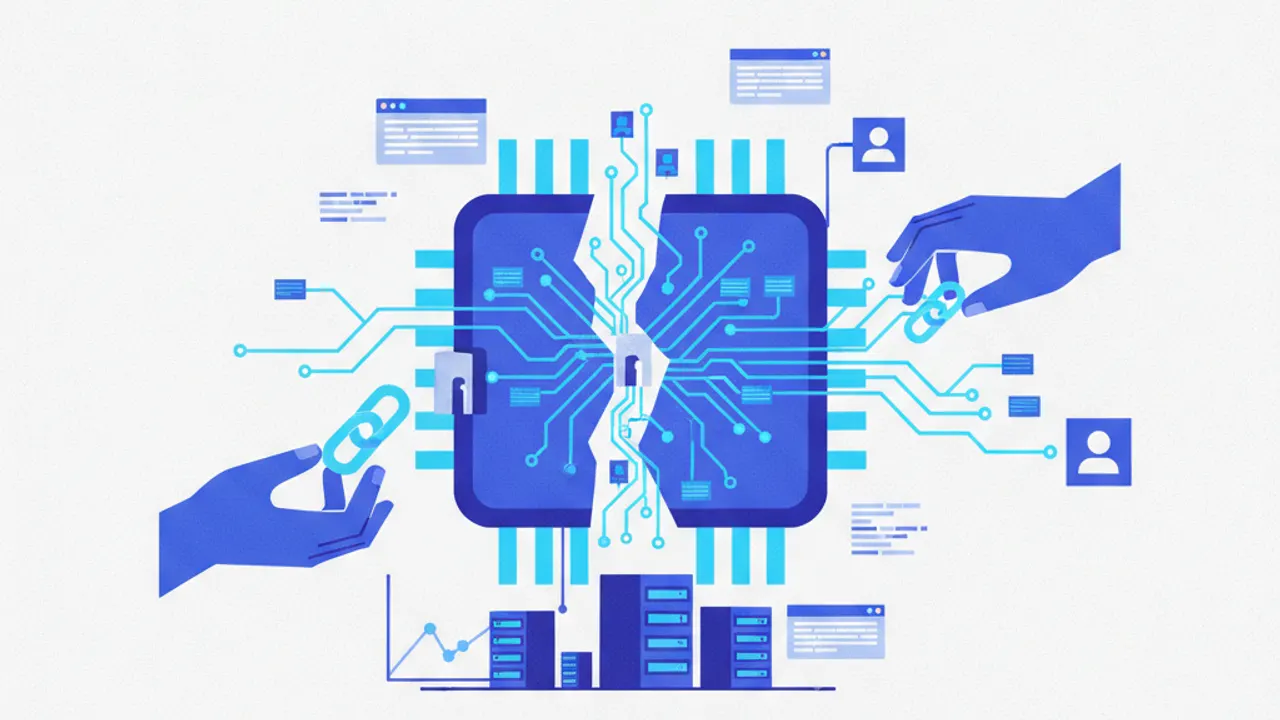
(KI-generiertes Symbolbild: Gemini / AI Connect)

A single click on a seemingly harmless shared chat link was enough to compromise a victim's ChatGPT account entirely. Security researcher Mukul Goyal from Parameter Labs documented a sophisticated exploit chain that allowed attackers to hijack active user sessions directly on the chatgpt.com domain. OpenAI classified the issue as a top-tier P1 vulnerability, deployed a complete patch on October 26, 2026, and awarded a 5,000 dollar bounty through its official vulnerability disclosure program.

At the core of the attack was ChatGPT's interactive HTML Previews feature. This component is designed to allow developers and end users to view rich visual content, diagrams, and mathematical notation directly inside the browser window. To render complex mathematical expressions, the web interface relied on the popular open source library MathLive. Researchers discovered that MathLive listened for incoming window postMessage events and inserted payload data using unsafe innerHTML calls, opening an immediate door for cross-site scripting.

OpenAI had implemented defensive measures to contain dynamic code within a sandboxed iframe, backed by a Content Security Policy designed to stop malicious scripts from escaping. Goyal managed to circumvent these safeguards by leveraging a specific YouTube oEmbed bypass. This technique allowed the attack payload to bypass Content Security Policy restrictions and break out of the intended sandbox boundaries into the broader application context.

Because the payload escaped the sandbox, the malicious JavaScript executed in the authenticated context of the victim's live session on chatgpt.com. As soon as a user opened the crafted share link, the attacker gained unauthorized access to the Document Object Model. The exploit could invisibly query internal application interfaces, list private conversation histories, exfiltrate sensitive chat contents to remote servers, and trigger new prompts on behalf of the victim without any visible indication.

The incident highlights the substantial security surface introduced by modern, interactive AI user interfaces. Whereas early large language model applications only returned plain text strings, modern services embed execution sandboxes, data visualization tools, and third-party JavaScript libraries. Link sharing is one of the most widely used collaborative features across AI platforms, making such entry vectors especially dangerous. While OpenAI remediated the flaw swiftly, the case demonstrates that isolating untrusted dynamic output remains a complex hurdle.

What this means for you

This incident shows that clicking untrusted shared links in generative AI applications carries severe session-hijacking risks. For corporate environments, it reinforces the need to treat interactive AI rendering layers as high-risk execution zones requiring strict browser sandboxing.

Perspectives

Coverage: 3× Other

One story, several angles: how each source frames the topic, each with a verbatim quote.

  • simonwillison.netOther

    Simon Willison highlights the multi-step technical exploit chain and criticizes OpenAI's five-thousand-dollar bug bounty payout as being too stingy for such a severe vulnerability.

    Original quote

    „paid out a $5,000 bug bounty, which I think was a bit cheap for a vulnerability this serious.“

    simonwillison.net
  • parameter.aiOther

    As the discoverers of the vulnerability, Parameter Labs provides a detailed technical breakdown showing how the interaction of two harmless features enabled complete account takeover simply by opening a shared link.

    Original quote

    „Opening the shared link was the only required action.“

    parameter.ai
  • aigovernance.comOther

    aigovernance.com analyzes the incident through the lens of enterprise risk and compliance, emphasizing that routine workflows with shared links became undetected attack vectors for corporate accounts.

    Original quote

    „Shared conversation links are a routine enterprise workflow, but this incident shows they can become account takeover vectors.“

    aigovernance.com

Source classification is maintained editorially (political spectrum only where consensus is broad; vendor communication is PR, not journalism). Unlabelled sources are unclassified: we do not guess.

Evidence

Solidly sourced
67/100
  • Parameter Labs researcher Mukul Goyal uncovered a P1 vulnerability in ChatGPT, which OpenAI patched on October 26, 2026, with a 5,000 dollar bounty.

    verified
  • The vulnerability targeted the MathLive library, which listened to postMessage events and handled content via unsafe innerHTML.

    single source
  • The exploit used a YouTube oEmbed bypass against the Content Security Policy to execute JavaScript directly in the authenticated chatgpt.com domain context.

    single source
  • Victims opening a manipulated share link had their private chats exfiltrated and actions executed under their identity.

    single source

The evidence score is computed, not hand-set: from confidence, the number of sources and the share of verified statements.

Source & transparency

As of: November 01, 2026

AI-generatedAI-generated: produced automatically from vetted sources with technical quality checks (source, quote and figure verification); no human sign-off of each item before publication

Sources
3
Verified statements
1 / 4
Evidence score
67Solidly sourced

Want to put this into practice?

We connect you with suitable AI providers from the DACH region, free of charge and without obligation.

What's next?