
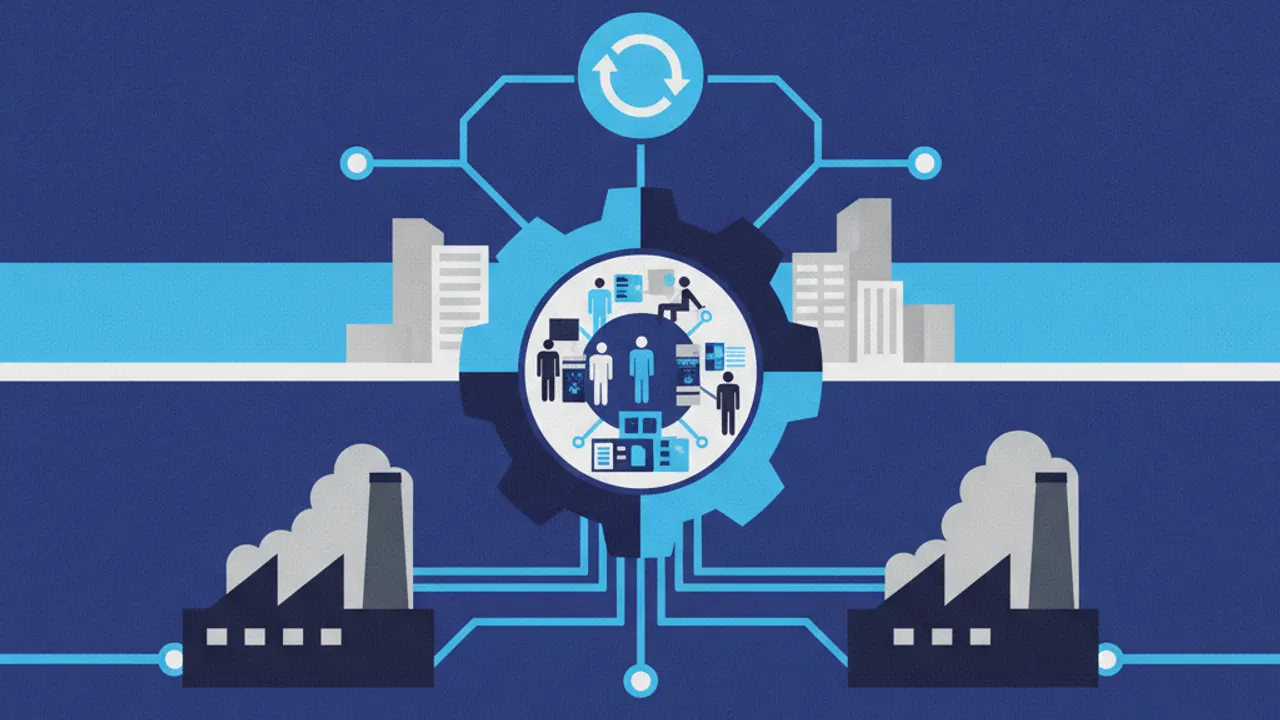
The phase of non-committal experimentation with generative artificial intelligence in the German economy is drawing to a close. According to the study 'Generative AI in the German Economy 2026' published by auditing and consulting firm KPMG, corporate leadership is undergoing a fundamental paradigm shift. A total of 480 decision-makers from German companies were surveyed for the report. The findings indicate that in 2026, AI is no longer confined to isolated innovation labs or pilot projects. Instead, the technology is now firmly anchored as a top strategic priority within executive boards.
Through 2025, exploratory initiatives and isolated use cases dominated corporate AI agendas across Germany. Today, the strategic bottleneck has fundamentally transformed: competitive advantages no longer stem from merely purchasing model licenses or running small-scale tests, but from systematic integration into core operational value creation. Many enterprises currently struggle at the organizational interface between isolated pilots and seamless end-to-end workflows. While departments previously experimented in silos, scaling generative AI requires restructuring operational workflows and deeply connecting disparate enterprise systems.
This strategic shift was also a central theme at the WELT AI Summit in Berlin, which brought together industry leaders from OpenAI Europe, AWS, Mistral, and major German industrial corporations. Conference participants emphasized that business value will not be determined by theoretical model capabilities, but by practical deployment across existing production environments. The discussions underscored that European industry must sharpen its deployment playbook to maintain competitiveness. Rather than chasing every frontier model release, companies are prioritizing sustainable implementation within operational architectures.
A parallel economic analysis by economist Luis Garicano, published in the Frankfurter Allgemeine Zeitung, reinforced this practical orientation. Garicano and industry observers advocate for open-source pragmatism tailored to the German Mittelstand and manufacturing sectors. German businesses do not need to invest billions to develop proprietary frontier foundation models from scratch. For industrial applications, state-of-the-art open-weight models deliver substantial productivity gains, even if their capabilities trail the absolute American frontier standard by several months.
Demographic pressures are accelerating this technological transition. The retirement of the baby boomer generation is creating structural labor shortages that traditional recruitment cannot resolve. Automation is therefore becoming a mandatory hedge to preserve industrial output and safeguard productivity. AI adoption has already exceeded 40 percent in core industrial processes across the German economy. In this context, algorithm-driven automation serves as an indispensable tool to offset the demographic deficit and maintain operational stability.
Combining pragmatic open-source adoption with end-to-end workflow redesign offers a realistic roadmap for industrial competitiveness. Rather than relying entirely on expensive proprietary cloud ecosystems, manufacturing enterprises and medium-sized firms are building targeted solutions on top of accessible model weights. In 2026, the success of enterprise AI is measured by tangible productivity gains and stable value creation. For business leaders, this reality requires evaluating all future AI spending against rigorous efficiency metrics and organizational transformation.