
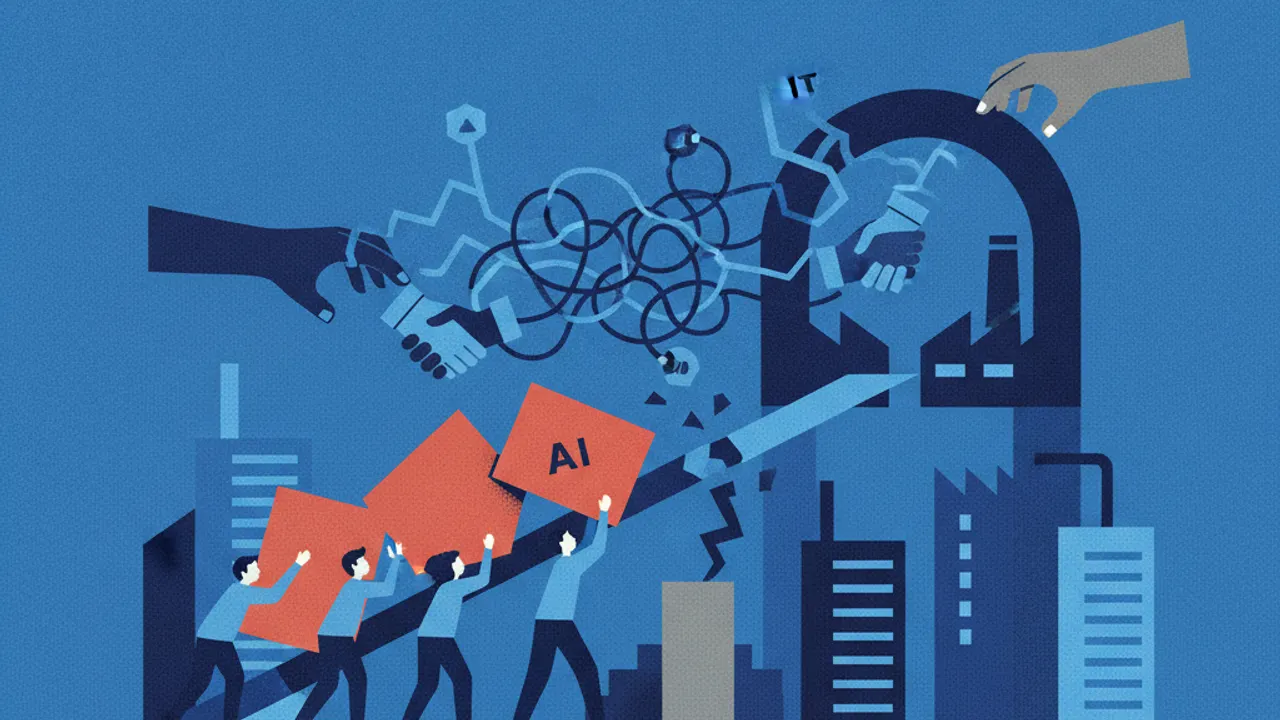
German industrial companies have firmly established artificial intelligence in their planning, but they are increasingly faltering when attempting company-wide deployment. A study by KPMG Germany titled 'Generative KI in der deutschen Wirtschaft 2026: Industrial Manufacturing' highlights a significant divide between formalized ambition and practical implementation. Although strategic documents now exist across executive suites, frustration is mounting over stalled rollouts on factory floors. Initial enthusiasm is giving way to sobering realities, as many digital initiatives remain trapped in the pilot phase.
The reported numbers initially point toward substantial progress across the sector. Today, 93 percent of surveyed German manufacturing firms maintain a formalized AI strategy, up sharply from 61 percent in the previous year. Furthermore, 73 percent of enterprises state that they already deploy generative or analytical AI productively within their core operations. In addition, 87 percent of surveyed businesses expect profound disruptions to their traditional business models within the next three years.
According to the KPMG analysis, the core obstacle is legacy factory infrastructure. Integrating modern models into fragmented systems combining enterprise resource planning and manufacturing execution architectures creates severe technical friction. Rather than building integrated networks, manufacturers are deploying isolated standalone tools confined to individual production lines. This technical fragmentation prevents algorithms from generating cross-departmental efficiencies or automating broader operational workflows.
This persistent friction has prompted direct intervention from political leaders. Federal Minister for Economic Affairs Katherina Reiche urged domestic manufacturers to tap their valuable operational and sensor data much more aggressively for data-driven business models. The political push follows a report by the German Chamber of Commerce and Industry, which revealed that many mid-sized companies are freezing AI investments due to fears of proprietary data leaking to American or Chinese hyperscalers.
Industry representatives emphasize that defensive insular strategies present severe competitive dangers. BDI President Peter Leibinger warned mid-sized businesses against stubborn isolationism and the futile search for an entirely self-contained, perfect internal setup. Companies that wait for isolated island systems risk losing access to increasingly software-defined global supply chains. Transitioning from defensive shopfloor experiments to interoperable enterprise architectures will ultimately determine the future relevance of German manufacturing.