
The adoption of artificial intelligence across enterprises is entering a phase of strategic maturation. Following initial rounds of experimentation, organizational focus is shifting toward measurable returns and the deliberate restructuring of workflows. Recent publications from consulting firms PwC and Gartner examine how corporate budgets, workforce headcounts and technical priorities are shifting in practice.
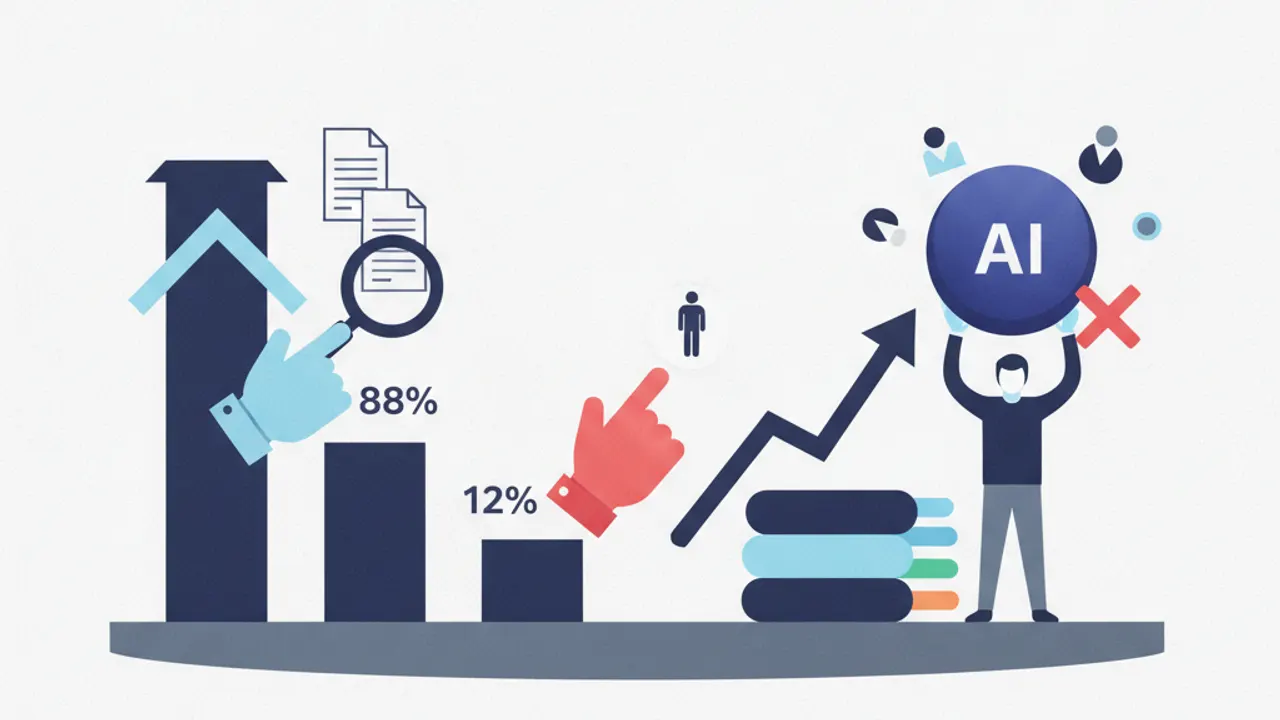
According to the PwC report 'AI Reality Check: Sustaining the AI Growth Dividend', 88 percent of organizations plan to increase their AI budgets over the next twelve months specifically due to advancements in agentic AI. The technology is already producing tangible gains for early movers. The analysis found that 44 percent of CEOs report measurable financial benefits from AI projects in the form of top-line revenue or operating margins. Furthermore, 79 percent of organizations have moved AI agents into pilot or production phases, with 66 percent of those recording clear productivity increases.
At the same time, an empirical study by Gartner counters the widespread narrative that executive leadership is deploying AI primarily to drive broad workforce reductions. Surveying 1,303 senior functional leaders, the Gartner Finance Practice found that only 23 percent of respondents are reducing headcount as a consequence of AI. In contrast, 17 percent are actively expanding their workforce to meet rising demand for specialized AI and data skills.
Gartner cautions chief financial officers against treating individual time savings as an automatic financial win. Without deliberate redeployment of freed capacity, enterprises suffer from value leakage where efficiency gains evaporate. Sustainable financial value emerges not from cutting payroll, but from reinventing operational processes and redefining organizational job profiles.
A primary bottleneck for scaling autonomous systems remains institutional and consumer trust, according to PwC. In Western markets such as the United States, only approximately 33 percent of workers and consumers fully trust autonomous AI decisions, compared to more than 85 percent in China. Consequently, comprehensive governance frameworks and oversight mechanisms have become essential prerequisites for scaling automated systems.