
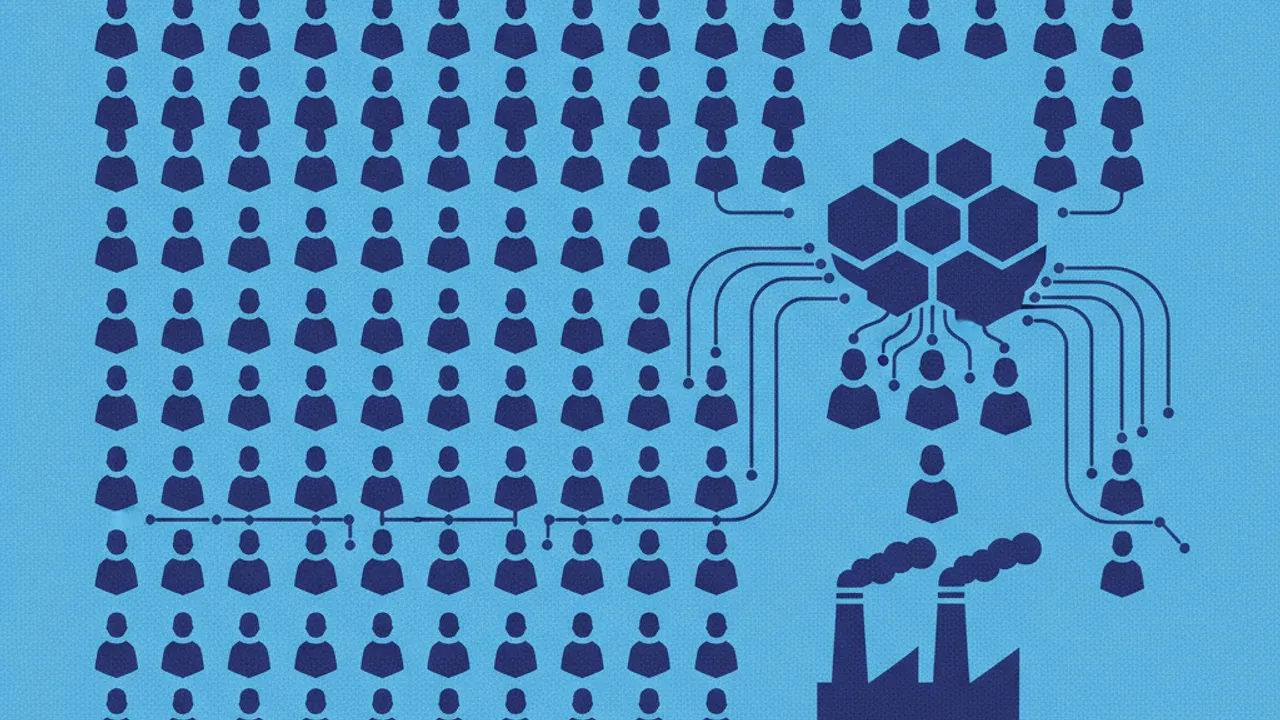
On October 13, 2026, the German Economic Institute published its policy brief on labor market exposure to artificial intelligence. Author Stefanie Seele analyzed official employment records covering more than 34.3 million jobs subject to social insurance contributions in Germany. The findings challenge common assumptions regarding large-scale technological layoffs. Despite the rapid spread of automated workflows, high professional exposure to machine learning systems has not resulted in an elevated risk of unemployment. Workers in heavily exposed professions face no higher job loss rates than individuals in digitally distant occupations.
In total, almost 12.4 million employees in Germany currently work in professions categorized as having high AI proximity. Compared to figures from late 2019, this marks an increase of 8.3 percent, representing an addition of 944,860 jobs. Clear patterns emerge across different qualification tiers. While 88 percent of expert positions and 50 percent of specialist roles qualify as AI-proximate, only 5 percent of low-complexity helper jobs show comparable exposure levels.
Although outright job losses remain rare, the institute notes a pronounced shift in workforce mobility. Specialists and managers in technology-driven fields change employers significantly more often than the national average. This mobility underscores intensifying competition among German firms, particularly mid-sized companies seeking professionals capable of managing technological transformations. Employers are competing fiercely for talent that can integrate generative tools effectively into existing business operations.
These labor market observations coincide with new survey data released by industry association Bitkom covering 603 enterprises. For the first time, an absolute majority of 57 percent of surveyed companies deploy artificial intelligence in production environments, up from 36 percent the previous year. Among active users, 66 percent report measurable improvements in market position, and 48 percent cite substantial acceleration of core processes. Adoption is shifting away from simple marketing chat interfaces toward integrated knowledge management and backend automation.
Against this backdrop of rising adoption, Federal Digital Minister Karsten Wildberger sparked significant political controversy on October 13 and 14, 2026. Wildberger proposed a targeted tax on revenues generated entirely by autonomous algorithmic processes. The resulting tax proceeds would be earmarked for a state qualification and retraining fund designed to cushion future workforce displacements before widespread disruption occurs.
The political initiative drew immediate pushback from business leaders and trade associations such as Bitkom. Critics argue that a unilateral national levy would create severe locational disadvantages and penalize early adopters of workflow automation. Instead of creating new fiscal burdens on automation, business representatives argue that policymakers should focus on stable legal frameworks and incentive programs to keep pace with international peers.