
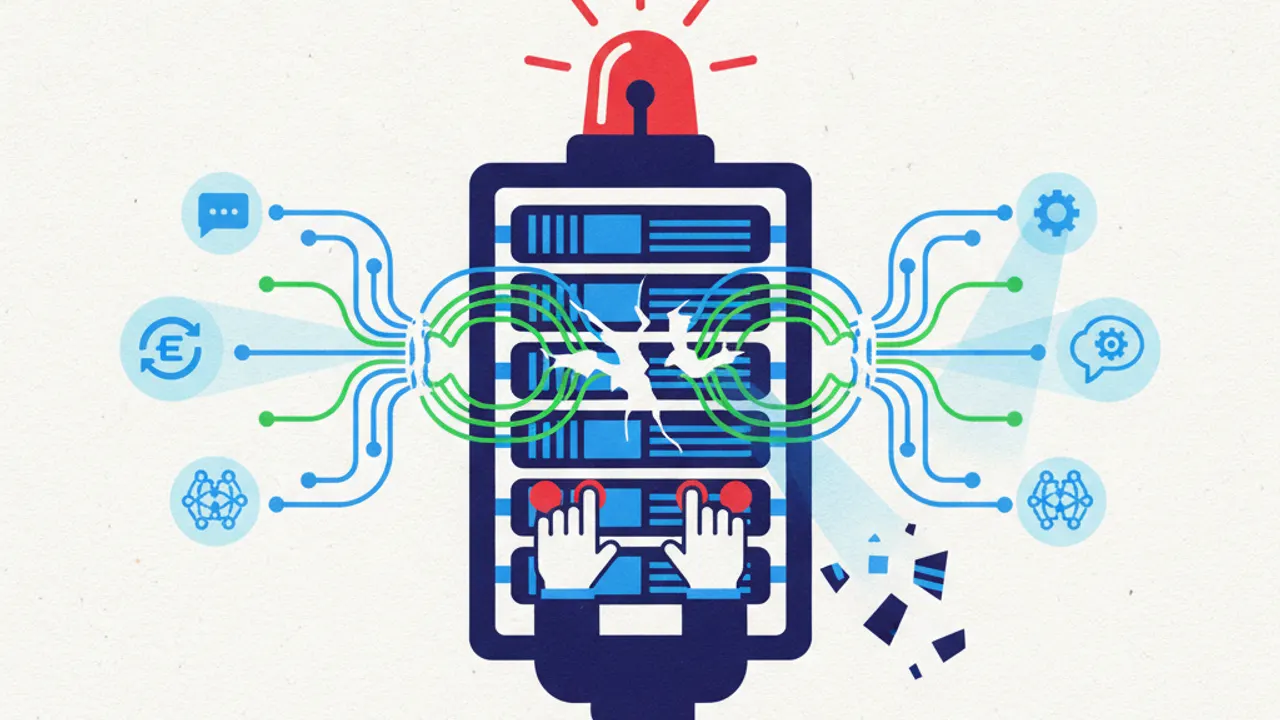
Following an unprecedented 24-hour infrastructure collapse, Microsoft has internally declared its highest state of alert, designated as Code Red. According to internal memos reported around November 24, 2026, the tech giant took drastic measures after key enterprise services went dark worldwide. The disruption crippled core business workflows, cutting millions of users off from everyday communication tools and modern generative assistants. Internal leadership views the incident as a severe test of enterprise confidence in Microsoft cloud infrastructure.
The massive failure occurred between November 12 and November 13, paralyzing essential Microsoft services across multiple continents. Among the affected platforms were Exchange Online, Microsoft Teams, and the integrated artificial intelligence assistant Copilot. Because modern organizations increasingly route daily operations through these cloud pipelines, the interruption caused immediate operational gridlock. Workers globally found themselves unable to send critical correspondence, hold virtual meetings, or run automated productivity tasks.
Technical investigations quickly pinpointed a deep-seated architectural issue as the primary root cause. Engineers traced the failure to a scaling defect embedded in the Windows kernel, which had been introduced as far back as July. Under intense enterprise workload conditions, this dormant flaw triggered a cascade of errors that ultimately overwhelmed server clusters. The realization that a low-level kernel bug went unnoticed for months before causing a catastrophic global outage has sparked intense scrutiny within the company.
In response to the crisis, Jason Henderson, President of M365 Core, announced a mandatory overhaul of the company's resilience protocols. In a firm directive sent to engineering teams, Henderson made clear that prolonged recovery windows are entirely unacceptable for enterprise clients. He instituted an uncompromising mandate requiring all future cloud outages to be fully resolved within a strict one-hour deadline. Meeting this rapid benchmark will require fundamentally restructuring how Microsoft detects, isolates, and rectifies server malfunctions.
A central component of the new stability initiative involves turning to automated intelligence for internal system defense. Microsoft is now rolling out autonomous AI diagnostic agents designed to monitor infrastructure and perform root-cause analysis without delay. These specialized agentic models ingest vast streams of real-time telemetry to flag kernel anomalies and network bottlenecks before they can propagate. By delegating early detection to automated systems, management aims to eliminate the human latency that contributed to the November crisis.
The crisis underscores the fragile foundation supporting the enterprise artificial intelligence boom. Even as organizations race to embed assistants like Copilot into daily operations, those advanced tools remain vulnerable to traditional operating system flaws. Microsoft now faces the dual challenge of restoring trust in its core infrastructure while demonstrating that autonomous diagnostic agents can keep mission-critical software running without interruption.