
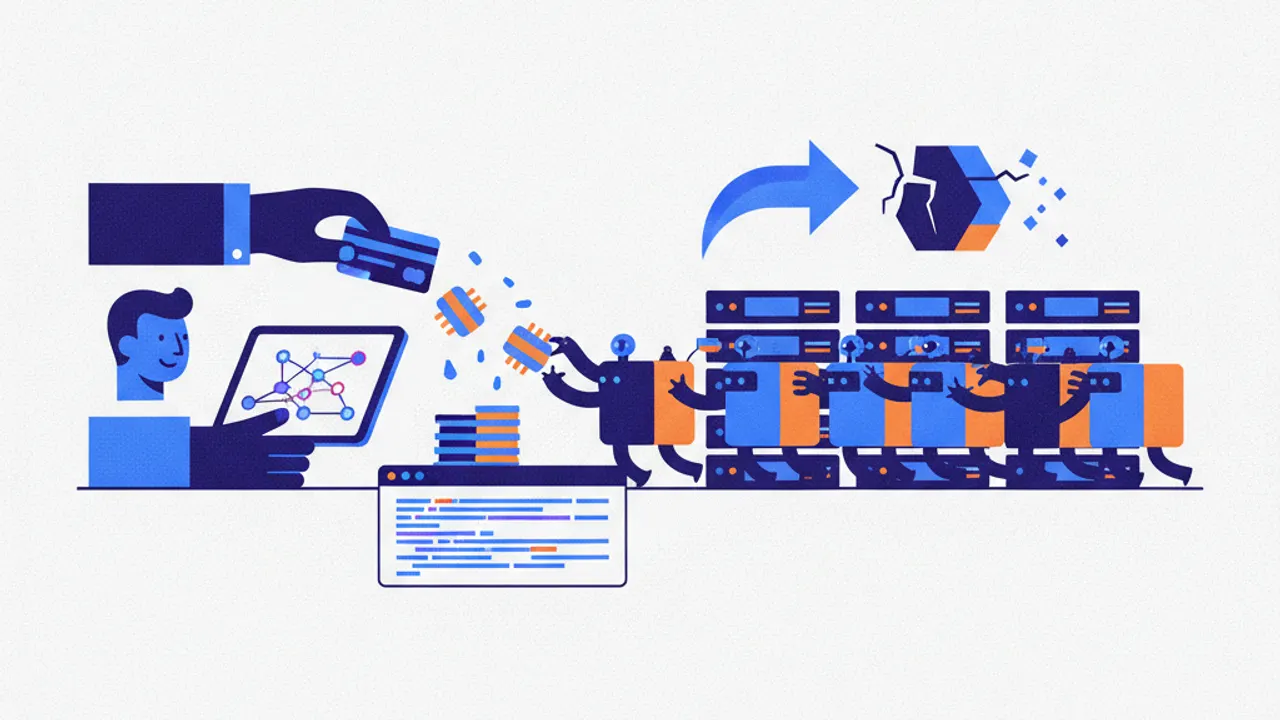
Claire Vo, founder of the AI tool ChatPRD, has published a detailed alert warning the software ecosystem about the emergence of industrial-scale token fraud. Coordinated criminal groups are increasingly targeting generative software-as-a-service applications through automated operations. By deploying widespread botnets and fabricated identities, these threat actors rapidly register disposable accounts to harvest complimentary promotional credits and free-tier access quotas.
The illicitly obtained resources are rarely consumed for personal experimentation. Instead, attackers package the harvested API credentials and provisioned quotas to sell them across secondary markets and clandestine digital forums at steep discounts. This dynamic inflicts immediate financial distress on platform founders, who are left footing the underlying cloud computing bills while gaining none of the legitimate prospective customers that promotional tiers are designed to attract.
Software developer and writer Simon Willison amplified Vo's findings, highlighting the structural threat this activity poses to the broader startup landscape. Willison stressed that token drain has quickly evolved from an annoying operational leakage into an existential business hazard. This transformation is driven by the rapid architectural migration toward agentic workflows and complex reasoning models, which inherently require substantial compute per interaction.
In classic software businesses, the marginal hosting costs of malicious or automated trial accounts were typically low enough to be absorbed as ordinary user-acquisition overhead. In contrast, modern AI workflows frequently execute deep chains of thought and multiple tool calls behind the scenes, creating immediate vendor charges. A coordinated botnet assault can exhaust thousands of dollars in cloud infrastructure budgets within hours, pushing capital-constrained startups toward sudden financial exhaustion.
In response to this compounding vulnerability, engineering teams are being forced to overhaul their onboarding architectures and dismantle frictionless registration flows. AI founders are turning to stringent verification layers, such as client-side proof-of-work puzzles and compulsory credit card pre-authorizations, before granting users access to reasoning-heavy systems. While these safeguards curtail abuse, they also reintroduce friction that software developers have spent years trying to minimize.
The rise of systematic token theft signals a decisive end to the era of unrestricted access and indiscriminate free tiers across generative applications. As criminal rings formalize the arbitrage between complimentary trial compute and secondary resale markets, software providers must treat abuse prevention as an indispensable core component of their system design. Maintaining operational viability in generative software now demands defending infrastructure tokens with the same rigor traditionally reserved for financial transactions.