
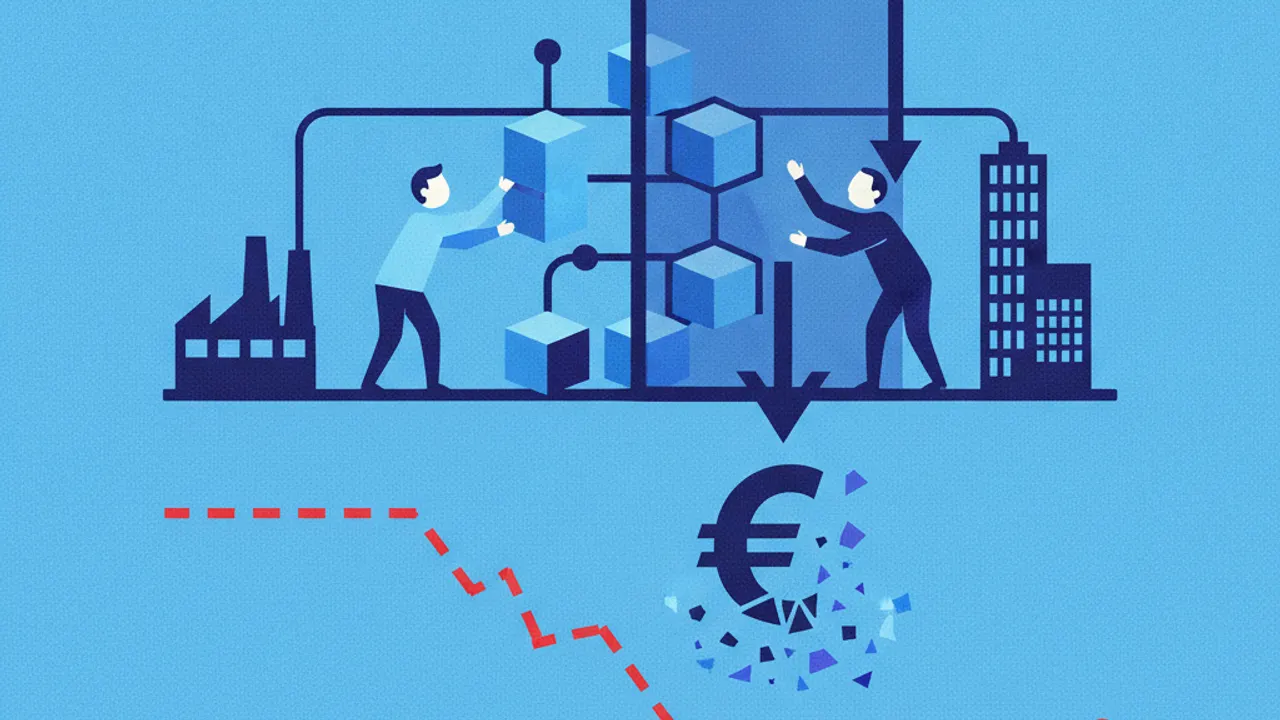
On 13 October 2026, the Munich-based ifo Institute published an economic model detailing the macro opportunities of generative artificial intelligence for Germany. According to the researchers, the broad adoption of generative models could unlock up to 440 billion euros in additional annual gross value added by 2034. However, this growth remains subject to major conditions, as restrictive access to training data threatens to dampen development. The study warns that more than one third of this economic upside, roughly 155 billion euros each year, could be lost if European regulations excessively cut off developers from industrial and textual data pools.
Oliver Falck, director of the ifo Center for Industrial Organization and New Technologies, argues in the report that regulatory policy must adapt quickly. He stresses that the political ambition to establish competitive European frontier models is incompatible with policies that seal off vital data spaces. If domestic developers cannot secure dependable access to comprehensive corpora compared to global rivals, they will remain reliant on external base models. That dynamic would entrench dependency on overseas technology providers and curb the economic impact of enterprise generative applications across the continent.
Alongside the dispute over value creation and data access, two independent labor market studies published on the same day offer a reassuring view of employment trends. Countering widespread fears, findings from the Institute for Employment Research (IAB) and the German Economic Institute (IW Cologne) indicate that generative systems have not triggered an employment crisis. The IAB pointed out that occupational groups with elevated AI exposure are not experiencing disproportionate headcount reductions. Instead, recent hiring declines in these segments stem primarily from broader macroeconomic cooling rather than autonomous software.
These conclusions match the findings outlined in IW Report 70/2026, which examines domestic employment data in close detail. The institute observed that working in tasks close to artificial intelligence has produced no measurable disadvantages for staff members so far. While open postings for routine specialist roles in digital fields have leveled off, this stagnation is counterbalanced by higher demand elsewhere. German employers are actively seeking advanced specialists and experts who know how to direct generative architectures and weave them into operational workflows.
Taken together, the reports illustrate a distinct picture for Germany as an industrial center. While the labor transition is unfolding far more smoothly than alarming forecasts predicted, the central danger lies in data governance. If policymakers fail to establish reliable, predictable access to industrial training sets, massive productivity dividends will simply vanish. Over the coming decade, the competitiveness of the German economy will depend less on immediate workforce disruptions and far more on whether local frameworks permit scalable training infrastructure.