
The adoption of artificial intelligence systems across the German economy has accelerated significantly over the past four years. According to a study by the Institute for Employment Research (IAB) of the Federal Employment Agency, approximately 28 percent of all companies in Germany, around 573,000 businesses, use AI systems in 2026. By comparison, that figure stood at just 1.3 percent at the end of 2022. However, researchers M. Arntz, B. Matthes and O. Schlenker reveal a sober reality beneath these growing adoption metrics, highlighting structural gaps in how technology is actually anchored within organizations.
Data from the IAB Job Vacancy Survey exposes a steep divide based on enterprise size. Among large corporations with more than 250 employees, the AI adoption rate reaches nearly 59 percent. Medium-sized firms with 50 to 249 employees also show solid uptake at 43 percent. In contrast, adoption drops noticeably among smaller organizations. Small businesses with 10 to 49 staff members register at 34 percent, while micro-enterprises with fewer than ten workers show an adoption level of only 23 percent across their regular operations.
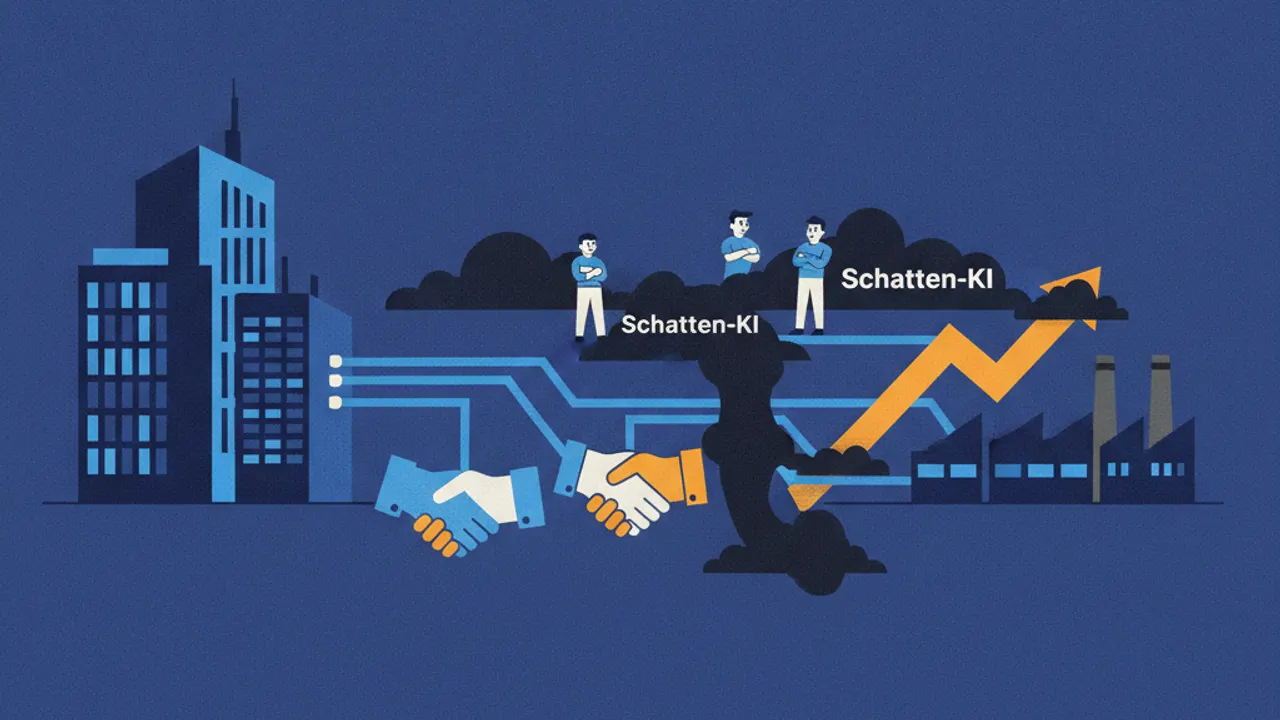
Beneath these corporate figures lies an operational dilemma that the researchers describe as an informal usage gap. While two-thirds of employees report using AI tools at work at least occasionally, only one in five workers relies on a solution formally provided by their employer. As a result, the vast majority of workplace AI activity happens informally as shadow AI. Staff members turn to public web tools on their own initiative, operating without clear internal guidelines, enterprise security standards or structured organizational workflows.
This informal practice creates significant drawbacks for measurable business performance. According to the IAB report, employees who work with officially integrated AI systems achieve significantly higher gains in work quality and operational efficiency, backed by structured corporate training programs. Conversely, when employees rely on standalone consumer tools, productivity dividends largely dissipate into fragmented, uncoordinated individual efforts. The IAB explicitly cautions that broader macroeconomic productivity growth will remain elusive as long as companies fail to embed AI into core business processes.
In response to these findings, executive teams and IT departments across Germany are shifting their operational approach. The initial enthusiasm for open-ended chatbot interfaces is increasingly giving way to structured efforts to curb shadow AI. Many organizations are tightening internal compliance policies or restricting access to unauthorized web tools altogether. IT leaders are pivoting toward enterprise deployments where closed AI workflows connect directly to enterprise resource planning and customer relationship management systems.