
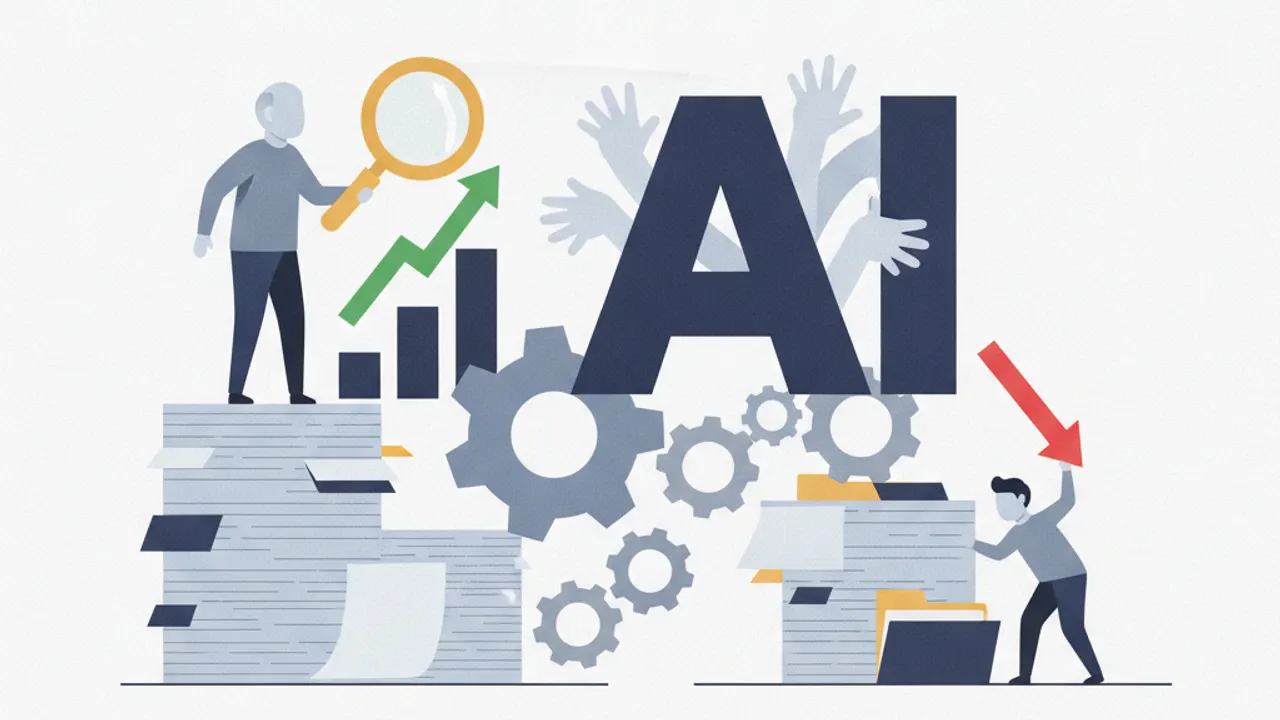
Contrary to widespread fears, the adoption of artificial intelligence in German enterprises is not causing a sweeping wave of layoffs across the existing workforce. However, a study published on October 13, 2026, by the Institute for Employment Research (IAB) presents a nuanced and concerning picture of the shifting labor market. Based on a longitudinal analysis of approximately 22.3 million full-time socially insured employees between 2022 and 2025, the research identifies a clear displacement pattern. While technological integration stabilizes experienced professionals, it creates measurable hurdles for young job starters.
For experienced workers aged 30 to 64, artificial intelligence has acted primarily as an employment driver and productivity enhancer over recent years. In occupational fields with high exposure to AI systems, employment growth in this age bracket was 5 to 6 percentage points higher between 2022 and 2025 than in roles with low technological exposure. Organizations are using generative tools to reinforce core processes and augment the capabilities of their seasoned staff. Rather than replacing established specialists, employers are investing in retention and using automation to address existing talent bottlenecks.
For career entrants aged 20 to 29, the IAB findings reveal a troubling warning signal. In heavily AI-exposed professions, employment in this demographic dropped by 3.8 percent over the surveyed period, compared to a decline of 2.6 percent in low-exposure fields. This represents a relative underperformance of 1.2 percentage points for young professionals. Researchers refer to this trend as the junior effect, noting that corporate recruiters have become notably hesitant when hiring for entry-level positions, fundamentally altering long-established onboarding paths.
The causes of this hiring reluctance are concentrated in manufacturing as well as commercial and non-academic occupations. Traditional entry-level duties such as data processing, drafting routine business communications, data hygiene, and basic spreadsheet analysis are increasingly automated by AI systems. Because companies no longer need junior staff to perform these repetitive baseline tasks, entry-level vacancies are dwindling. Employers are reluctant to commit time and mentorship resources to newcomers when algorithmic tools can deliver basic administrative output instantly and at lower marginal cost.
According to the IAB analysis, this pressure is particularly intense in manufacturing and commercial operational roles without academic entry barriers. In these areas, companies deployed automated systems aggressively in recent years to streamline standard administrative procedures. While high-skilled specialists gained leverage and productivity, supportive tasks traditionally assigned to novice staff were eliminated. Consequently, the transition from vocational training or university graduation into regular permanent employment has tightened considerably in these sectors.
For corporate talent strategies, this development poses serious long-term risks to innovation and succession planning. If young graduates are denied the opportunity to build foundational competencies through routine work, businesses will struggle to develop their own future senior professionals and managers. HR leaders must fundamentally redesign entry-level curricula, creating pathways that teach junior staff how to govern, validate, and orchestrate AI pipelines from day one. Without proactive adjustments to hiring pipelines, enterprises risk facing severe shortages of experienced senior talent in the years ahead.