
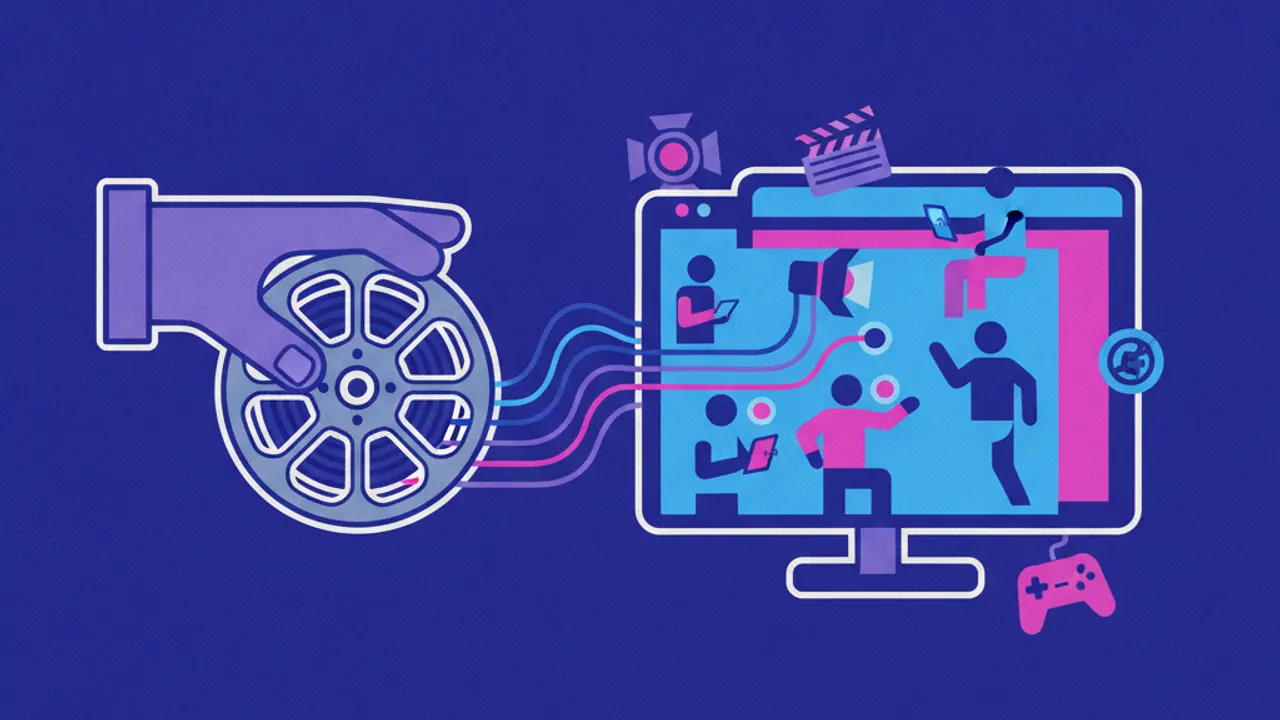
A notable transformation is underway in the American entertainment industry as creative professionals increasingly contribute to the very systems reshaping their profession. According to an investigative report published by The Guardian, award-winning US screenwriters, directors, and showrunners are widely taking on secondary work with data annotation agencies. These specialists are contracted to train generative AI models developed by major artificial intelligence labs, including Anthropic and OpenAI.
The assignments for these experienced professionals extend well beyond routine data labeling. The creatives review and refine automated screenplays, enhance dramatic character arcs, and correct algorithmically generated production schedules. Through this specialized fine-tuning, generative tools learn to replicate narrative pacing and industry-specific storytelling standards with greater precision, rapidly elevating the technical maturity of automated writing platforms.
This trend is largely propelled by severe economic contractions across traditional entertainment hubs. Industry estimates indicate a drop of up to 35 percent in active film and television productions in Hollywood. Faced with fewer commissioned projects and prolonged dry spells between productions, many professionals turn to AI training roles to bridge financial gaps. Hourly compensation for this work ranges widely from 12 to 200 US dollars, depending on experience and the contracting agency.
At the same time, major streaming networks and studios are accelerating their deployment of assistive software across studio operations. Netflix disclosed in the same context that it utilized generative or assistive AI pipelines across roughly 300 out of 1,000 titles in 2026. These applications primarily assist in pre-visualization workflows, post-production pipelines, and broader project schedule coordination.
The situation highlights a deep structural tension between immediate economic necessity and the long-term future of creative labor. While creative specialists provide the high-quality feedback required to enhance machine intelligence, widespread anxiety remains regarding the gradual erosion of traditional creative jobs. The intersection of fewer greenlit productions and deeper algorithmic integration is set to become a defining issue in upcoming industry negotiations.