
The global hype surrounding generative artificial intelligence is giving way to a more sober assessment of actual operational returns in corporate executive suites. While global enterprise spending on artificial intelligence is heading toward 400 billion dollars in 2026 according to IDC projections, the transition toward fully autonomous systems remains slow. As the Enterprise AI Impact Report published by the Future Investment Initiative Institute on October 12, 2026 highlights, 62 percent of surveyed enterprises are currently experimenting with agentic AI. However, only 23 percent have managed to deploy and scale autonomous agents in at least one core functional area within everyday operations.
The persistence of pilot projects is not simply a matter of executive hesitation, as demonstrated by an empirical study released concurrently by Harvard University researchers. Fiona Chen and James Stratton analyzed approximately 300 million digitally tracked work steps across 718 software companies between January 2021 and March 2026, using data from engineering management platform Jellyfish. Their investigation scrutinized activity patterns within source code platforms such as Git repositories and Jira tickets. The research team sought to determine whether the widespread introduction of agentic programming tools translates into a higher volume of finished digital products.
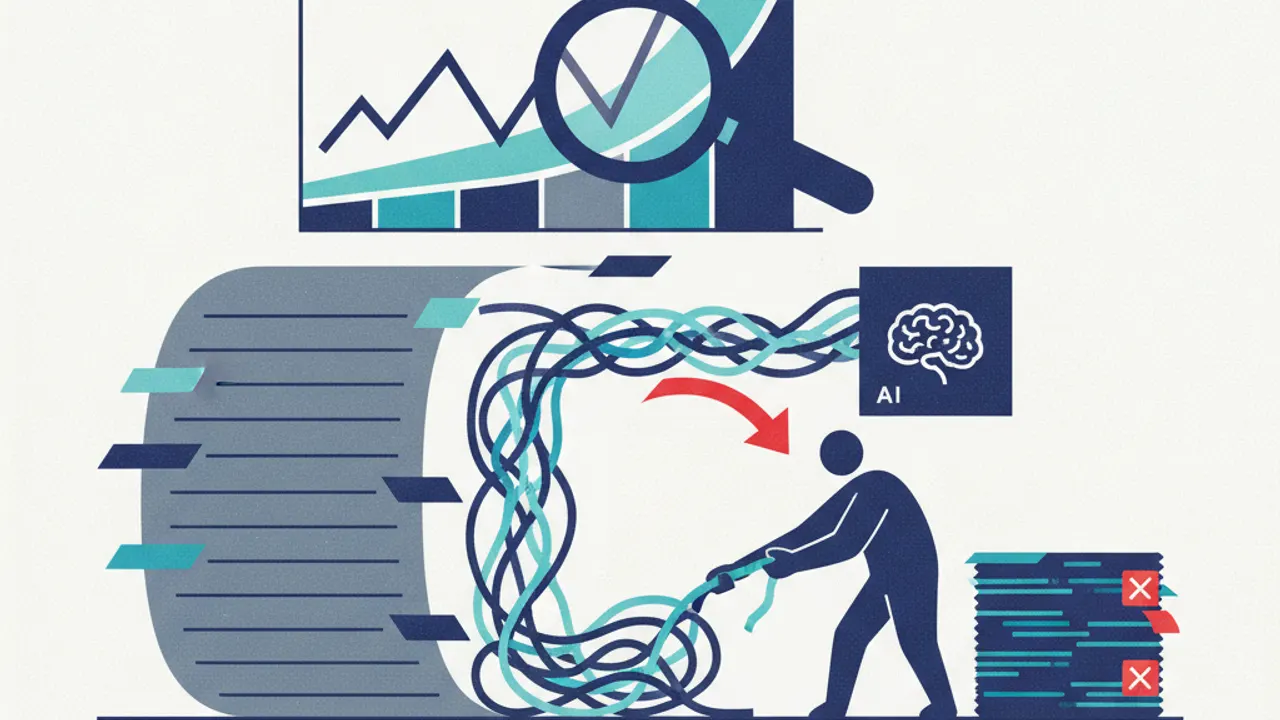
The findings from Harvard reveal a pronounced productivity paradox inside software engineering departments. Following the introduction of agentic coding tools, individual code volume surged by an average of 30 percent in terms of written lines of code. At the same time, the frequency of code commits rose by 20 percent, while submitted pull requests grew by 23 percent across the analyzed engineering organizations. Despite this surge in raw activity, the authors could not detect any measurable increase in completed software features or delivered work packages throughout the entire observation period.
The underlying cause of this bottleneck is a simple relocation of operational friction within the engineering lifecycle. Rather than liberating engineering teams from repetitive work, the flood of synthetic code creates severe strain on downstream quality assurance mechanisms. Human code reviews, comprehensive security audits, and the identification of subtle errors during review stages consume nearly all of the time gained during initial code generation. Consequently, the initial velocity achieved during composition is offset by downstream verification burdens, leaving overall software release cycles essentially unchanged.
These empirical conclusions mirror the practical concerns reported by corporate leaders in the FII Institute publication. Despite broad baseline exposure, with cited McKinsey data showing that 88 percent of organizations now utilize AI in at least one operational domain, tangible risk barriers continue to restrain deeper operational autonomy. For 73 percent of surveyed decision-makers, unresolved questions surrounding data protection and cybersecurity represent the primary obstacle to widespread implementation. An additional 50 percent point to legal uncertainties regarding copyright, corporate liability, and evolving regulatory obligations.
For the institutional partners behind the FII Institute report, including Brookfield, Visa, and JD.com, the current landscape represents a crucial strategic juncture. Simply multiplying the raw output of digital assets no longer justifies the steep infrastructure and licensing expenses associated with enterprise AI adoption. Organizations must redesign their review pipelines, approval hierarchies, and governance frameworks to accommodate autonomous contributions safely. Until businesses learn how to validate agentic workflows reliably and securely, promised productivity breakthroughs will remain out of reach.