
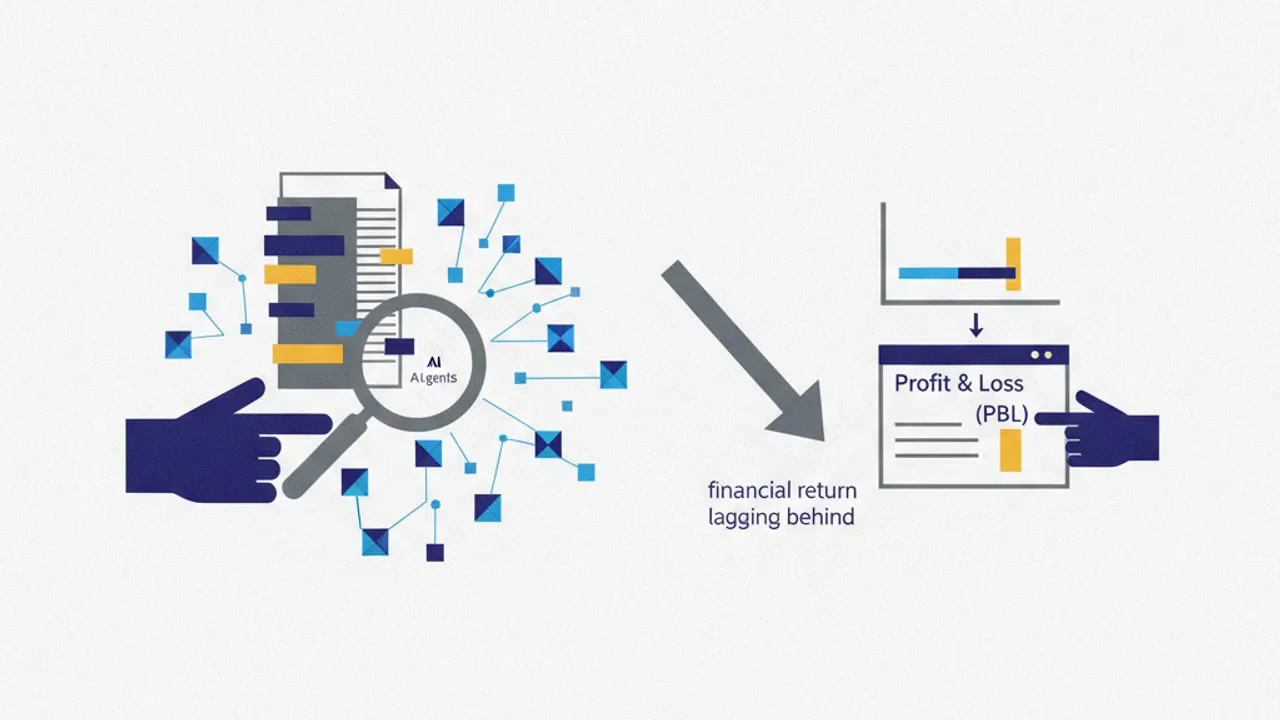
A comprehensive survey of global enterprise leadership reveals a significant divide between the rapid technical adoption of autonomous software and its actual bottom-line value. Published by professional services firm Genpact under the title "Autonomy in Practice", the study polled 2,005 C-level and senior executives across 17 global industries. The analyzed organizations represent enterprises generating annual revenues ranging from 1 billion to over 50 billion dollars. The findings indicate that while autonomous agentic systems are quickly penetrating corporate infrastructure, tangible business returns lag noticeably behind initial executive expectations.
According to the research, 79 percent of surveyed corporations have already deployed autonomous AI agents within live production environments. However, a mere 20 percent of these organizations utilize agentic systems consistently and comprehensively across functional departments. In most enterprises, applications remain confined to siloed pilots within individual divisions. This fast technical rollout conceals the reality that scaled, synchronized implementation across the entire enterprise remains an elusive milestone for four out of five companies.
This operational integration deficit translates directly into disappointing balance sheet figures. Only 15 percent of enterprise respondents have linked their artificial intelligence investments directly to measurable profit and loss targets. Consequently, AI projects funded across the preceding 24 months yielded, on average, just 49 percent of their projected economic value. More than half of the anticipated return on investment is lost during the transition from initial pilot phases into ongoing operational workflows.
The report identifies an organizational backlog as the fundamental driver behind this lingering value gap. To date, only 9 percent of surveyed corporations have fundamentally re-architected their operating models to accommodate human-AI collaboration. Without newly defined process flows and management structures, agentic systems cannot deliver their promised efficiency gains. Many enterprises continue to force modern autonomous tools into legacy operating frameworks established years ago.
The gravity of this organizational mismatch is magnified by the expanding decision-making scope granted to algorithmic tools. AI systems now guide or drive 40 percent of all operational business decisions, more than double the proportion recorded in 2025. This expanding autonomy does not denote unmonitored execution, as human professionals actively intervene through auditing and formal approval mechanisms in 87 percent of cases. Workforce responsibilities are consequently shifting from routine execution toward active supervision and continuous governance.
Simultaneously, the findings debunk assumptions that autonomous agents inevitably trigger immediate mass layoffs. Among organizations operating AI agents in live production, 92 percent reported maintaining or even expanding their total employee headcounts. Instead of eliminating staff, corporations are restructuring existing positions to oversee synthetic workflows and establish specialized interfaces for effective human-machine collaboration.