
For years, the field of mechanistic interpretability has operated under a central premise known as superposition theory. Researchers broadly assumed that neural networks learn far more concepts than they have neurons, forcing them to compress unrelated data points into the same activation dimensions. A widely discussed research essay by Nick Cammarata, a former OpenAI researcher and co-founder of AI safety firm Goodfire, now challenges this consensus. In essays titled Neural Networks Are Already Clean and Agents disprove Polysemanticity, Cammarata argues that modern language models are far more structured and legible than the research community previously believed.
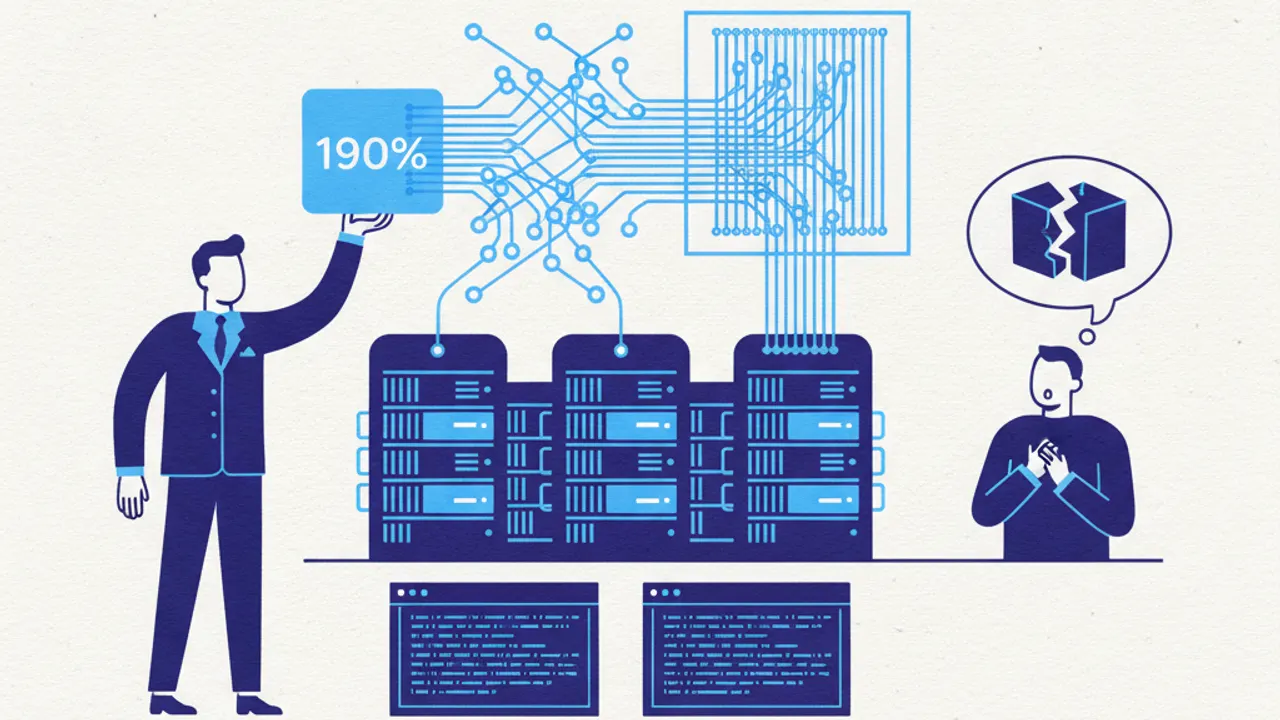
Cammarata is a prominent figure in the field, having co-authored the foundational 2020 Circuits paper that shaped contemporary interpretability research. In his latest empirical investigation, he analyzed modern transformer architectures scaling up to the trillion-parameter regime, including models such as Qwen3-32B and Kimi K3. His findings suggest that approximately 90 percent of individual neurons in these systems exhibit a single, coherent, and human-readable primary function. The widespread belief in polysemanticity, according to Cammarata, stems largely from measurement artifacts, poor visualization tooling, and gradual conceptual generalization.
These assertions call into question substantial investments made across leading AI safety laboratories over recent years. Organizations such as Anthropic and OpenAI have poured massive compute resources into training Sparse Autoencoders, known as SAEs, to disentangle entangled concept spaces. Cammarata contends that these complex secondary models may be solving an artificial problem. Many classic proofs of superposition were derived from older architectures like InceptionV1, which differ fundamentally from modern transformer topologies.
Contemporary networks rely heavily on architectural improvements such as LayerNorm and residual streams, which Cammarata argues naturally encourage feature separation. What earlier diagnostic probes categorized as confusing superposition may simply be representations of broader, hierarchically organized concepts. If native neurons are already largely monosemantic, researchers could audit circuits directly without training massive dictionary-learning models on top of frozen activations. This shift would substantially lower the computational and financial barriers required to inspect frontier models.
The essay has sparked an intense debate among alignment researchers and mechanistic interpretability experts. Prominent figures such as Neel Nanda of Google DeepMind have voiced skepticism regarding whether these findings truly scale to complex reasoning behaviors. Critics point out that finding an identifiable primary role for a neuron does not eliminate subtle, distributed interactions across billions of parameters. They caution that circuit-level verifiability remains an open problem, even if individual neurons appear cleaner in isolation.
This methodological disagreement arrives at a pivotal moment for AI safety governance and model evaluations. If native transformer activations can be audited without secondary autoencoder infrastructure, regulatory inspections and safety guarantees could become far more accessible to independent researchers. Conversely, relying on premature assumptions of interpretability poses distinct risks if deceptive or harmful capabilities remain hidden within subtle activation tails. Independent replications in the coming months will determine whether Cammarata has exposed a long-standing measurement error or merely underestimated the complexity of transformer representations.